

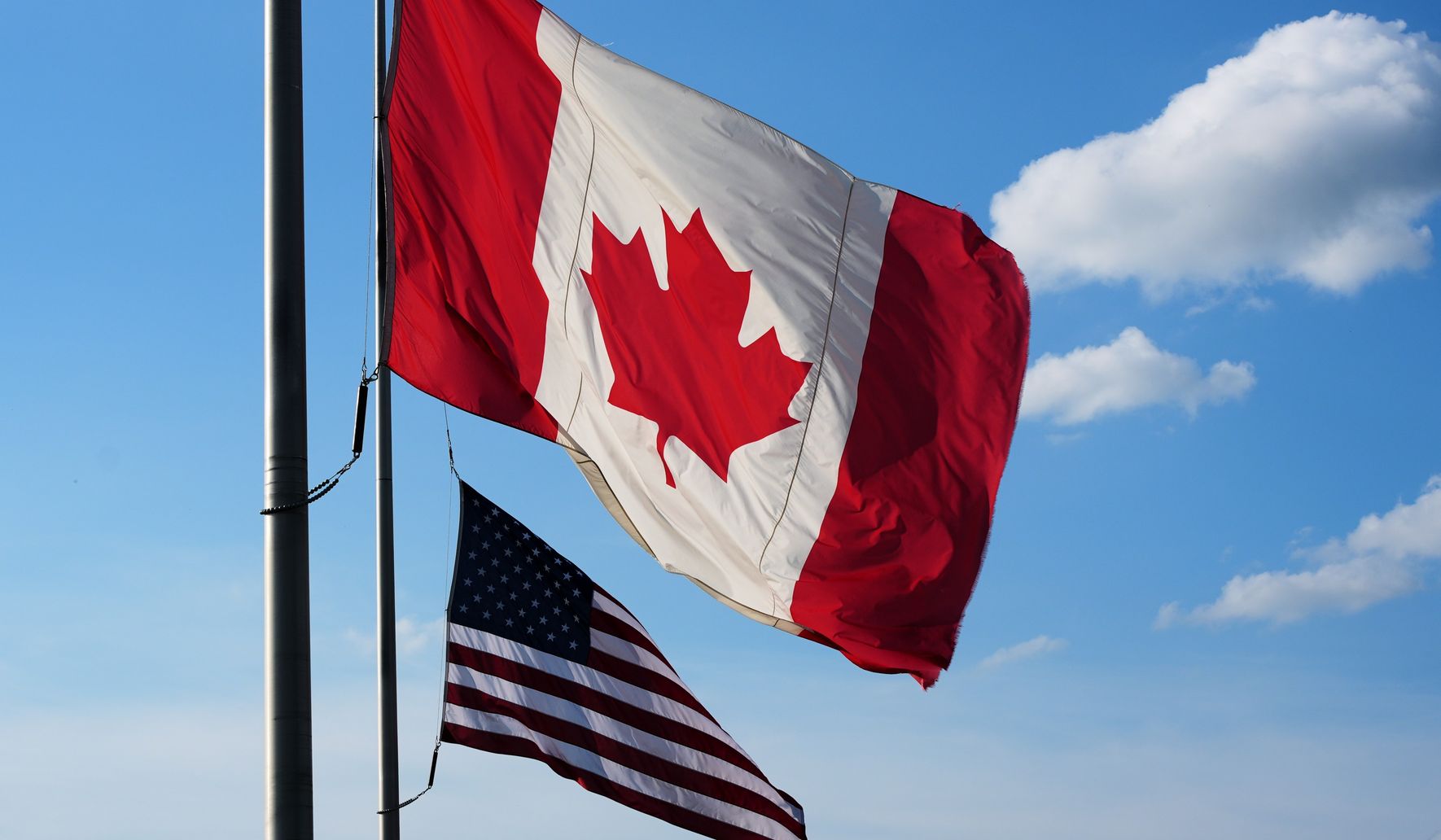
The Trump administration on Tuesday ordered federal agencies to stop buying Canadian-made goods for certain contracts, targeting items such as alcohol and dairy to prioritize American suppliers and strengthen procurement rules.
The administration announced Tuesday that it is directing government agencies to prohibit the purchase of Canadian-origin products, including alcohol and dairy, as part of federal contracts. This move is presented as a straightforward step to shift federal buying power back toward U.S. farms, factories, and distilleries. Officials framed the change as a correction to procurement habits that had favored foreign suppliers over domestic producers. The directive is aimed at ensuring taxpayer dollars support American jobs and industry.
At its core, the policy follows a clear Buy American logic: if the government spends billions on goods and services, it should favor American businesses whenever possible. From a Republican perspective, this is practical economics and sound patriotism rolled into one policy. The administration argues that federal purchasing must reflect national priorities, including economic security and supply-chain resilience. Those priorities have become more urgent after repeated disruptions and the recognition that domestic capacity matters in crises.
Targeting alcohol and dairy has political and economic symbolism as well as substance, because both sectors support rural communities and small businesses across many states. Distillers, breweries, and dairy farmers will likely welcome federal preference as a tangible market for their products. Local producers say guaranteed demand through federal contracts can stabilize prices and help small operations scale up. In this view, shifting procurement away from Canadian-origin goods is a direct investment in American livelihoods.
The directive will be implemented through procurement rules and contract language, with agencies instructed to update buying guidelines to reflect the new restrictions. Procurement officers will need clear standards to determine product origin and to enforce the prohibition consistently across departments. Authorities say exceptions will be narrow and clearly justified, to avoid undermining the policy’s intent. The administration emphasizes that transparency and enforceability are essential so dollars don’t quietly migrate offshore again.
Some critics warn of diplomatic friction with Canada and potential retaliation, but supporters argue that defending American industry should not be sacrificed for political niceties. From a Republican angle, reciprocity and fairness in trade demand that the United States leverage its own market power. If Canada objects, the administration can present this as an invitation to renegotiate trade terms that treat U.S. suppliers fairly. The policy sends a message: access to the U.S. federal market must be earned, not assumed.
Industry reaction is expected to split along predictable lines: Canadian exporters and trade groups will protest, while U.S. producers and state leaders in agriculture-heavy districts will applaud. State officials who rely on dairy and spirits production for jobs see this as a long-overdue rebalancing. Trade lawyers are already parsing procurement rules to assess how far the administration can go within existing statutes. Meanwhile, procurement teams on the ground will be preparing checklists to vet product origins and update contract clauses.
Beyond immediate market changes, the policy is part of a broader push to strengthen domestic manufacturing and reduce dependence on vulnerable cross-border supply chains. The administration frames it as a matter of national resilience as much as economic fairness, arguing that federal procurement should never create weak links in critical supply lines. Republicans emphasize that strong domestic supply chains protect national security, preserve working-class jobs, and keep manufacturing knowledge in America. The policy fits into that larger strategy by using purchasing power to reward domestic capacity.
Agencies will now begin revising procurement guidance and contract templates to reflect the prohibition on Canadian-origin goods for affected purchases, and federal buyers will be expected to document origin decisions more rigorously. Implementation details will determine how broadly the policy applies and whether limited waivers are permitted for unique circumstances. The administration is signaling it will use every available tool to ensure federal spending supports American industry and reduces reliance on external suppliers. Observers should expect a steady rollout of updated rules and oversight mechanisms in the weeks ahead.

