

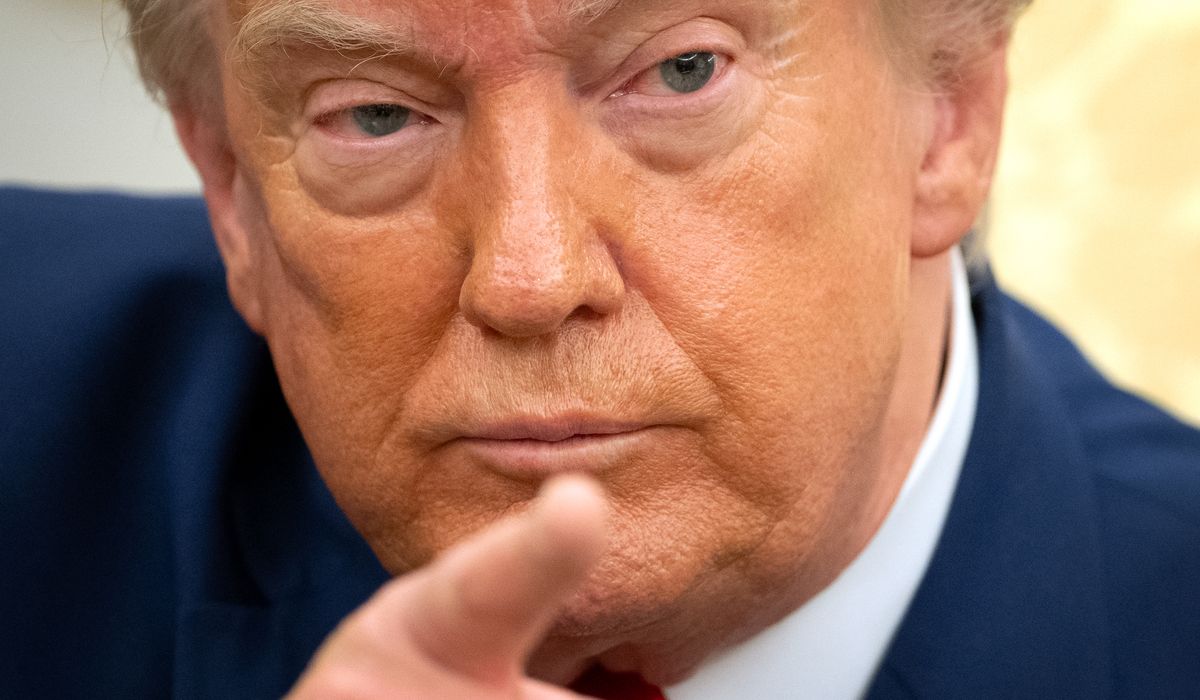
President Trump has approved an agreement with Saudi Arabia that could potentially provide the kingdom with uranium enrichment capability for its civilian nuclear program, according to two people familiar with the matter.
The White House action reported here signals a significant shift in U.S.-Saudi cooperation on nuclear energy, and it will likely draw intense scrutiny from lawmakers and experts. Giving a partner state enrichment capacity touches raw national security concerns because the same technology can be used for both power reactors and weapons programs. From a Republican perspective, the decision is framed around bolstering an important ally while insisting on strong safeguards to protect American and allied security.
Proponents argue that expanded nuclear cooperation supports Saudi economic development and energy diversification, reducing dependence on fossil fuels and strengthening bilateral ties. They point out that peaceful nuclear programs can be valuable tools for modernizing a partner state and aligning its interests with the United States. Still, those same proponents stress that any transfer of sensitive technology must come with ironclad, verifiable limits and U.S. oversight where possible.
Critics worry that enrichment capability, even if nominally civilian, raises the risk of proliferation in the Middle East and could spur a regional arms race. Iran looms as a nearby example that heightens these concerns, and officials will need to show how safeguards prevent diversion to military ends. Republican lawmakers who prioritize national security are likely to demand clear, enforceable guarantees and robust inspection regimes before endorsing this path.
The technical difference between importing reactor fuel and producing enriched uranium on site is not academic; it changes the balance of control. If a country can enrich uranium domestically, the need for foreign suppliers drops and the discretion over fissile material grows. Republicans generally accept that allies should advance economically, but they also insist that strategic choices never compromise U.S. security or the security of partners in a volatile neighborhood.
To win conservative support, the arrangement must include tough verification, prompt notification procedures, and strong penalties for violations. Congressional oversight and continued intelligence monitoring will be central to maintaining confidence in any deal that touches enrichment. Lawmakers will be watching for binding commitments that keep proliferation pathways tightly controlled.
The geopolitical argument in favor emphasizes a stable, reliable U.S. partner counterbalancing malign actors in the region. Supporting Saudi civilian nuclear capability can be presented as an investment in regional stability, energy security, and long-term diplomatic leverage. Still, framing it this way requires matching rhetoric with technical and legal measures that reduce the risk of Iranian-style breakout scenarios or unintended technology transfers.
Public and expert reaction will split along predictable lines: some will view this as prudent engagement that secures American interests, while others will see it as a risky loosening of long-standing nonproliferation norms. That division means the administration will need to be transparent about the terms and the safeguards, and it will need to show how American oversight remains meaningful and active. Republicans who back the move will emphasize allied strength and prudent constraints rather than blanket permissiveness.
Ultimately, the political fight over the agreement will play out in hearings, oversight demands, and public statements that test the balance between alliance management and nonproliferation responsibilities. The decision puts us at a crossroads where strategic partnership and proliferation risk must be reconciled. For conservatives, the calculus is straightforward: support partners, but with strict, enforceable limits that keep dangerous capabilities tightly under control.

