

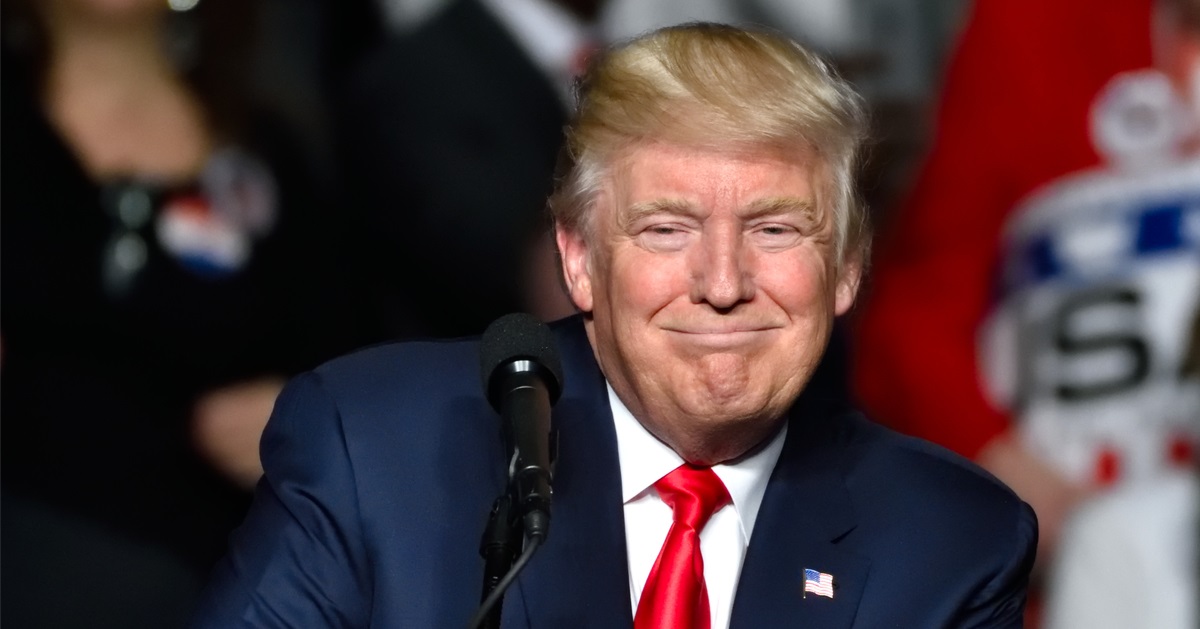
President Donald Trump publicly targeted five Republican senators for voting to limit his authority to use military force in Venezuela, calling their action a threat to national security and sharply criticizing their loyalty while the move has stirred a heated debate inside the GOP.
President Donald Trump has publicly targeted five Republican senators after they supported legislation aimed at barring future military action in Venezuela without explicit congressional approval. The senators named were Rand Paul of Kentucky, Susan Collins of Maine, Lisa Murkowski of Alaska, Todd Young of Indiana, and Josh Hawley of Missouri. Trump labeled the measure a threat to national security and framed the vote as an overreach that undermines his powers as commander in chief.
Trump’s public rebuke has sent clear shockwaves through the party and raised questions about unity at a delicate moment. He called out the senators on social media and said they should be “ashamed” of their votes and “should never be elected to office again,” language that makes reconciliation inside the GOP harder. That tone turns what could have been a constitutional debate into a personal dispute with political consequences.
The policy at issue is straightforward: the legislation would require congressional approval before any new military deployment to Venezuela, limiting unilateral executive action. Supporters of the bill argue it restores the Constitution’s separation of powers on questions of war and peace. Opponents, including the White House and many national security-minded Republicans, see it as a dangerous handcuff that could prevent rapid responses to crises.
Sen. Josh Hawley’s vote is especially notable given his profile as a populist ally who has often sided with the president on major fights. Hawley explained his decision in constitutional terms, writing on X, “Concerning Venezuela, my read of the Constitution is that if the President feels the need to put boots on the ground there in the future, Congress would need to vote on it.” His stance highlights a real legal argument that some conservatives respect, even as others view it as politically risky.
That tension between constitutional principle and political loyalty is the core of the dispute. Some Republicans insist that defending the president’s authority on national security is essential to deter adversaries and reassure allies, while others worry about unchecked executive power. The split shows how fragile party cohesion can be when legal theory collides with strategic concerns.
Sen. Susan Collins faces a unique political squeeze that illustrates the practical fallout of this vote. As the only one of these senators representing a state said to have been won by Vice President Kamala Harris in recent elections, Collins is staring at a tough 2026 reelection fight against strong Democratic opponents like Bernie Sanders-backed Graham Platner and Maine Gov. Janet Mills. Trump’s public criticism hands Democrats a ready line for the campaign trail and complicates efforts to hold the Senate.
Beyond Collins, the episode raises a broader question: is this a policy disagreement or a test of loyalty? Trump’s framing leans toward the latter, singling out allies who have otherwise backed him on big priorities. If the goal is to keep the party aligned heading into high-stakes politics, publicly shaming fellow Republicans who raise constitutional concerns seems counterproductive and risks splintering the coalition.
The debate is not going away anytime soon, and it forces Republicans to balance two real imperatives: preserving a unified stance on national defense while respecting constitutional checks on presidential power. That balancing act will shape intra-party dynamics and campaign narratives as 2026 approaches, with voters watching how the GOP manages criticism from within its own ranks. [[EMBED_TWITTER_PLACEHOLDER]]


1 Comment
This shows WHY Republicans, when given the reins of power, have the reputation for NOT being able to govern! Nobody wants just “YES” men, but just because you disagree with some action, doesn’t mean your THOUGHTS should outweigh the President’s decision! Advice is necessary and accepted; however, if all you offer is additional road blocks, you should consider RESIGNING!