

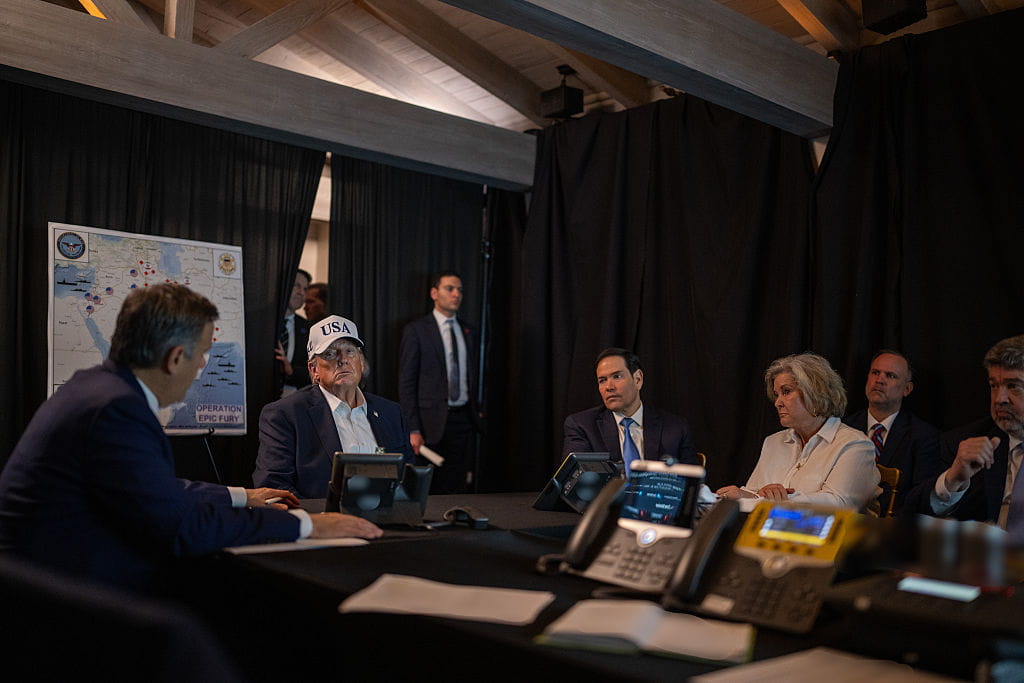
The recent weekend strikes alongside Israel against Iranian targets reignited the old fight over executive war-making power, with about half of Congress complaining that the president acted without prior authorization and critics framing the move as another unilateral use of force done on a weekend.
The president’s decision to strike Iran in concert with Israel came over a weekend, and many lawmakers immediately voiced outrage that they were not consulted first. About half of Congress publicly objected, arguing the Constitution vests the power to declare war in the legislative branch. Those complaints landed fast, but they reflect a long-standing tension between swift executive action and congressional oversight.
From a Republican perspective, the argument centers on the need for decisive deterrence when threats are immediate and intelligence is time-sensitive. Military moves made in coordination with allies are often based on operational windows that do not wait for lengthy political debate. Supporters say a president must be able to act quickly to protect American lives and interests, especially when working with a partner like Israel that shares regional intelligence and stakes.
Opponents frame this as a constitutional bypass, insisting that Congress’s role was sidelined and that asking for permission after the fact doesn’t satisfy democratic safeguards. They point to the War Powers Resolution and the idea that large-scale uses of force need legislative backing. That’s a valid check to guard against open-ended military commitments, but critics sometimes ignore the reality that modern threats can require split-second responses.
The political reaction split along predictable lines, with many Democrats and a share of Republicans denouncing the timing and process. For Republicans who back the strikes, the emphasis is on results: degraded enemy capabilities, reinforced alliances, and a message sent to adversaries that attacks on U.S. interests will be met with force. For those demanding more process, the issue is institutional: Congress must not allow its constitutional duties to be reduced to a post hoc press release.
Looking at precedent, presidents have long wrestled with how to square rapid military action and congressional authorization. This isn’t the first time an administration moved without prior approval, and it likely won’t be the last. The practical question for those who care about both national security and constitutional order is how to build procedures that allow for quick, limited responses while preserving Congress’s right to decide sustained or escalatory campaigns.
Coordination with Israel played a central role, and that partnership matters politically and militarily. Working with a sovereign ally lends legitimacy to targeted actions and can improve precision and intelligence sharing. It also complicates the political optics: opponents argue that joint operations should trigger joint briefings with lawmakers, while proponents say allied moves sometimes require confidentiality to prevent operational compromise.
There are sober risks to any strike: escalation, civilian harm, and regional instability. Even from a Republican viewpoint favoring strength, those risks mean the president must weigh the long-term strategic consequences, not just short-term tactical gains. The appetite for sustained entanglement should be limited, and when strikes are necessary they should be narrowly tailored and clearly tied to defensible objectives.
The core constitutional friction won’t vanish simply because one side claims necessity and the other cries overreach. Lawmakers on both sides should demand clearer rules of engagement and better, faster communication from the executive branch. If Congress wants real oversight, it must craft mechanisms that respect operational secrecy when needed but still provide meaningful input and limitations on extended military commitments.
What matters going forward is whether institutions adapt to balance speed with accountability. A president who uses force to protect American interests still needs legitimacy from the people through their representatives, and Congress that wants to preserve its prerogatives must propose workable solutions rather than only protest after the fact. The debate will continue, and the nation will watch how both branches respond next time a regional crisis demands urgent, coordinated action.

