

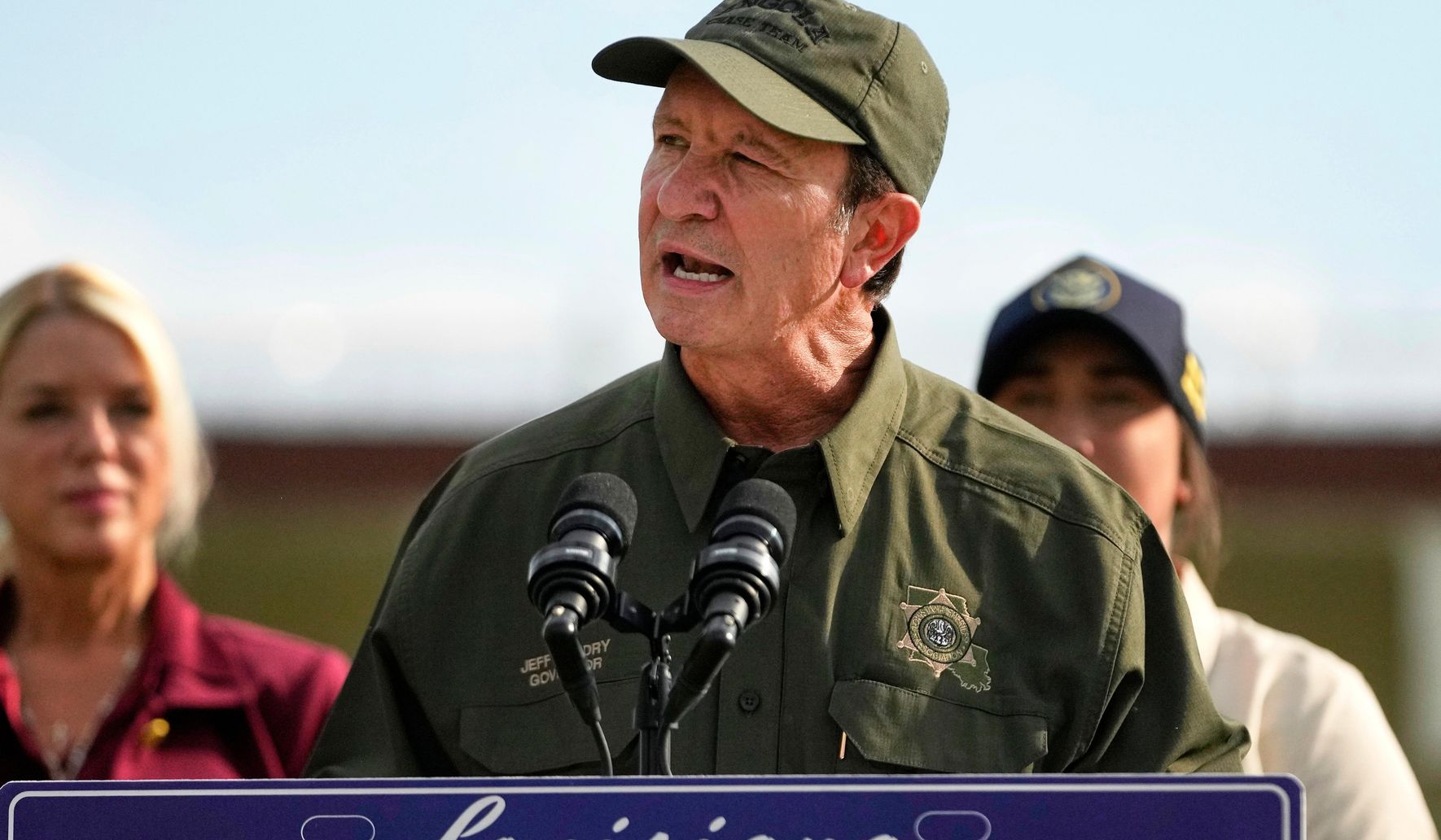
President Donald Trump announced he is appointing Louisiana Gov. Jeff Landry as the U.S. special envoy to Greenland, a move aimed at advancing American strategic, economic, and security interests in the Arctic region.
The president on Sunday announced the appointment of Louisiana Governor Jeff Landry to serve as a special envoy to Greenland, the vast, semi-autonomous territory of Denmark that has drawn growing attention for its strategic location and natural resources. The choice signals a targeted effort by the administration to make sure American priorities are front and center in Arctic affairs. Republicans view the pick as practical and forward-looking, putting a pro-energy governor in a role tied closely to national security and economic opportunity.
Jeff Landry arrives with a track record in state-level energy policy and a reputation for pushing development and infrastructure projects. As governor of Louisiana he has dealt with coastal resilience, port operations, and energy-sector permitting, experience Republicans argue translates well to an Arctic posting where logistics and resource access matter. The envoy role is not ceremonial; it is expected to involve negotiating partnerships, lining up private investment, and coordinating with military planners.
Greenland sits at the center of new Arctic geopolitics: shipping lanes are changing, mineral deposits are becoming more accessible, and great-power competition is intensifying. For conservatives, those shifts justify a robust U.S. presence to protect supply chains for critical minerals and to prevent adversaries from gaining footholds. An envoy focused on Greenland is intended to create channels for American companies and the U.S. military while reinforcing respect for the island’s autonomy.
Working with Denmark will be a diplomatic priority, since Greenland remains part of the Kingdom of Denmark and many defense arrangements run through Copenhagen. The U.S. has longstanding ties to the region, including a presence at Thule and cooperation on search and rescue and scientific research. The envoy will need to balance American urgency with respect for local governance, building relationships with Greenlandic leaders who are cautious about outside influence.
Energy and mining are obvious economic angles for the envoy to pursue, and Republicans emphasize the need to secure reliable access to raw materials like rare earths and other critical minerals. Greenland’s geology is attractive to companies looking for battery metals and other inputs for the clean-energy transition, and state-level experience in permitting and stakeholder engagement could help move projects forward. Advocates argue that responsible development could bring jobs and infrastructure to the island while reducing strategic vulnerabilities.
Security concerns are equally central. Russia and China have been active in polar planning, and the Arctic is increasingly a theater for military and intelligence competition. A dedicated envoy can coordinate defense cooperation, ensure bases and facilities are compatible with U.S. needs, and work with NATO partners to close gaps. From a Republican perspective, showing the flag diplomatically complements any military posture and deters rivals without escalating tensions unnecessarily.
There are practical hurdles ahead: Greenlandic public opinion, environmental sensitivities, and the complexity of international law in the Arctic. Any envoy has to manage local concerns about sovereignty and ecological impact while making the case for U.S. investment. Republicans see this as an opportunity to promote energy independence and economic development in ways that respect local authority and avoid heavy-handed intervention.
Economically, clearer U.S. engagement can unlock private-sector interest in ports, power infrastructure, and mineral processing facilities that are currently lacking in the region. That infrastructure would not only support extraction but also improve resilience for communities that face harsh weather and supply chain fragility. The envoy role can accelerate deals and remove bureaucratic friction that otherwise slows projects with strategic value.
What to watch next are the envoy’s first trips, the tone of coordination with Denmark, and early private-sector responses to invitations for investment. Republicans expect a practical, results-driven approach that focuses on defense cooperation, resource security, and sustainable infrastructure. The appointment of Jeff Landry will be judged on whether it turns strategic intent into tangible outcomes for both the United States and the people of Greenland.

