

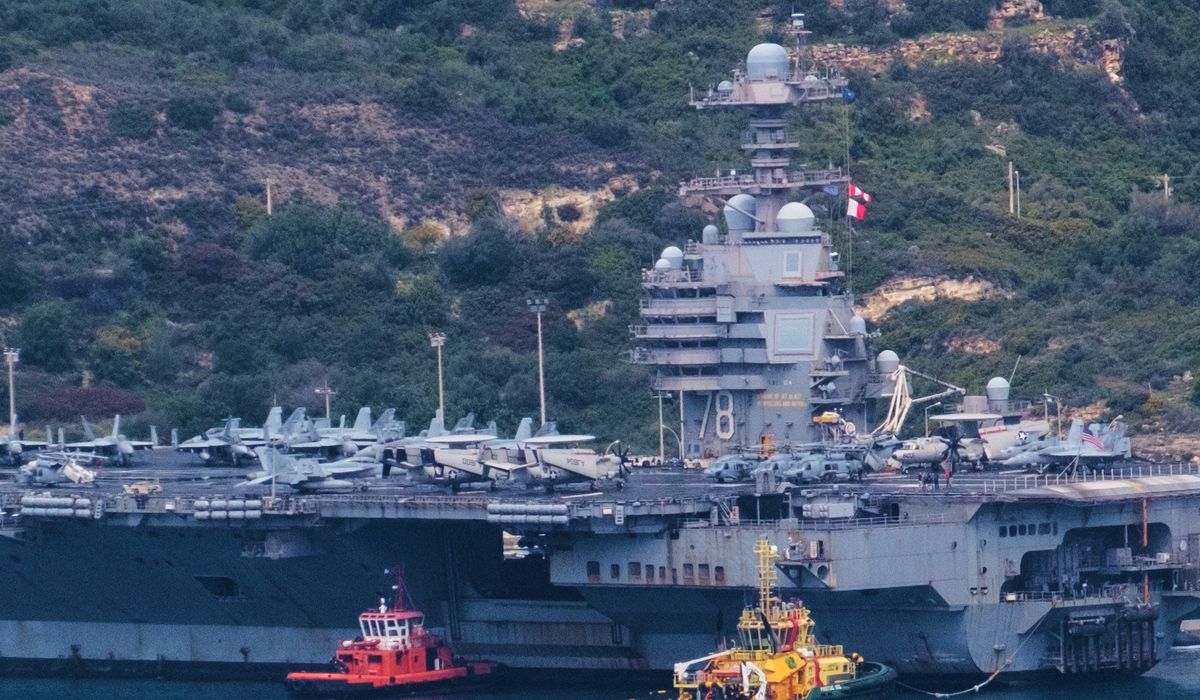
President Trump has ordered the U.S. Navy to remove the advanced launch system from the newest aircraft carriers and return to steam catapults, prioritizing proven reliability and simpler logistics.
President Trump is directing the Navy to take the Electromagnetic Aircraft Launch System off the newest carriers and put steam catapults back in place. This shifts the service away from a cutting edge but troubled technology toward a method that sailors know and maintain more easily. The decision reflects concerns about readiness and predictable performance in high-tempo operations.
Supporters argue the newer electromagnetic system introduced on the Ford-class carriers created logistical headaches and maintenance burdens that undercut combat readiness. EMALS promised smoother launches and less wear on airframes, but real-world reliability and sustainment have not lived up to expectations. For a military that must be ready on short notice, predictability matters more than experimental advantages.
Steam catapults have decades of service history and a large maintenance base across the fleet and industry. Shipyards, fleet maintenance crews, and aircraft squadrons have institutional knowledge built around steam launchers. Returning to that approach reduces the training curve and shortens supply chains for parts, which matters when time and resources are limited.
The move also signals a wider principle favored by many Republicans: prefer capabilities that deliver under pressure rather than tech that looks good on paper but struggles in regular use. Military procurement has to balance innovation with the practical realities of operations. When lives and missions are at stake, forces should not be forced to rely on systems that complicate deployments or increase downtime.
Cost and schedule pressure played a role in the debate over electromagnetic launchers since the Ford-class program began. New systems often bring unexpected fixes, retrofits, and testing programs that consume time and money. Leaders who worry about taxpayers and warfighter effectiveness see value in halting systems that require long tails of expense and uncertainty.
Another issue is industrial base readiness. Steam catapult components are produced by established suppliers across the country, keeping skills and jobs tied to current work streams. Reinstating those production lines can stabilize the industrial base and avoid the risks that come with narrow, single-source technologies. That stability matters for surge production in a crisis.
Shipbuilders, sailors, and aviators will need time to adjust ship designs and training pipelines, but the transition should follow a clear, disciplined timeline. Planning for retrofits and construction changes will require tight oversight to avoid repeating past cost overruns. Republican leaders have pushed for stronger accountability in defense programs to make sure changes actually save time and improve readiness.
Operational commanders have been candid about what they need from a carrier: a reliable flight deck that can generate sorties day after day under stress. From that perspective, simpler systems that are well understood can be force multipliers. The Navy still benefits from technical innovation, but not at the expense of steady, dependable capability on the seas.
The broader debate is a reminder that innovation should be practical and field-tested before it displaces established solutions. President Trump’s order to return to steam catapults reflects a preference for systems that meet the Navy’s immediate operational needs. The focus now will be execution, oversight, and ensuring sailors have what they need to keep carriers mission ready.

