

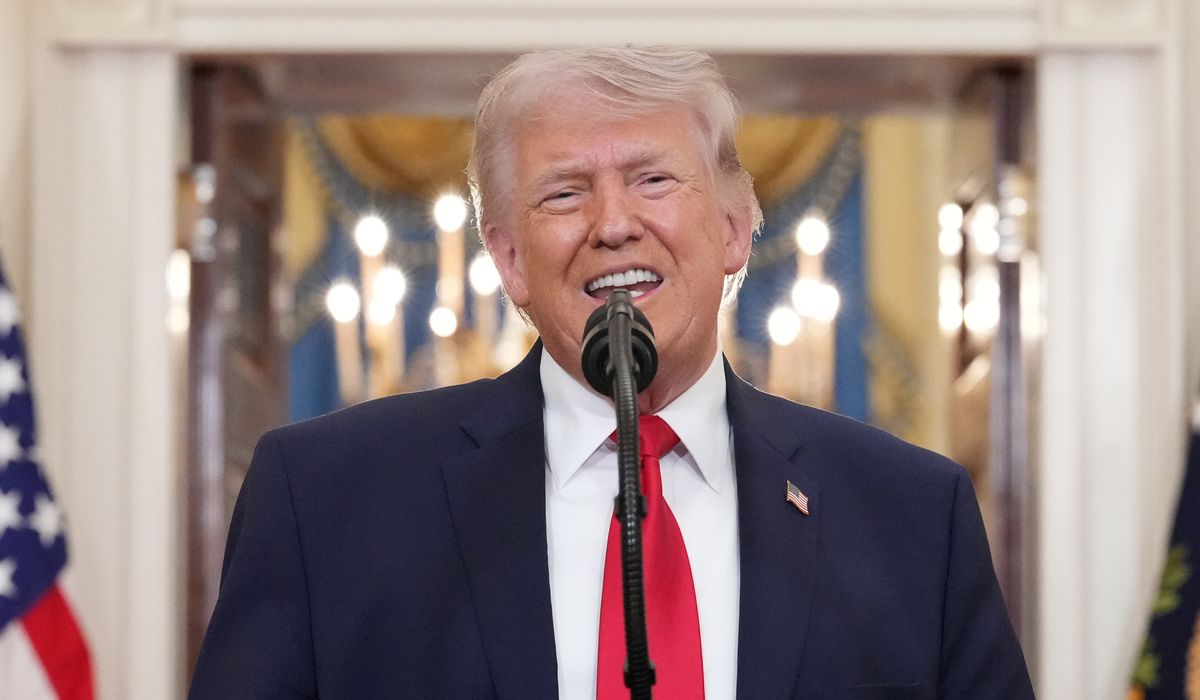
President Trump on Wednesday made the case to a skeptical American public that the military operation in Iran is necessary to stop Tehran from building a nuclear weapon.
The administration presented a straightforward argument: Iran’s nuclear activities had reached a point where inaction risked unlocking a nuclear-armed Tehran. That case rested on a mix of intelligence assessments, recent Iranian moves, and a judgment that deterrence alone was no longer reliable. Republicans have argued that decisive action now prevents far greater threats and costs later.
That message met public skepticism, and the president addressed it directly to reassure citizens that the operation was limited and targeted. He emphasized that American forces acted with a clear objective to neutralize capabilities rather than to start a wider war. For many on the right, this was a necessary, responsible step to protect American lives and regional stability.
Officials framed the operation as preventive, not provocative, saying the goal was to halt progress toward a weapon rather than to punish Iran for unrelated behavior. The argument is that allowing Iran to cross the nuclear threshold creates an irreversible strategic reality. Conservatives who support the move stress that credible deterrence depends on demonstrating willingness to act when vital national security interests are at stake.
Critics countered that military options carry risk and that diplomacy should have been exhausted first, but the administration argued diplomacy had failed repeatedly to curb Iran’s ambitions. Republicans pointed to years of noncompliance and concealment as evidence that talks alone were insufficient. They argued that a clear, enforceable military outcome was necessary to reset deterrence against Tehran.
On the legal front, the administration cited existing authorizations and international law principles to justify the operation while promising oversight and transparency to Congress. Supporters on the right said this balanced respect for constitutional checks with the need for swift action. They argued the president acted within his duty to defend the country when imminent threats could not wait for slow-moving political debate.
Operational details remained deliberately sparse in public statements, which is standard for national security reasons and to protect ongoing capabilities. Republican voices insisted that withholding tactical specifics does not mean lack of accountability, and that classified briefings can satisfy congressional scrutiny. The emphasis was on results: degrading the program and buying time to build a stronger deterrent posture.
Regional allies reacted in mixed ways, but many understood the logic behind stopping the nuclear path early rather than face a nuclear arms race in the Middle East. Conservatives highlighted that allowing Iran nuclear capability would embolden proxies and destabilize key partnerships. The administration framed the action as part of a broader strategy to protect allies and preserve American influence.
Economic and strategic trade-offs were part of the decision calculus: avoiding a future where containment requires far larger military commitments or leaves U.S. partners vulnerable. Republicans argued that preventing a nuclear Iran is both fiscally prudent and strategically necessary. The administration said the operation aimed to limit long-term costs by acting now to neutralize a critical threat.
Messaging to the American public stressed clarity and resolve, with repeated assurances that American lives and interests were the primary concern. Republican leaders pushed back against suggestions that the operation was reckless, framing it instead as disciplined and narrowly focused. They argued that decisive leadership, not hesitation, keeps the country safe.
While debates about consequences and accountability will continue, supporters framed the action as a hard but necessary choice to prevent Tehran from crossing an unacceptable line. The administration promised continued vigilance and a readiness to back diplomatic or economic tools when they can be effective. For Republicans backing the move, the core view is that protecting the nation required action before a nuclear threat became a reality.

