

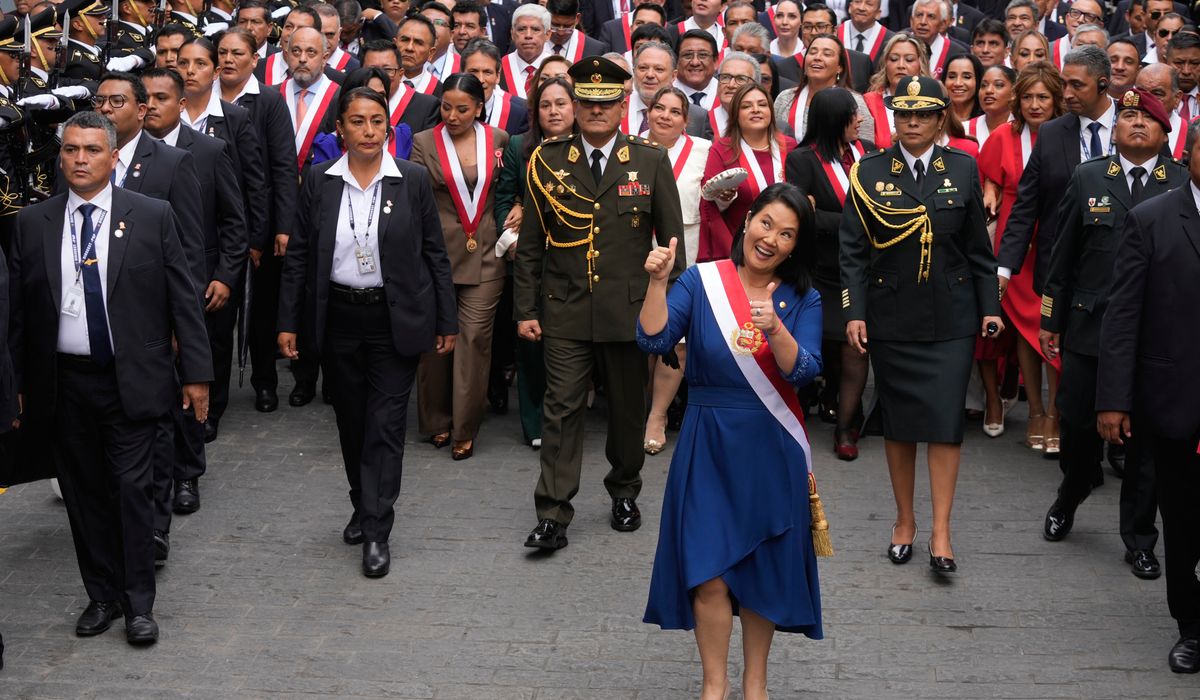
The Trump administration is pressing for reliable partners in the Western Hemisphere to take on narco-traffickers and blunt growing Chinese influence, and a strong contender on the horizon is Keiko Fujimori.
Washington needs allies who can cooperate on law enforcement, intelligence sharing, and secure supply chains, and a willing Peru could fit that role. The focus is on practical steps that reduce cartels’ reach and push back against Beijing’s economic foothold in the region. That combination of security and economic policy is where a partnership could deliver concrete results.
Drug cartels are not a law enforcement problem you can wish away; they are transnational networks that exploit weak institutions and open borders. The Trump administration has consistently prioritized tough, cross-border cooperation to cut off supply routes and choke cartel profits. Working with regional leaders who share that approach makes it harder for cartels to move drugs, cash, and weapons across the hemisphere.
Chinese influence presents a second, strategic challenge that goes beyond trade and infrastructure projects. Beijing’s investments often come with strings attached: control over critical assets, leverage in local politics, and long-term economic dependence. A partner that values sovereign decision making and transparent investment can help set a counterexample to deals that leave countries beholden to Chinese state interests.
Keiko Fujimori represents a political force in Peru that leans toward security-first policies and market-friendly economics, which aligns with the Trump administration’s priorities. Her political brand centers on law and order and on resisting corruption, at least as framed by her supporters. If she commits to strong bilateral cooperation, Washington could find a pragmatic, ideologically compatible ally in Lima.
Concrete cooperation would look like enhanced intelligence sharing, coordinated interdiction operations, and capacity building for Peruvian law enforcement. Those are the kind of low-drama, high-impact moves that make life harder for cartels overnight. They also send a clear message to Beijing that partners in the hemisphere are choosing sovereignty and transparent investment over opaque deals.
Economic policy matters too. Supporting infrastructure that diversifies trade and improves customs oversight reduces both cartel opportunities and dependence on a single foreign power. The Trump approach prefers private investment and regulatory transparency over loans tied to political influence. Helping regional partners build resilient economies is as much a defense strategy as deploying police resources.
Diplomacy should be straightforward: offer targeted support where it strengthens Peruvian institutions without micromanaging politics. That means assistance in border security technology, training for prosecutors and judges, and collaboration on anti-money-laundering efforts. It also means pushing for procurement and investment standards that favor competitive, accountable partners instead of opaque state-backed projects.
There will be skeptics on both sides who warn about overreach or unintended consequences, and those concerns deserve an honest debate. But hard-headed Republicans see value in clear priorities: protect Americans from drugs, back regional partners who defend their own sovereignty, and oppose the expansion of authoritarian influence. Pragmatic, security-focused cooperation with leaders like Keiko Fujimori could fit that mold and deliver quick wins.
Policymakers in Washington should map out specific, measurable goals and timelines so partnerships produce results rather than slogans. Short-term metrics—seized shipments, disrupted trafficking corridors, and transparent bids on infrastructure projects—will show whether cooperation is working. If Lima matches commitments with action, the U.S. gains leverage to expand successful programs across the hemisphere without resorting to empty rhetoric.

