

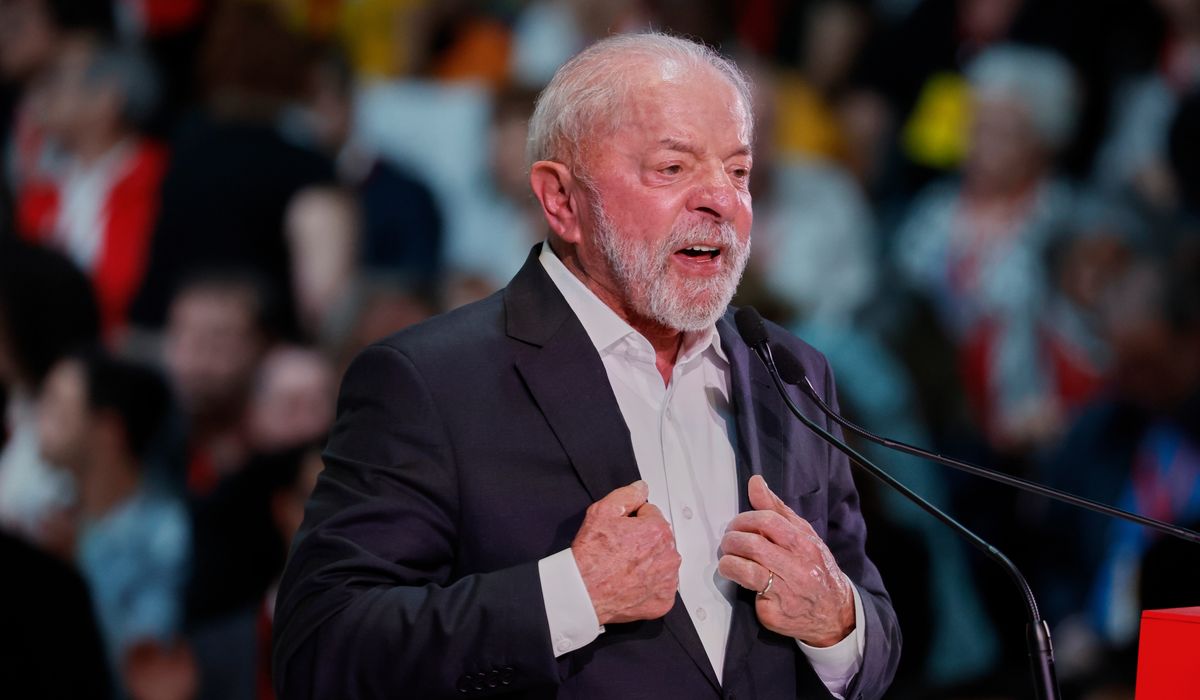
President Donald Trump will host Brazilian President Luiz Inacio Lula da Silva on Thursday for talks about shared economic and security issues, a White House official said.
The meeting brings two influential leaders together at a time when the Western Hemisphere faces shifting economic ties and growing strategic competition. From a Republican perspective, this is an opportunity to advance American interests while pressing for practical cooperation on trade, energy, and regional security. Both capitals say the agenda centers on shared economic and security issues, and officials expect concrete discussions rather than symbolic gestures.
Trade and investment will be central to the talks, with the United States looking to expand market access and level playing fields for American businesses. Republicans want to see reciprocal, enforceable commitments that protect intellectual property, reduce barriers, and encourage energy and agricultural cooperation in ways that benefit U.S. workers and farmers. Brazil’s vast market and natural resources make it a critical partner for pragmatic economic engagement that balances competition with responsible commerce.
Energy and supply chain resilience are likely to figure prominently, because both countries have strong stakes in stable energy markets and reliable commodities. The Trump administration views energy independence and secure supply routes as national security issues, so cooperation with Brazil on oil, biofuels, and critical minerals matters in Washington. Strengthening these ties can reduce reliance on adversarial suppliers and create jobs back home while supporting Latin American partners.
Security cooperation will aim at practical threats like organized crime, drug trafficking, and illicit networks that cross borders and harm everyday Americans. Republicans typically press for operational collaboration, shared intelligence, and focused assistance that helps partner nations secure their frontiers without unnecessary dependency. A results-oriented approach means measurable outcomes, such as joint operations, training programs, and better information sharing.
On geopolitical competition, the talks offer a forum to address the influence of external powers in the region, and Republicans will likely raise concerns about strategic rivals expanding their footprint. U.S. policy under Republican leadership emphasizes the need to counter malign actors through diplomacy, economic leverage, and robust partnerships with willing partners. Encouraging Brazil to align with democratic countries on key security and trade issues benefits both hemispheric stability and American strategic interests.
Democracy and rule-of-law issues may surface in private discussions, framed around promoting predictable institutions and accountable governance that foster long-term investment. While Republicans favor sovereignty and noninterference, they also prioritize stable, market-friendly governments that protect property rights and enforce contracts. Conversations on governance are expected to be candid but focused on practical reforms that encourage U.S. engagement rather than ideological lecturing.
The White House will likely seek commitments that translate into tangible benefits for American citizens, including job creation, stronger supply chains, and safer communities. Republicans often measure diplomatic success by results at home, so any agreement will be weighed against whether it produces measurable economic gains or security improvements for the United States. The tone of the meeting is expected to be businesslike, emphasizing accountability and mutual gain.
Brazil’s role in regional institutions and environmental discussions may come up, especially where bipartisan U.S. interests intersect with conservation, energy, and agricultural policy. From a Republican angle, environmental cooperation should be pursued in ways that do not disadvantage American industries or weaken energy security, and that reward responsible stewardship without punitive trade consequences. Practical collaboration on reforestation, sustainable agriculture, or clean energy technologies can be mutually beneficial if pursued through market-friendly mechanisms.
Ultimately, this encounter is an opportunity to reset or deepen ties based on mutual benefit rather than vague promises, and Republicans in Washington will push for clear deliverables. The White House official’s statement framing the visit around economic and security issues sets the expectation that outcomes, not optics, will define success. Both sides have incentives to show progress quickly, because real-world results bolster political support at home and strengthen the foundation for future cooperation.

