

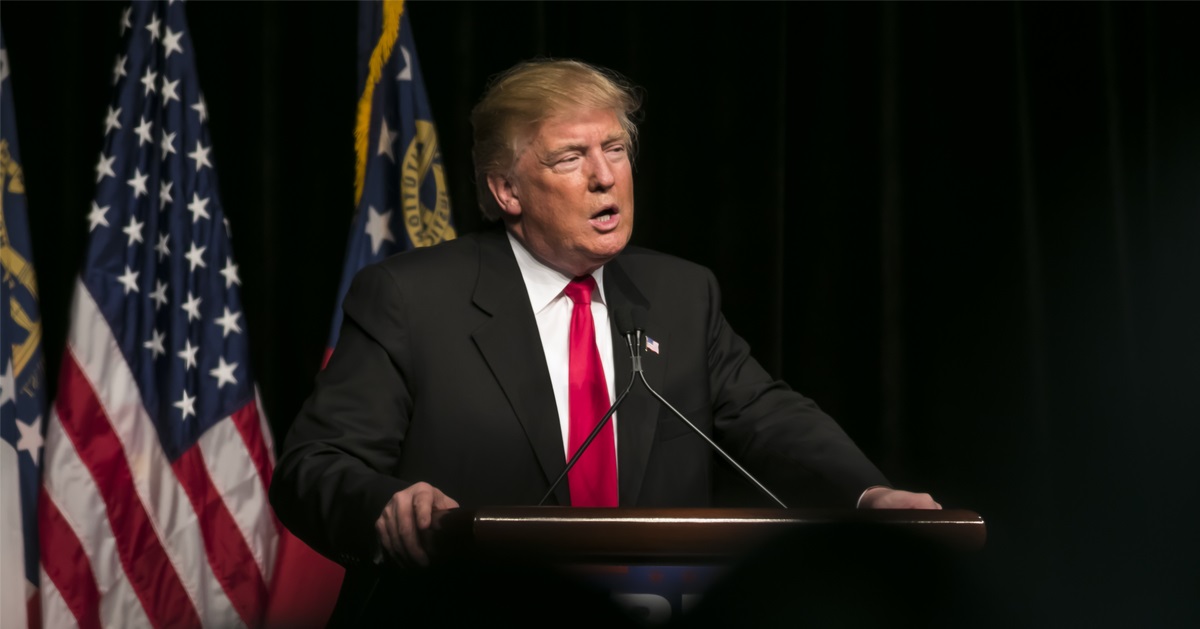
President Trump has announced he will sign an executive order to guarantee a dedicated four-hour broadcast window for the Army-Navy game, framing it as a defense of tradition against commercial pressures in college football.
On Saturday, Trump posted his intent on social media to lock in an exclusive broadcast slot for the Army-Navy rivalry, saying he will act to protect the game’s place on the second Saturday in December. The announcement follows his presence at the 126th Army-Navy game on Dec. 13, 2025, at M&T Bank Stadium in Baltimore, where Navy edged out Army 17-16 and claimed the Commander-in-Chief’s Trophy. His message makes clear he sees a cultural duty in preserving this long-standing matchup.
This decision comes as the NCAA moves to expand the College Football Playoff, and many worry that playoff growth will squeeze the Army-Navy game out of its traditional window. Trump framed the threat bluntly, warning that the push is motivated by “Big TV Money,” and argued that networks chasing higher ratings could displace a game tied closely to military honor. From his view, some events deserve protection that market logic should not override.
In his public statement Trump promised to “soon sign” what he called a “Historic Executive Order” to ensure the game gets an exclusive four-hour broadcast. He said plainly, “I will soon sign a Historic Executive Order securing an EXCLUSIVE 4 hour Broadcast window, so this National Event stands above Commercial Postseason Games.” That line is meant to signal both the seriousness of the action and a refusal to let television schedules dictate a national tradition.
Supporters see this as a principled stand for tradition and patriotism, not a stunt. To many conservatives, the Army-Navy contest is more than a sports date on a calendar; it’s a public ritual honoring service members and military values. Trump’s presence at the event—his seventh appearance in Baltimore, walking the field with Lt. Gen. Steven Gilland and greeting players before the coin toss—underscored his personal investment in keeping the game intact.
Critics will call any executive order aimed at broadcasting choices an overreach into private media decisions, and that argument has traction among constitutional purists. Still, the counterargument from a Republican viewpoint is straightforward: when cultural cornerstones are threatened by corporate greed, leadership should step in. For those who watch the rivalry as an expression of national pride, the question is whether schedules should bow to ad revenue or defend civic traditions.
The narrow Navy victory and the awarding of the Commander-in-Chief’s Trophy added drama on the field, but the larger issue Trump raised is about future generations seeing this contest uninterrupted. He also signaled he remains engaged with college football generally, noting plans to attend the College Football Playoff championship in Miami with Secretary of State Marco Rubio. That balance—supporting the sport while reserving a special place for a uniquely American rivalry—is the core of his pitch.
Whether an executive order can or should reshape broadcast calendars is bound to spark legal and political debate, but the move taps into a broader conservative concern about commercialization eroding public culture. Trump framed it as a defense of something sacred: “The Army-Navy Game is one of our Greatest American Traditions — Unmatched Patriotism, Courage, and Honor!” For his supporters, that claim makes the executive action not only sensible but necessary.

