

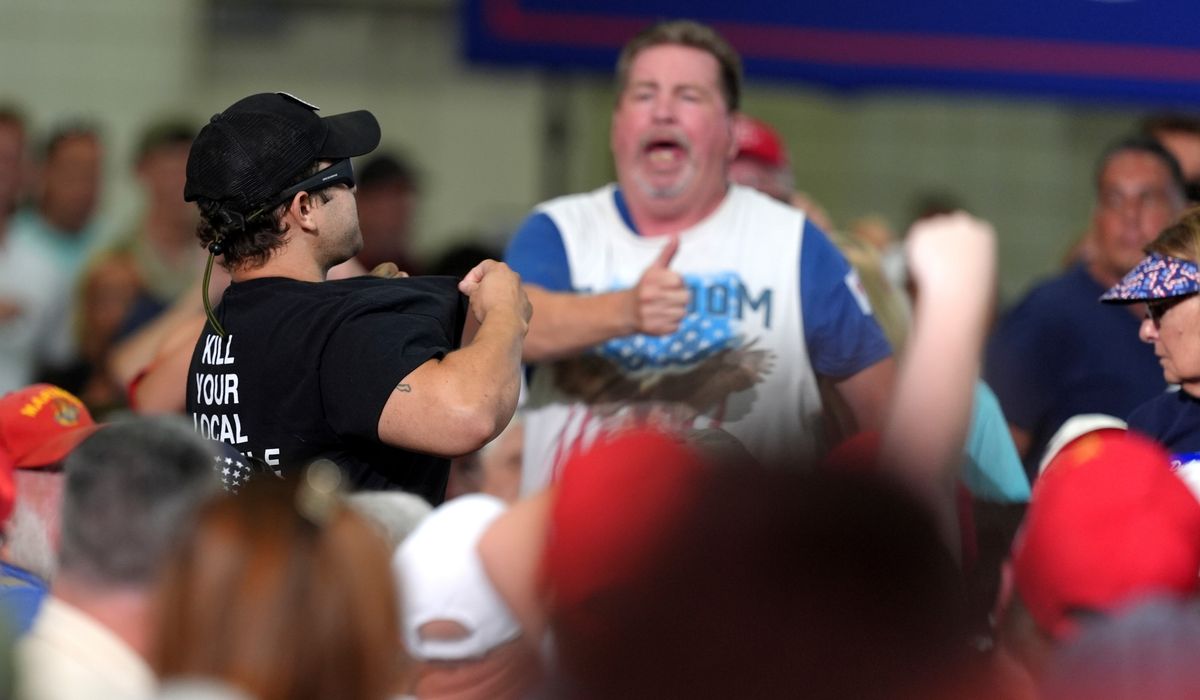
Two protesters were removed from President Trump’s Myrtle Beach rally, including one who wore a t-shirt emblazoned “Kill Your Local Pedophile.” Security escorted both from the venue as the crowd reacted, and the event continued without major interruption. The incident highlighted tensions at political gatherings between free expression and maintaining order.
The rally in Myrtle Beach drew a large crowd of supporters and a few demonstrators who wanted to make a bold statement, but organizers and law enforcement moved quickly when one protester crossed a line with a provocative shirt. Authorities escorted two people out, and attendees voiced their opinions loudly as the situation unfolded. Those actions underscored that public safety inside a paid event matters more than a fleeting attempt to provoke.
Supporters at the rally cheered the prompt response, seeing it as a straightforward enforcement of event rules that kept the program on track. Republicans believe that maintaining secure, orderly gatherings is part of upholding civil society and protecting attendees from intimidation. Swift removal of disruptive actors sends a clear message that rallies are for political engagement, not platforms for violent slogans.
There are still principles at stake: free speech remains central, but private events have rules and consequences when rhetoric crosses into calls that suggest harm. Nobody should be punished for dissenting, yet organizers also have a responsibility to remove people whose behavior threatens safety or normal civic discourse. Handling those moments calmly and decisively keeps the focus on policies and the message the crowd came to hear.
The t-shirt that read “Kill Your Local Pedophile.” forced an awkward line to be drawn between shock tactics and actual endorsement of violence, and many in the audience saw it as unacceptable. From a Republican standpoint, bold messaging is fine, but promoting harm or suggesting vigilante actions is not the same thing as passionate protest. That distinction matters when rallies are expected to be peaceful forums for debate and political energy.
Video and accounts from the event showed supporters quickly returning to chants and applause for the president after the protesters were moved out, indicating the disruption had limited staying power. Organizers and security aimed to minimize distractions and keep the agenda moving, a practical approach voters often appreciate. When crowds see the rule of law applied evenly inside venues, confidence in event safety improves.
Local law enforcement worked with event staff to manage the situation, and no prolonged confrontation developed, which keeps the narrative simple: disruption removed, show continued. Republicans prefer enforcement that is firm but restrained, avoiding escalation while protecting citizens’ rights to attend events safely. The scene in Myrtle Beach reinforced a recurring theme for conservative voters: public order matters and should be preserved at political gatherings.
Critics will make arguments about free speech and dramatize the moment, but the immediate effect was to keep the rally on track and the audience engaged with the president’s remarks. Organizers will likely review procedures and remind attendees of conduct guidelines, while supporters move on to the policy discussions and campaign themes that brought them out. For many in the crowd, the swift response simply meant the event could deliver its message without being derailed by a handful of attention-seeking demonstrators.

