

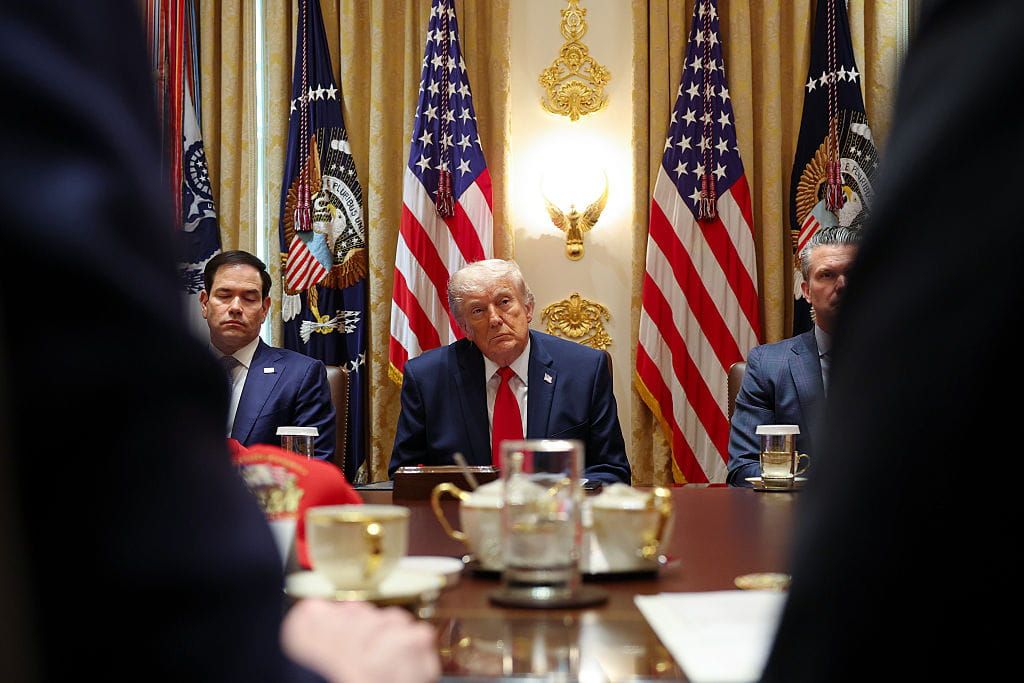
US forces struck targets in Iran while President Trump warned that he will ‘Finish the Job’ if negotiators cannot reach a deal, and “Negotiations to end the conflict are still underway.”
On May 28, 2026, U.S. military action against Iranian positions signaled a clear shift from deterrence to direct response. The strikes were presented as targeted, limited in scope, and tied explicitly to the administration’s red lines. Officials framed the move as both punitive and preventive, designed to protect American interests without triggering uncontrolled escalation.
President Trump made a hardline promise in public remarks, saying he would ‘Finish the Job’ if talks failed to secure American safety and regional stability. That pledge landed precisely as intended with a constituency that favors strength over drawn-out bargaining. For Republicans, the message is simple: weakness invites aggression, and decisive action restores deterrence.
“Negotiations to end the conflict are still underway.” Those words sit at the center of the policy debate, reminding everyone that diplomacy and force are being used in parallel. But for many conservative voters, diplomacy must be backed by credible consequences, and that view shaped the public reaction to the strikes. The ongoing talks are necessary, yet they must not be allowed to become cover for endless concessions.
Supporters say the strikes were a measured response that made use of precise intelligence and calibrated firepower. They argue the operation showed resolve without launching a broad war, aiming to degrade Tehran’s capacity to threaten the region. From this perspective, striking now preserves freedom of action later and keeps adversaries guessing.
Still, successful military moves require clear political objectives, adequate resources, and a plan for follow-through. Republicans emphasize that strategy should include achievable benchmarks and timelines, not open-ended missions. If the administration follows through on its threats, those metrics must be transparent so the public and Congress can judge progress.
There is also a diplomatic angle that conservatives don’t dismiss: leverage matters. Strikes that are surgically executed can strengthen negotiators’ hand at the table, forcing opponents to take U.S. demands seriously. The goal is to convert military pressure into meaningful concessions without sacrificing national interests for the sake of short-term calm.
International responses were mixed, with some partners urging caution and others privately acknowledging the necessity of a firmer posture. For Republicans, allied unease does not outweigh America’s obligation to defend itself and its regional partners. Allies appreciate predictability, and credible force remains the fastest route to predictable outcomes.
Domestically, the President’s vow resonates with a base that prizes clear commitments and visible results. Conservative voters have repeatedly shown they prefer leaders willing to use strength to secure peace, not leaders who offer indefinite negotiations. That political reality is driving Republicans in Congress to press for oversight that supports, but also constrains, open-ended engagement.
Concerns about escalation are real and must be taken seriously, which is why many on the right insist on a narrow, objective-driven campaign. The calculus is not reckless; it is about aligning means with ends so the U.S. can achieve a durable deterrent. If the administration is prepared to ‘Finish the Job,’ it should also be prepared to explain what finishing looks like and how success will be verified.
Looking ahead, the interplay between force and diplomacy will set the tone for U.S. policy in the region for years to come. Republicans argue that a firm stance now can prevent larger wars later by removing incentives for aggression. As talks continue, the country will watch whether measured strikes translate into a stronger negotiating position or simply extend a dangerous standoff.

