

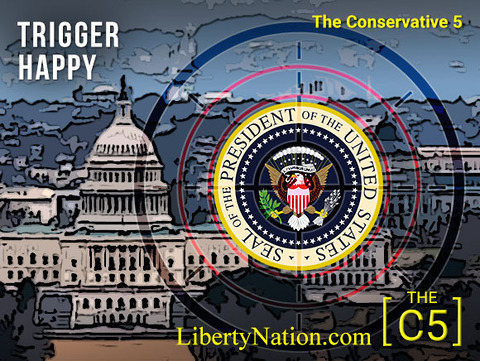
An unsettling incident at the White House left Americans asking blunt questions about intent, security, and how the story will be told.
“Was it another attempt on the president’s life, or just crazy needing an outlet?” That line has been repeated in breathless tones across social feeds and cable screens, but the facts remain thin and messy. The scene was chaotic, evidence sparse in public view, and official accounts shifted enough to invite skepticism. People on both sides of the aisle deserve straight answers, not spin.
The scene outside the White House exposed real gaps in clarity from agencies meant to protect our leaders and inform the public. Witness testimony arrived in fragments, law enforcement releases moved slowly, and pundits rushed to frame motives before investigators finished basic work. A Republican view expects competent security, accountable agencies, and crisp public communication when the nation’s capital is touched by violence. Anything less fuels rumor and erodes trust.
From a conservative perspective, the immediate questions are practical and procedural: who was involved, what weapon or device was used, and how did the breach happen if there was one? Those are not speculative demands; they are basic operational facts that national security professionals should deliver quickly. When officials hedge or leak partial narratives, it creates an opening for politicized interpretations and encourages dangerous misinformation to spread.
There is also a cultural dimension here that Republicans should acknowledge without apology. Violent rhetoric on the left and right has consequences, and normalization of extreme language increases risk. That reality does not erase individual mental illness or lone-actor pathology, but it does mean public figures must be responsible about how they talk about political opponents. Accountability for rhetoric and for security lapses must coexist.
Media handling of the incident has highlighted another problem: narrative preference over nuance. Reporters and anchors raced to fit the event into familiar frames—assassination attempt, protest gone wrong, or deranged loner—rather than stick to verified detail. Conservatives seeing bias in coverage will note how quickly media outlets jump to conclusions that fit their worldview, then struggle to correct the record when new facts emerge.
Investigators should focus on the basic criminal and forensic work that yields answers: chain of custody for evidence, who had motive and means, and whether this was coordinated or opportunistic. Those are the same priorities regardless of political color; we want thorough, unhurried work that respects the rule of law. The public should expect updates paced by the investigation, not by television ratings or social media headlines.
Politically, this event will be weaponized by factions eager to score points, and that will be a test of conservative discipline. Republican leaders who rush to politicize without data only hand the narrative to opponents and to the media. A better posture is firm demand for facts, criticism of any procedural failures, and refusal to indulge wild speculation until investigators publish their findings.
Finally, there is a policy angle about protecting high-profile targets and public spaces without turning the capital into a fortress that cuts citizens off from civic life. Security must be intelligent and effective, and elected officials should ensure agencies have resources and clear protocols. At the same time, transparency about how decisions are made and why certain procedures exist will help restore public confidence in those institutions.

