

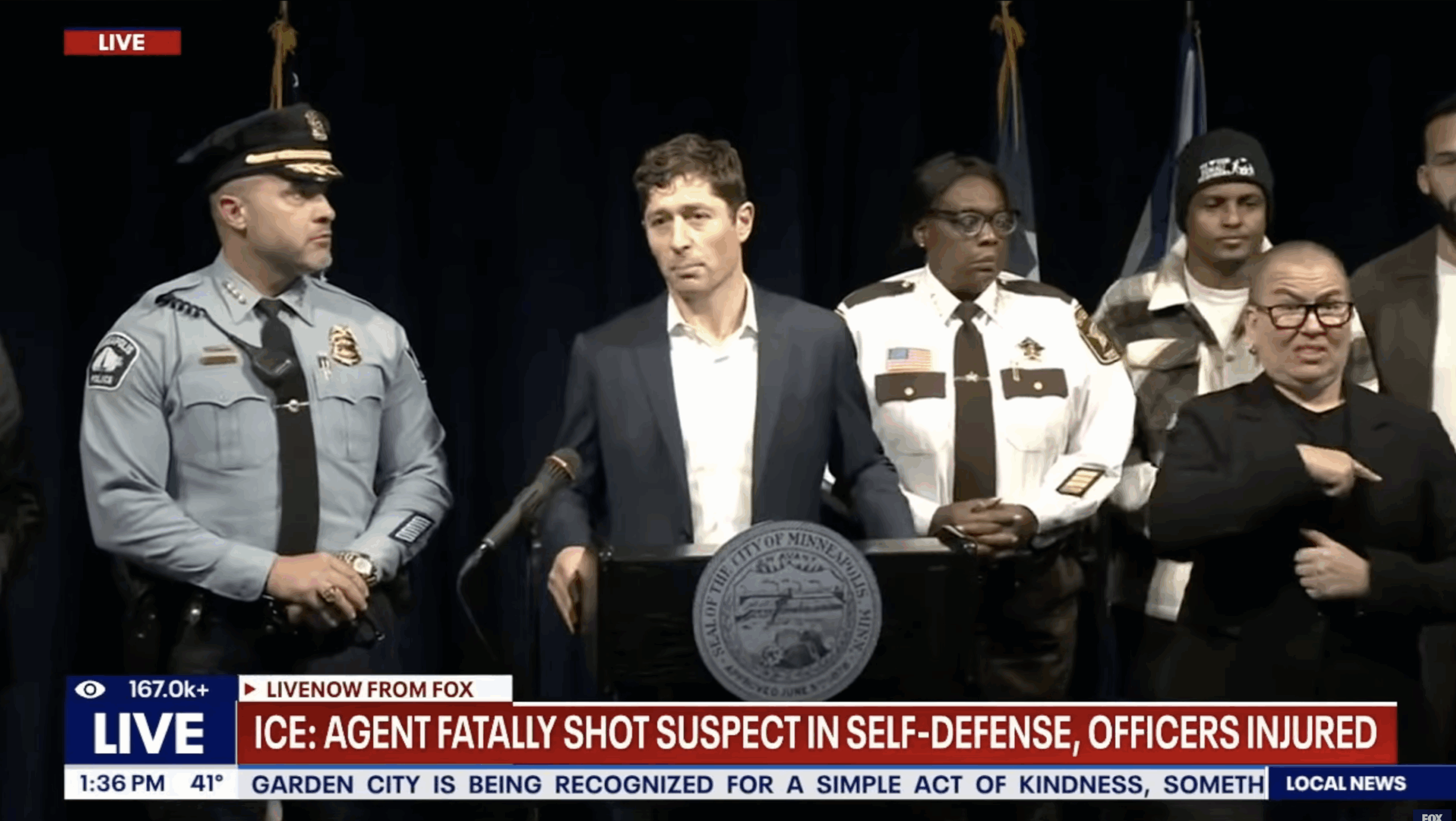
A woman died after her vehicle accelerated into an ICE agent during an encounter in Minneapolis on Wednesday, and the Department of Homeland Security said the ICE agent fired what it described as a defensive shot while video appears to show the vehicle making contact with the agent.
The scene unfolded in Minneapolis when a woman accelerated her vehicle toward an Immigration and Customs Enforcement agent during an encounter on Wednesday. According to the Department of Homeland Security, the ICE agent fired what the Department of Homeland Security described as a defensive shot. Video footage released or circulating appears to show the woman’s vehicle making contact with that agent during the incident.
Seconds before the collision, law enforcement officers can be seen issuing commands that appear intended to stop the vehicle and control the encounter. Body-worn cameras and surveillance video are central pieces of evidence in cases like this, and they will be examined closely to establish the sequence of actions. Investigators will look to confirm what commands were given, whether they were followed, and how the contact occurred.
Officials have emphasized the need for a thorough, factual review rather than rush to judgment from any quarter. This approach is especially important when a shot is fired and a person dies during a law enforcement encounter. The focus should be on the timeline, the officer’s perceptions of imminent danger, and whether the force used matched the threat faced.
As details emerge, it’s important to recognize the context in which officers make split-second decisions under stress and danger. Vehicle assaults on officers are uniquely perilous because they combine speed, unpredictability, and lethal force in motion. Agencies train for such threats, and investigators will assess whether actions taken were consistent with training, policy, and law.
The involvement of ICE adds a federal layer to the inquiry and raises questions about jurisdiction, coordination with local authorities, and public transparency. Federal agencies generally coordinate with local law enforcement at scenes where both federal and local interests are involved. That coordination usually includes sharing video, witness statements, and forensic analysis to create a clear record of what happened.
Public reaction is often immediate and intense after incidents that involve law enforcement use of deadly force, and this case will be no different. Citizens and leaders will call for clarity, and officials will need to provide as much verified information as possible without compromising the investigation. Law enforcement agencies also face the task of maintaining public safety while protecting the integrity of the investigative process.
Family members and advocates frequently demand swift release of footage and transparency about investigative steps, while agencies caution that premature release can complicate forensic work. Still, accountability requires that the public eventually see the basic facts—what occurred in the moments leading up to and after the shot. Independent review, whether internal or through a neutral outside body, often helps build credibility around findings.
From a policy perspective, incidents involving federal immigration enforcement touch on broader debates about border control, public safety, and the scope of agency authority. Lawmakers and the public will evaluate how the agency’s duties intersect with community policing and individual rights. These discussions tend to focus on ensuring both the enforcement of laws and the protection of civil liberties.
Legal consequences for any officer involved depend on the results of the investigation, including whether prosecutors find the shooting justified under the law. Criminal charges are determined by evidence about reasonable perception of threat and applicable statutes. Civil liability and administrative discipline can also follow, based on departmental policy and the facts uncovered.
In the coming days, expect officials to release more information about the timeline, witness accounts, and forensic findings as the probe continues. The community and policymakers will watch how federal and local authorities handle transparency and accountability. What happens next will shape public trust and inform discussions about the duties and limits of law enforcement in dangerous encounters.


1 Comment
Unless you have been struck by a vehicle you have no idea of the consequences! I have a plate on my femur from getting hit by a vehicle while on my motorcycle at a stop light. The light turned green, i started out and an old guy making a left turn nailed me. This was not a car bearing down on me at high speed. I dang near didnt make it because i landed on my head and had a huge concussion, even with a helmet on.It hit me right in the leg and i was in a body cast for a little over a year. Officer was very much justified in shooting.