

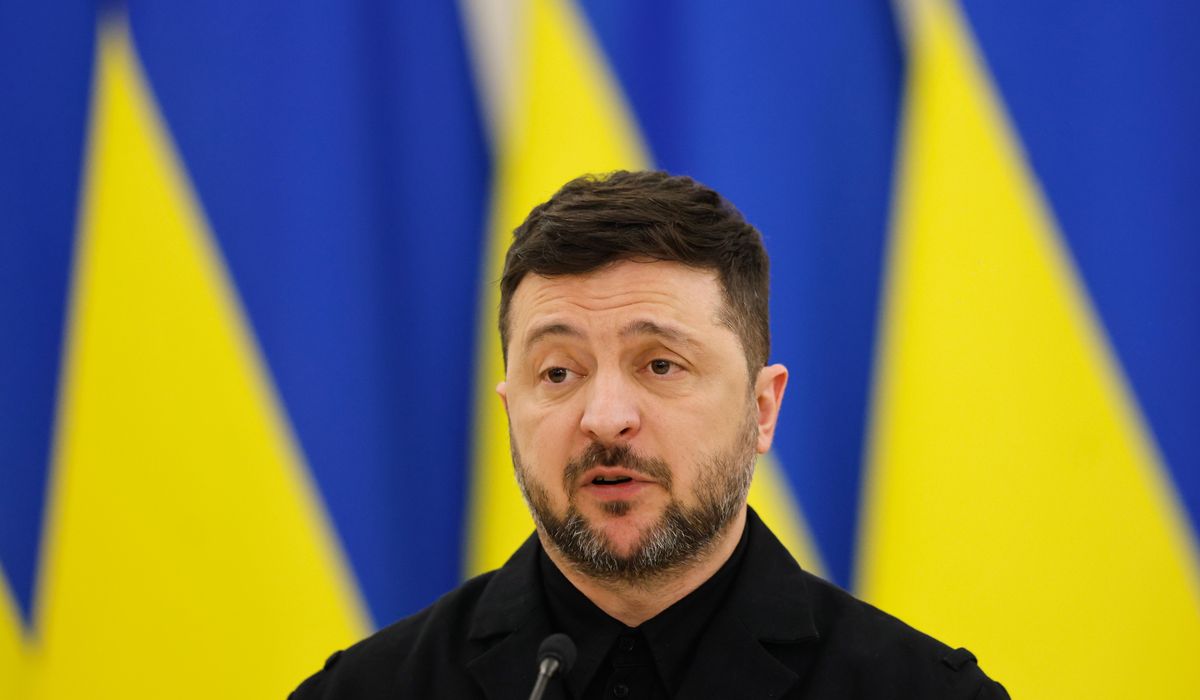
President Volodymyr Zelenskyy said Sunday that a U.S. security guarantees document for Ukraine is “100% ready” after two days of talks involving representatives from Ukraine, the U.S. and Russia.
The claim that a security guarantees document is “100% ready” lands in a tense moment for U.S. foreign policy. After two days of talks with representatives from Ukraine, the U.S. and Russia, leaders are signaling progress, but the phrase raises immediate questions about what the guarantees actually commit America to. Republicans should weigh the political optics against the hard facts: words on a page do not automatically translate into enforceable actions.
Any security guarantees will need to be precise about scope, limits and triggers so Americans understand what is being promised. Vague pledges invite open-ended obligations that could pull the United States into escalating conflict without clear returns. From a conservative perspective, commitments must protect U.S. national interest first and be tied to realistic, enforceable conditions.
Verification and enforcement are central concerns that often get short shrift in headline statements. Who verifies compliance, how will violations be addressed, and what penalties are acceptable? If the document lacks credible monitoring and consequences, it risks being a diplomatic placebo rather than a deterrent mechanism. Republicans typically insist on verifiable benchmarks before extending guarantees that involve American security.
Congressional oversight is another unavoidable reality. Any significant security guarantee implicates funding, troop posture, or transfers of lethal aid—actions that fall under legislative authority. Expect Republican members to demand hearings, text reviews and binding timelines rather than broad executive promises. That scrutiny is not obstructionism; it is the constitutional duty to check the executive branch on foreign entanglements.
The role of Russia in the negotiations complicates the math further. If representatives from Russia are party to a document, the United States must evaluate whether Moscow can be trusted to abide by written commitments. Republicans have historically viewed Russia through a lens of strategic competition, not reliable partnership, so any deal that depends on Russian compliance will be met with suspicion. Contingency plans must be built into the guarantees.
There is also the question of what form security guarantees should take—treaties, bilateral agreements, or NATO-style commitments. Each carries different legal consequences and domestic political hurdles. A treaty might require Senate ratification, while a political declaration could be implemented more quickly but with less permanence. Republicans will push for clarity on the mechanism because the mechanism determines how binding the promise becomes.
Cost is not an abstract issue either. Supporting Ukraine has already involved billions in aid, equipment and support services, and new guarantees could further obligate taxpayers. Conservative scrutiny will focus on measurable outcomes for American investments and direct links between assistance and Ukrainian reforms. Without demonstrable value, broad guarantees risk eroding public support for sustained engagement.
Finally, deterrence matters. Effective guarantees should make aggression costlier for an adversary and reassure allies without provoking wider escalation. That balance is delicate: overcommitment can invite entanglement while undercommitment can invite further aggression. From a Republican standpoint, tough-minded diplomacy paired with clear limits and oversight offers the best chance to achieve both deterrence and prudent stewardship of American power.

