

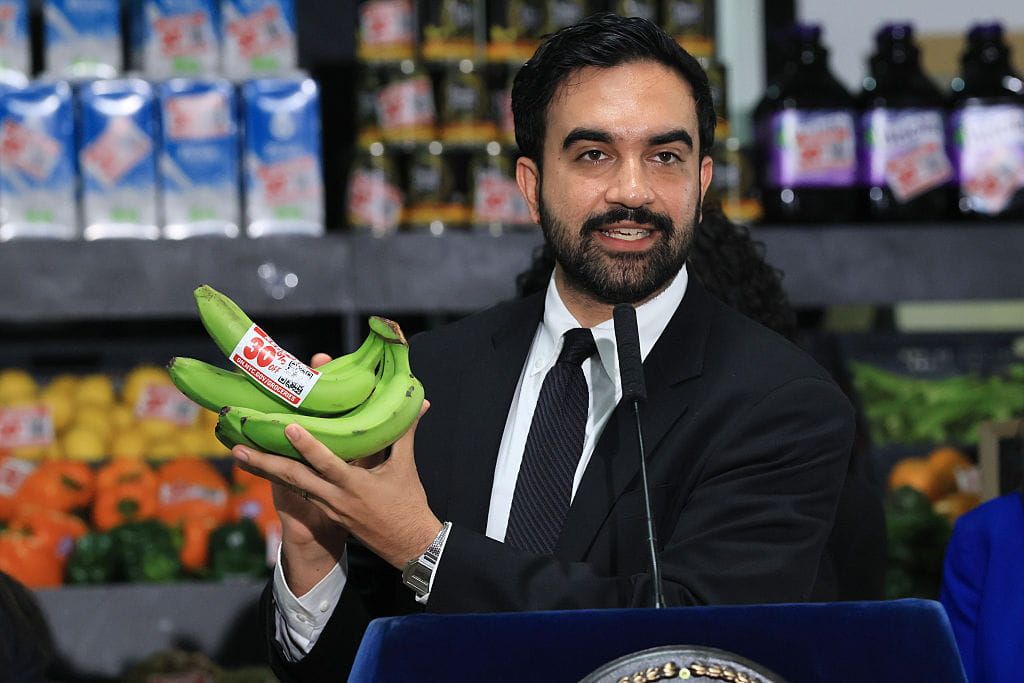
New York’s plan for government-run grocery stores promising a 30% discount has sparked sharp criticism and irony, as officials consider some form of identification or customer card to prevent reselling and abuse while insisting stores will remain open to everyone.
The mayor unveiled a plan for city-owned grocery stores offering 30% off basics like meat, produce, and dairy, drawing immediate skepticism. Critics warn the discount invites arbitrage, bulk-buying, and resale schemes that would drain inventory and waste taxpayer dollars. The policy’s suggested fixes — a library-card-esque system or another customer ID mechanism — have only intensified debate about fairness and practicality. That tension highlights an odd contrast between demanding ID for benefits and opposing voter ID rules.
The proposal aims to make groceries more affordable for everyday New Yorkers, but implementation questions loom large. One obvious problem is what stops someone from buying discounted goods and reselling them at market price, undercutting the program’s purpose. The mayor responded directly: “This is a program for New Yorkers to be able to put food on the table, not a program for people to be able to make a quick buck through reselling,” Mamdani told reporters. His team points to inventory controls and limits, but those are easy to game without strict enforcement.
City officials have floated a customer card or a library-style card to manage purchases and monitor who benefits. New York City CFO Jeanny Pak explained the approach, saying, “[W]e are looking to make sure that we target New Yorkers, whether it be a sort of a library card-esque thing, and also we manage who’s buying, and that is focused on everyday New Yorkers.” That language admits the city plans to differentiate shoppers, but officials insist such measures are about preventing abuse, not excluding people.
Still, identification systems are imperfect shields. A determined reseller can recruit others to buy discounted items or exploit loopholes in any card-based system. The risk is that a generous discount becomes a subsidy funnel for middlemen and organized resellers rather than a help for households truly struggling. Conservatives argue this is a predictable outcome of centralized distribution and price controls, and that taxpayer funds will be the fallback when shortages appear.
The mayor’s spokesperson pushed back, framing the card idea as logistics rather than gatekeeping. “It is a practical inventory management tool to ensure affordable groceries remain available for the people who need them instead of being cleared off shelves for resale,” the spokesperson told the news outlet. “To be absolutely clear: NYC Grocery stores will be open to everyone,” the spokesperson continued. “There will be no system to verify identity, residency, or income, and no one will be asked to show ID to shop.” That reassurance leaves room for a loyalty card or similar system that tracks purchases without formal ID.
That nuance fuels Republican critiques on principle and practicality: if you accept ID for groceries to prevent resale, you open the door to the same logic used by advocates of voter ID. Conservatives have long supported reasonable verification to protect programs and elections from fraud, and the grocery plan spotlights the inconsistency in progressive positions. As Elon Musk put it on X, “Oh, the irony is too much.”
Supporters of the idea argue a visible discount can create political energy for broader social programs. Venture capitalist David Friedberg warned that such policies could create “a radical spectacle, an exuberance for socialist policies that’s going to kind of light a fire for socialism around the country, unfortunately,” and added his view that “everyone’s got it a little bit wrong in assuming” the effort will instantly collapse. He also cautioned, “Because at the end of the day, no one has to pay the bill, because the bill doesn’t come due for some time.”
Those predictions matter because the long-term fiscal reality rarely aligns with political theater. Similar government-run ventures have often ended with empty shelves, higher taxpayer costs, and eventual closure after initial fanfare. Conservatives point out that market-based solutions and charity networks can target help without the distortions created by below-market pricing that invites arbitrage. When public programs hide the true cost, the bill eventually arrives at the taxpayer’s door.
Practical fixes like purchase limits, anti-resale rules, and retailer cooperation can blunt some abuses, but they add bureaucracy and enforcement costs. If enforcement requires staff, audits, or surveillance, the overhead will erode the apparent savings at checkout. That tradeoff matters because modest discounts can vanish under the weight of administrative complexity and fraud prevention, leaving taxpayers to make up the gap.
There is also a political gamble: normalizing government-run grocery stores could encourage copycat policies elsewhere, which proponents celebrate and critics fear. If cities scale similar programs, the cumulative burden on municipal budgets could grow fast, especially if programs promise deep discounts across broad categories. Republicans framing the debate will emphasize individual responsibility, market discipline, and protecting taxpayers from open-ended subsidies disguised as targeted aid.
Whatever the final design, the proposal forces a straightforward question: how do you give a meaningful 30% break to those who need it without creating a magnet for abuse and a long-term liability for taxpayers? The answer will determine whether the plan helps New Yorkers or becomes another costly, well-intentioned misstep.

