

Washington State tops the nation for organized retail crime, and the governor has just vetoed a bill proposing funding to fight it, a move that raises questions about priorities and the direct fiscal hit from widespread theft.
Washington leads the country in organized retail theft, and that ugly ranking matters beyond storefronts and headlines. The state leans heavily on sales tax to balance budgets, so when goods disappear off shelves the damage shows up on government ledgers as lost revenue. That link between theft and public finances makes the issue a policy problem, not merely a business one.
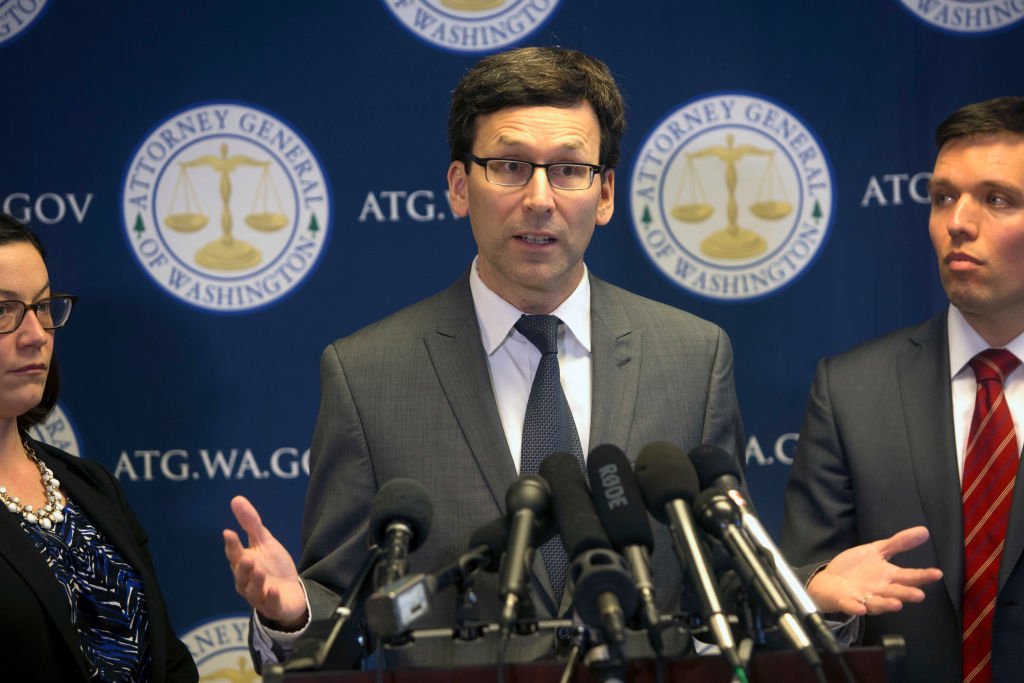
Governor Bob Ferguson, a Democrat, vetoed a bill designed to funnel resources toward battling organized retail crime, leaving law enforcement and local governments with fewer tools. The veto sets up a clash over whether to prioritize immediate enforcement funding or pursue different policy approaches favored by the governor. For communities already feeling the strain, the choice looks like a political decision with tangible consequences.
Retailers say organized rings are systematic and sophisticated, moving stolen merchandise through networks that can be hard to track. Small businesses, in particular, have thin margins and limited capacity to absorb repeated losses, so theft forces some to raise prices or reduce services. Those responses ripple into neighborhoods, where residents face higher costs and fewer options, and taxpayers may be asked to close the gap.
From a Republican perspective, this is a classic case of prioritizing public safety and property rights while demanding accountability from elected officials. Funding for targeted enforcement, better coordination among police, prosecutors, and retailers, and clearer penalties for repeat offenders are straightforward policy levers. When leadership refuses to back those measures, critics see it as choosing ideology or optics over practical solutions that protect citizens and commerce.
Experts and local officials point out that theft-driven revenue leakage complicates budgeting, since sales tax is a predictable income stream until it is undermined by widespread theft. That unpredictability forces painful trade-offs in public spending, from education to infrastructure, or pressures officials to find alternative revenue sources. Taxpayers ultimately shoulder those consequences when officials fail to address the root problem.
There are also criminal justice considerations that get tangled up in this debate, including prosecution priorities and sentencing guidelines. Prosecutors in some jurisdictions exercise discretion that reduces the likelihood of meaningful consequences for organized theft, and defense and bail reforms can further complicate enforcement. Republicans pushing for tougher accountability argue that without consistent enforcement, laws on the books do little to deter sophisticated thieves.
Private sector responses have included increased security measures, hiring loss-prevention teams, and shifting inventory strategies, but those steps cost money and often result in higher consumer prices or fewer products on shelves. Community impacts go beyond economics: when retail chains close stores or pull back services, local access to essentials erodes and jobs disappear. That outcome underscores why many see state-level funding and coordination as a necessary public investment.
Political dynamics are also at play, since the veto gives elected leaders a platform to explain their reasoning and voters a chance to weigh priorities at the ballot box. Republicans will frame this as a failure to defend property and public revenue, while Democrats might argue for alternative reforms or budget trade-offs. Either way, the dispute highlights a tension between managing immediate crime problems and pursuing broader criminal justice goals.
Washington’s top ranking on organized retail crime is a wake-up call that reaches into finance, public safety, and local economies, and the governor’s veto only sharpens the debate. Policymakers can choose to fund enforcement and interagency action, recalibrate prosecutorial practices, or pursue layered reforms—but the absence of the vetoed funding narrows short-term options. Communities, businesses, and taxpayers will watch how leaders respond in the weeks and months ahead.

