

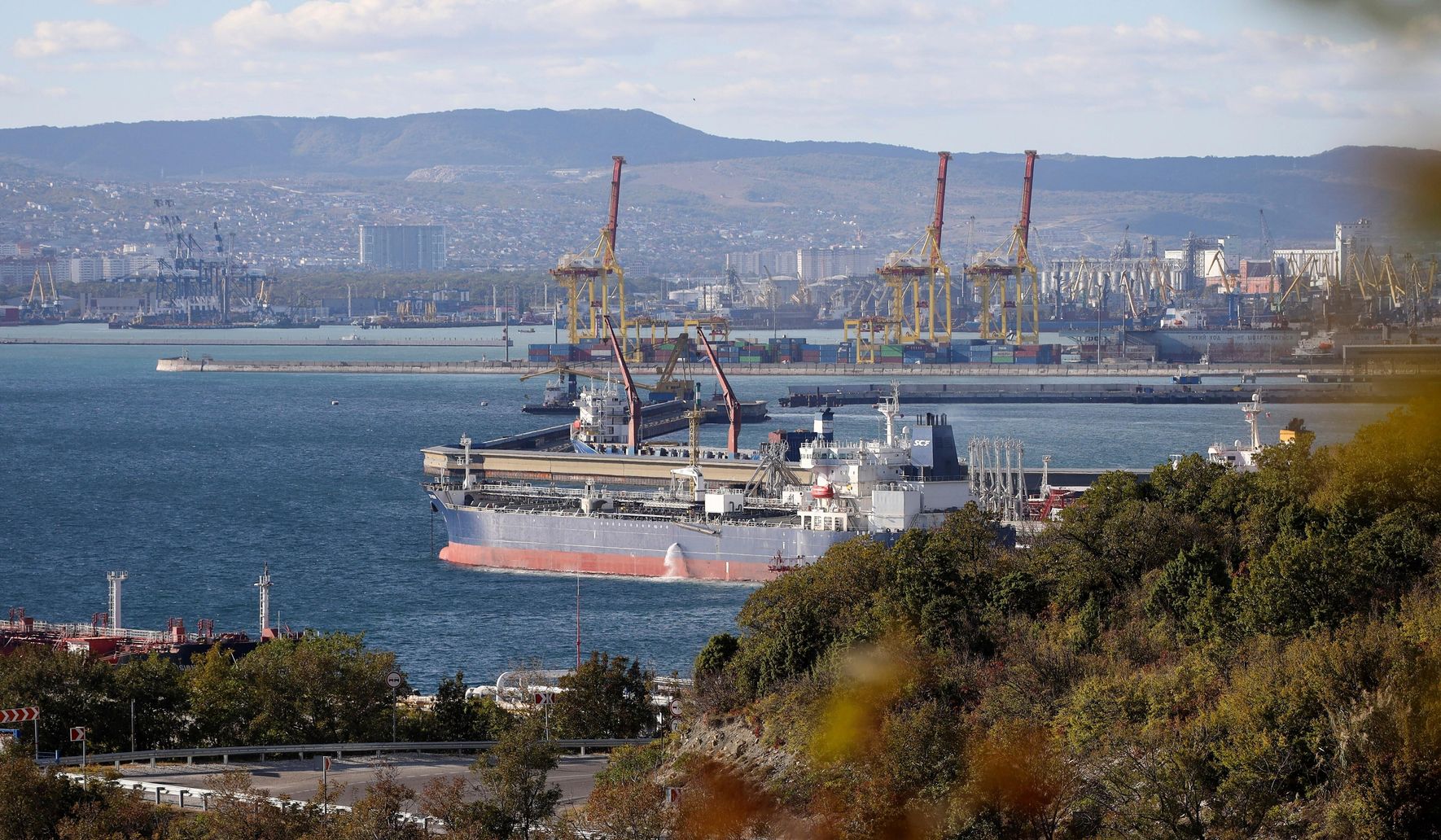
Ukraine’s use of homegrown naval drones to hit two Russian oil tankers in the Black Sea marks a notable escalation in maritime operations and raises immediate concerns about shipping safety, environmental damage, and the evolving role of unmanned systems in coastal warfare.
“Ukraine used domestically produced Sea Baby naval drones to strike two Russian oil tankers in the Black Sea, an official from Ukraine’s security services told The Associated Press on Saturday.” The statement confirms a targeted use of small, locally developed unmanned surface vessels against commercial or auxiliary maritime assets. That action highlights how relatively low-cost technology can create disproportionate strategic effects in contested waters.
The Sea Baby systems are built for shallow-water operations and can be launched from concealed coastal positions or small craft, making them flexible tools for a navy lacking traditional surface superiority. Their design focuses on endurance and a modest payload sufficient to damage or disable merchant hulls and fuel stores. These traits make Sea Baby variants useful for denying access or harassing logistical traffic along choke points and coastal routes.
Striking oil tankers carries several immediate risks beyond military gain, most notably the danger of spills and long-term ecological damage to the Black Sea coastline. Oil slicks would threaten fisheries, seaside communities, and tourism, and cleanup in semi-enclosed seas is often costly and technically challenging. Any environmental impact also adds political pressure on regional and international actors to respond or intervene.
From a legal perspective, attacks on merchant vessels can raise questions under the law of armed conflict and maritime law, particularly concerning whether the vessels were being used for military purposes or were purely civilian. Distinguishing military targets from protected civilian shipping is complex in practice, and incorrect assessments can trigger international condemnation or legal disputes. Naval drone strikes blur these lines further, since intent and control can be opaque to outside observers.
Operationally, using small naval drones allows a weaker naval power to impose costs on larger fleets and commercial logistics without committing big ships or aircraft. That asymmetric approach has become attractive where shore-based missiles or air strikes might be too risky or politically sensitive. The psychological effect of constant, unpredictable drone harassment can also raise insurance premiums and deter commercial traffic through contested sea lanes.
Commercial shipping companies and insurers pay close attention to incidents like these because they can alter risk calculations for entire trade routes. If insurers raise premiums or carriers avoid certain passages, the economic consequences ripple beyond the immediate area of conflict. Redirecting fuel and cargo ships around longer routes increases fuel consumption and delivery times, affecting global commodity prices and supply chains.
For coastal nations and regional navies, small naval drones present both an opportunity and a headache: they are relatively cheap to procure and can level certain playing fields, but they are also hard to detect and defend against with conventional systems. Detecting a low-profile unmanned surface vessel at sea requires persistent surveillance, radar tuning, and often human judgment that automated systems can miss. Effective countermeasures may demand coordinated sensors, patrols, and rules of engagement that complicate command and control.
Politically, such incidents tend to produce quick public reactions and demands for retaliation, especially when civilian infrastructure or commerce is affected. Governments will balance domestic pressure with diplomatic costs when deciding how to respond, and the ambiguity of drone operations gives decision-makers more room to maneuver or to deflect. International actors may weigh sanctions, naval escorts, or condemnatory statements depending on the scale and consequences of the strikes.
Technologically, the continued refinement of small unmanned surface vehicles is fueling a broader shift in naval doctrine toward distributed, unmanned systems. These craft can be used for reconnaissance, minesweeping, or direct attack, and their proliferation will force navies to rethink fleet compositions and budgets. Investment in both offensive unmanned capabilities and defensive detection networks is likely to rise as the trend becomes more entrenched.
Local infrastructure and maritime governance will also be tested as authorities handle immediate rescue, salvage, and pollution control tasks after strikes. Coordinating between military, civilian agencies, and international partners is essential to limit harm to people and the environment. Failure to act swiftly increases the odds of prolonged contamination and economic disruption for coastal communities dependent on fishing and tourism.
Ultimately, incidents involving Sea Baby naval drones and merchant tankers illustrate how modern conflicts extend beyond traditional battlefields into commerce, environment, and law. The practical and policy challenges they create will push navies, insurers, and coastal governments to adapt quickly, balancing security needs with the imperative to keep seas safe for civilian use.

