

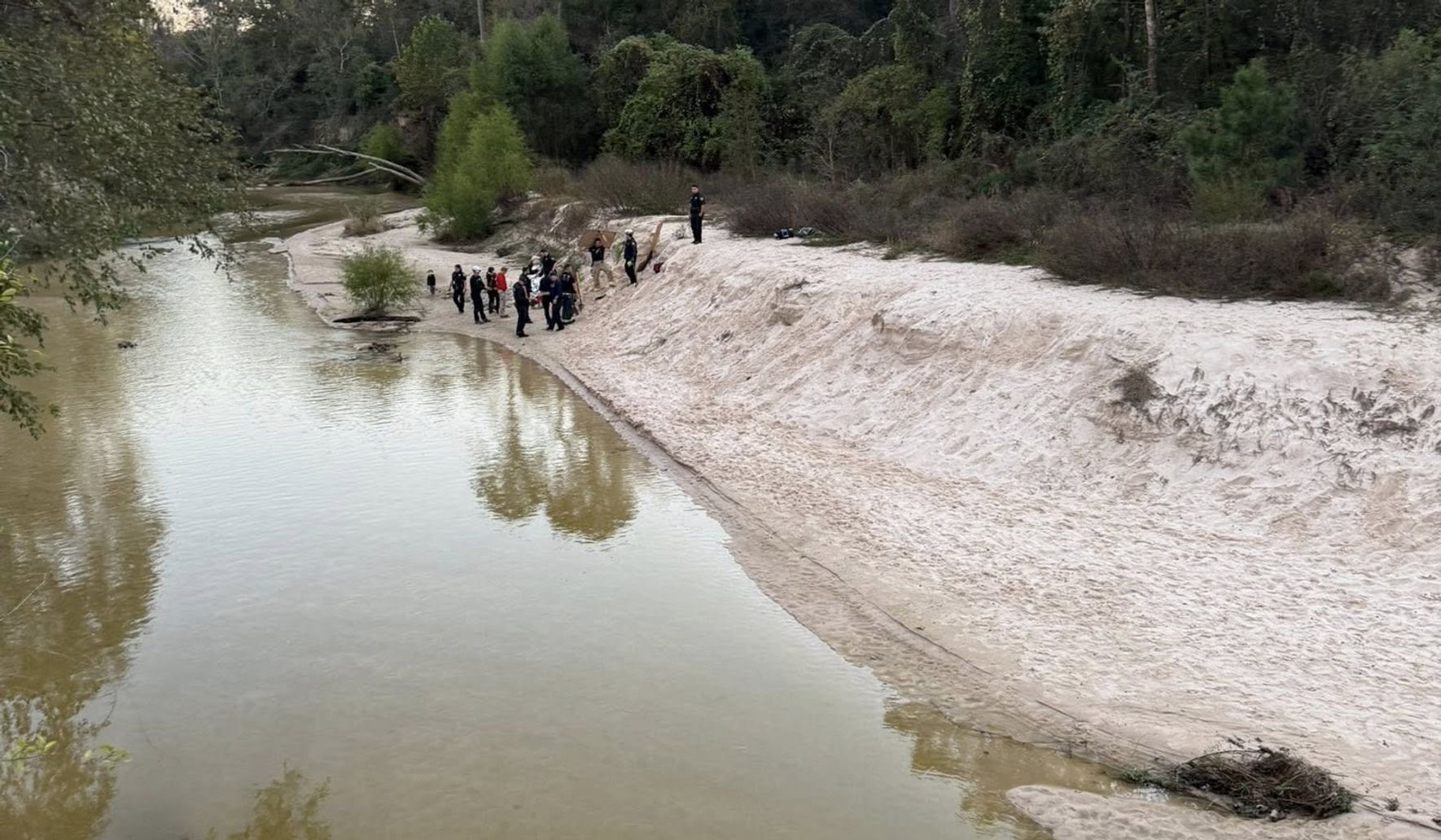
A 12-year-old girl in Texas was playing at a creek on Thanksgiving when a sand bar collapsed and trapped her in a hole, but she was rescued without injury.
The girl was at a creek in Texas on Thanksgiving when loose sand shifted beneath her feet and a sand bar gave way. Instead of a fall into open water, the collapse created a confined hole that held her fast until help arrived. Witnesses described a tense scene as family and bystanders called for and waited on emergency assistance.
Local crews arrived quickly and worked to free the child without causing further collapse or harm. Rescuers used careful excavation and stabilization techniques to prevent more sand from shifting while the girl was extracted. The operation prioritized safety over speed, and that caution helped avoid injury.
Sand bars and creek banks can look solid but are often deceptive, especially after recent rain or periods of high flow. Fine, loose sand can behave like quicksand when a void forms or weight shifts suddenly, trapping limbs or the lower body. That hazard is especially common where water flow reshapes banks and leaves unsupported mounds of sediment.
Parents and guardians should note that ordinary play near shallow water still carries risk if the shoreline is unstable. Keeping an eye on where children step and steering them away from overhangs and newly formed sand features reduces chances of a collapse. Simple supervision matters more than assuming shallow water is automatically safe.
On-site bystanders often play a key role in initial response, calling emergency services and keeping the scene calm until trained teams arrive. Communicating clear information to dispatch — location, condition of the trapped person, and any immediate dangers — helps responders prepare the right equipment. Staying out of the collapse zone prevents additional victims and gives rescuers room to work.
Rescue teams typically stabilize the area and create a controlled opening rather than digging blindly, which can cause further collapse. Tools and methods used are chosen to limit vibration and shifting, and personnel may shore up sand with boards or sandbags before reaching the trapped person. These techniques are standard for confined rescues in unstable ground around water.
The fact that the girl was pulled out without injury reflects both quick action and conservative tactics by everyone involved. When extraction is done deliberately, it minimizes the chance of secondary harm from sudden shifting or debris. Medical checks on site are common even if no obvious injuries are present, to confirm the rescued person is truly unhurt.
Seasonal outings like Thanksgiving visits to creeks and rivers are understandable, but they come with preventable risks. Scouting the area first, avoiding the edges of sand bars, and keeping flotation available for young swimmers are practical steps. Awareness of local conditions — recent rains, water level changes, and visible erosion — helps families make safer choices.
This incident underscores how quickly a normal playtime can turn into an emergency and how effective coordination between bystanders and responders can lead to a safe outcome. The girl’s rescue without injury is a relief to everyone involved and a reminder of the hazards that can hide in ordinary outdoor spots. Community reminders about shoreline safety can prevent similar scares in the future.

