

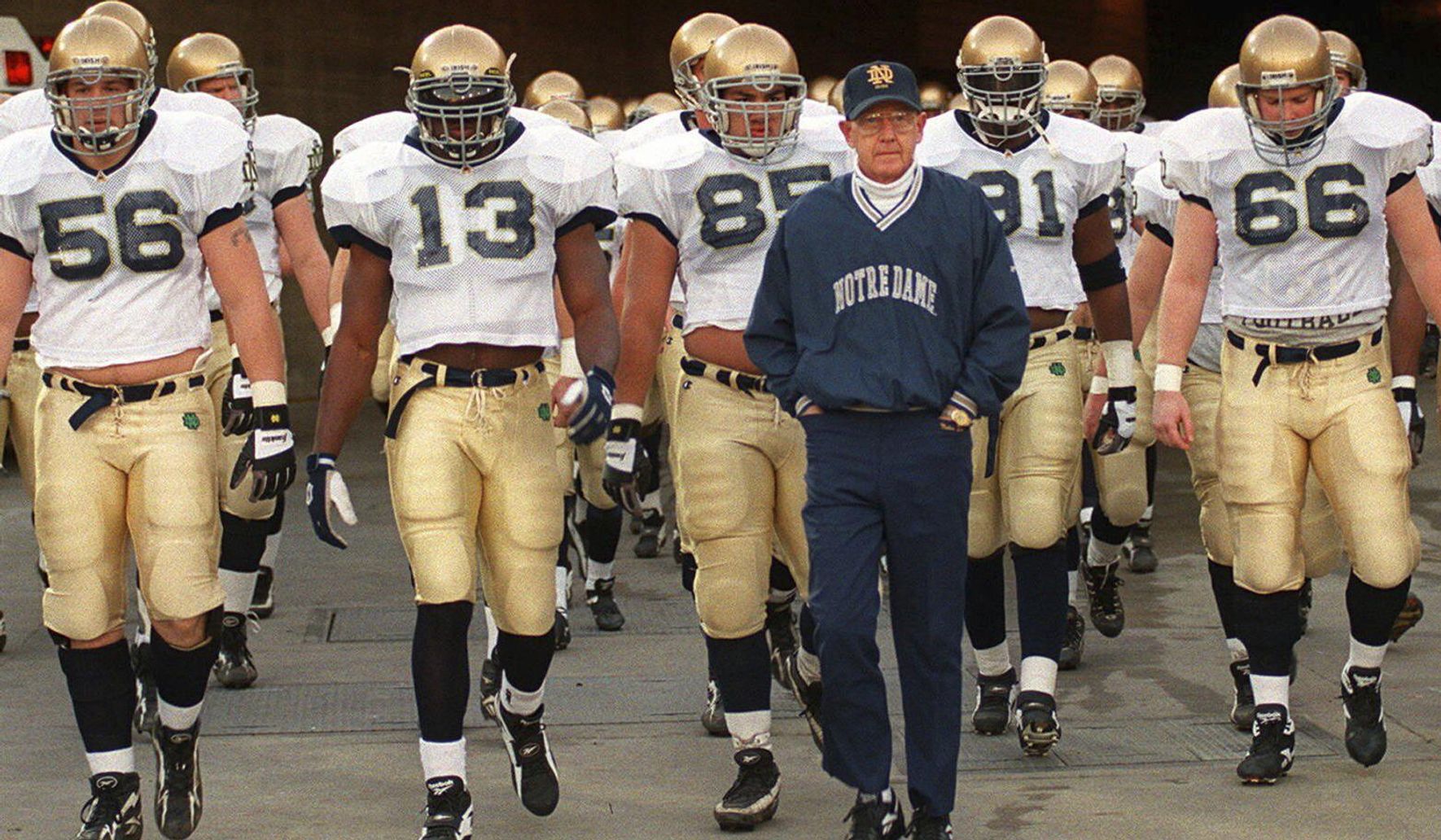
Lou Holtz built a coaching legacy around discipline, wit, and a knack for turning struggling programs into national contenders, most famously leading Notre Dame to an unbeaten national title in 1988.
Lou Holtz, the quick-witted and disciplinarian college football coach who restored Notre Dame to national prominence and guided the Fighting Irish to an unbeaten national championship season in 1988, remains a touchstone name in the sport. He combined tough expectations with plainspoken motivation, and that mix defined his tenure. Fans and critics alike remember a coach who demanded results and delivered a clear identity.
When Holtz arrived at South Bend, the program needed steady direction and a stronger culture, not flashy gimmicks. He focused on fundamentals, conditioning and a no-nonsense approach that players could respect or leave. That clarity helped recruit athletes who wanted structure and a pathway to success.
Holtz’s methods were disciplined but never humorless; his quick wit showed up in speeches and pressers while his discipline set the daily tone at practice. He expected accountability across the roster and insisted everyone knew their role. That combination turned into more consistent performances on game day.
The 1988 campaign stands out because it married those traits to execution under pressure, producing an unbeaten run that ended with national recognition. Game plans were pragmatic and often conservative, aimed at minimizing mistakes and forcing opponents into errors. Holtz’s teams played smart football and refused to collapse when stakes rose.
Beyond tactics, Holtz’s motivational skills are part of his enduring brand; he could simplify a complex season into a few lines that stuck with players. Those one-liners and pointed speeches were tools as much as they were entertainment. Players remember being challenged to be better each week and to accept responsibility for the team’s fortunes.
Holtz also emphasized character and resilience, insisting that on-field toughness came from discipline off the field. He built a program where routine and preparation mattered as much as raw talent. That approach created a culture where younger players learned from veterans, and standards mattered.
After the peak years at Notre Dame, Holtz remained a visible figure in football as a broadcaster, speaker and mentor to coaches who studied his methods. His name kept popping up in conversations about program turnarounds and leadership under pressure. The way he blended mental preparation with physical readiness influenced a generation of college coaches.
Debate continues about the limits of a disciplinarian model and whether it always fits modern college athletics, where recruiting, NIL and transfer portal realities complicate old formulas. Still, Holtz’s blueprint for rebuilding a team—clear expectations, tactical prudence and motivational leadership—remains a reference point. Coaches and administrators study examples of how he changed locker rooms and scheduling priorities.
At the same time, Holtz’s public persona—blunt, media-savvy and often entertaining—kept him in the conversation beyond wins and losses. He turned interviews into teaching moments and could make a complex season feel manageable for fans and players alike. That blend of showmanship and structure helped him stay influential.
Even years after that unbeaten title, Holtz’s influence shows up in how college programs think about culture and accountability without losing sight of the scoreboard. Younger coaches borrow parts of his approach while adapting to new rules and recruiting landscapes. The debate over style versus substance in coaching endures, and Holtz’s career keeps offering lessons to anyone rebuilding a program.

