

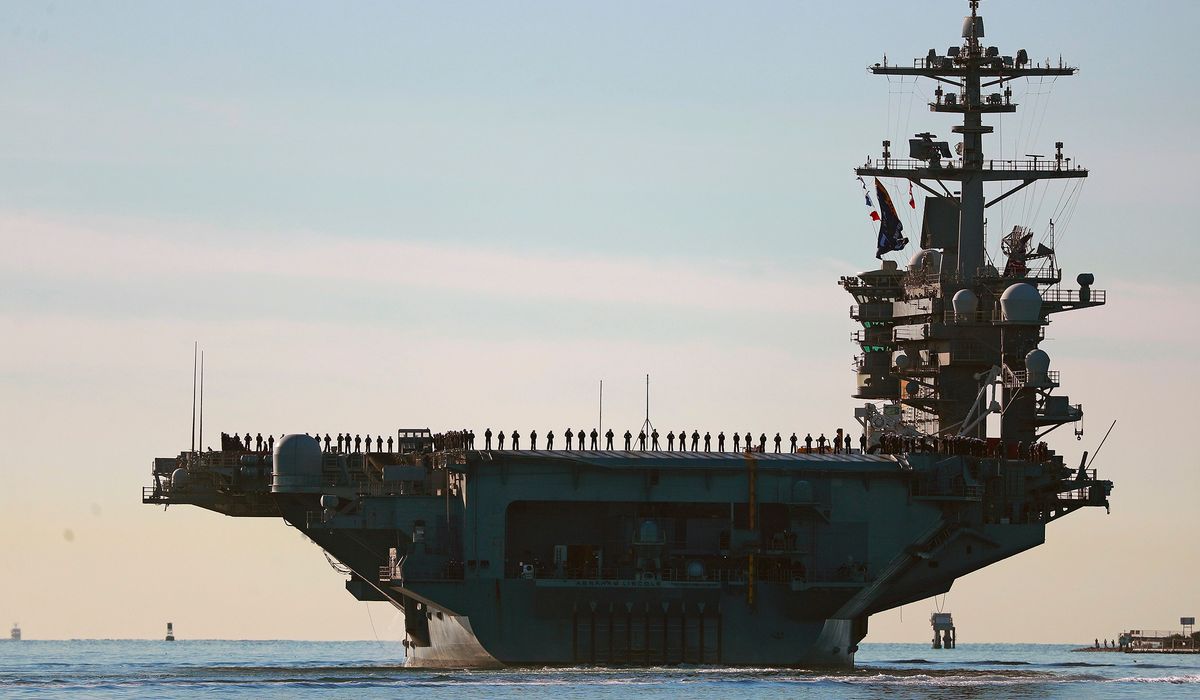
Adm. Brad Cooper lauded the crew of the USS Abraham Lincoln after a record-breaking deployment, praising the roughly 5,000 Marines and sailors aboard the nuclear-powered aircraft carrier for their endurance and professionalism during an extended mission.
The Navy’s top officer publicly commended the ship’s crew on Sunday, calling out the teamwork that kept complex flight operations and carrier systems running around the clock. The deployment set a service milestone, and the admiral made clear that the achievement reflected daily effort from every division on board.
Life at sea on a carrier of this scale is relentless, with pilots, maintainers, logisticians, medical staff, and supply teams all tied to a single tempo. Maintaining aircraft, reactors, and the carrier’s flight deck requires impeccable coordination, especially when operational demands stretch a ship beyond routine patrol schedules.
Five thousand personnel live and work in tight quarters, so leadership and morale matter as much as technical skill. The admiral’s praise underscored both mission success and the human side of sustained deployments: families ashore, rotations, and the private sacrifices that rarely make headlines.
Operational readiness is the visible measure, but logistics and sustainment are the invisible backbone. From spare parts and aviation fuel to food and medical care, the supply chain that keeps a carrier at sea underpins everything the crew does, and breaks in that chain can blunt a carrier’s effectiveness almost immediately.
Training and repetition sharpen performance, and a record-breaking run doesn’t occur by accident. The sailors and Marines aboard the USS Abraham Lincoln followed procedures, adapted to changing conditions, and maintained strict safety standards while executing complex missions under pressure.
A nuclear-powered carrier brings both advantages and demands: long endurance and high power for ships and aircraft, paired with stringent maintenance for the propulsion plant and associated systems. That balance between capability and upkeep is central to why leadership highlighted the crew’s steady, daily work.
Command messages after deployments often focus on gratitude, but they also serve to reinforce standards and expectations for future operations. Commending the crew publicly reinforces the behaviors commanders want to see replicated fleetwide, from watchstanding discipline to seamless cross-department support.
Homecomings and maintenance cycles follow such deployments, offering time to repair, upgrade, and reset people and equipment. For many sailors and Marines, those days back ashore are as crucial as any training evolution at sea, providing rest and the chance to prepare for the next mission.
The admiral’s remarks highlighted professionalism and resilience and pointed to a broader truth about carrier operations: success depends on a vast team that keeps complex systems running in challenging conditions. That team effort, not any single action, produced the record-breaking outcome the Navy celebrated.

