

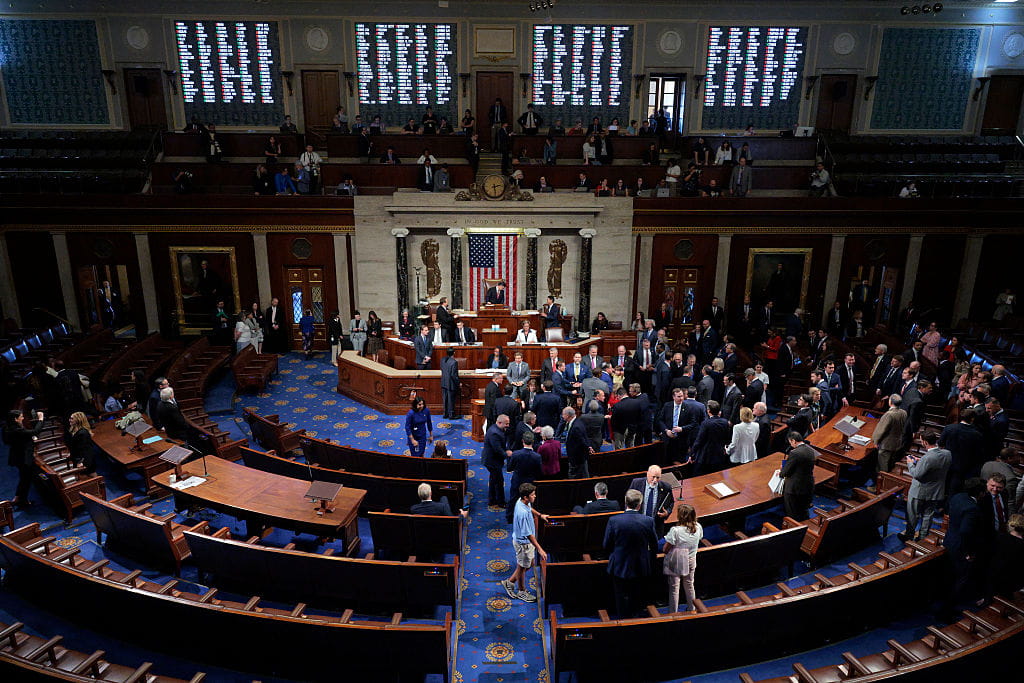
The U.S. House failed to pass a war powers resolution on Thursday, March 5, and the episode highlights how Congress, the White House, and the public are still wrestling with who should call the shots when tensions with Iran flare.
On Thursday, March 5, the U.S. House failed to pass a war powers resolution that sought to force an immediate halt to hostilities with Iran. For context, a similar effort in the Senate stumbled just a day before, underscoring how messy and politically charged these votes have become. The text at issue would direct President Donald Trump to cease hostilities against Iran immediately, which sounds decisive but raises practical and constitutional questions.
Republicans are right to be skeptical of resolution theater that looks tough but leaves commanders and allies scrambling. A rush to demand an instant cutoff of operations can undercut ongoing missions, intelligence cooperation, and the safety of forces on the ground. Lawmakers should be careful about snap judgments that sound good in a headline yet can hamstring leaders managing rapidly evolving threats.
There is also a real constitutional argument here, one conservatives often make: Article II vests the president with the authority to act quickly when national security is at stake. At the same time, Article I gives Congress the power to declare war and control spending. Those competing authorities matter, and a knee-jerk resolution that forbids all hostilities risks upsetting the balance while offering little in the way of workable oversight.
Beyond the theory, consider the practical politics at play. Many members of Congress want to demonstrate they can limit executive action, and some genuinely wish to avoid a wider conflict with Iran. But using a blunt instrument like an immediate cease order is a poor substitute for a clear strategy, precise limits, and a plan to secure U.S. interests. The result is political posturing dressed up as governance.
Another problem is predictability. Adversaries study Washington as closely as we study them, and sudden, absolutist directives can send confusing signals. If our leaders say one day that operations must stop immediately and the next day that limited strikes are acceptable, that inconsistency becomes leverage for rivals and a liability for partners. Credibility matters more than political scoring.
At the same time, Congress has legitimate tools to exert oversight without making reckless demands. Lawmakers can condition funding, demand classified briefings, and use hearings to extract actionable answers about the administration’s plan and goals. Those are constructive options that preserve both accountability and operational flexibility in ways a blanket order never will.
Some conservatives also point out the hypocrisy: when the president is restrained by an order to cease hostilities, political opponents will still find reasons to complain, and the same proponents of limitations sometimes support similar measures when their preferred outcome is in sight. That inconsistency undermines the case for sweeping mandates and makes a case-by-case approach more convincing.
There is a sane middle ground. Congress should insist on clear objectives, timelines, and reporting requirements tied to any military action, while avoiding one-size-fits-all edicts that can put troops at unnecessary risk. A carefully crafted framework protects American interests and allows the president to react to immediate dangers without being boxed in by political theater.
Finally, the failure of this resolution is a reminder: tough talk in the House or Senate is easy, governing through crisis is harder. If lawmakers truly want to shape national security policy, they should use their leverage where it matters—appropriations, oversight, and durable legislation—not headline-grabbing orders that would be impossible to implement without significant consequences. The voters deserve real solutions, not symbolic votes.

