

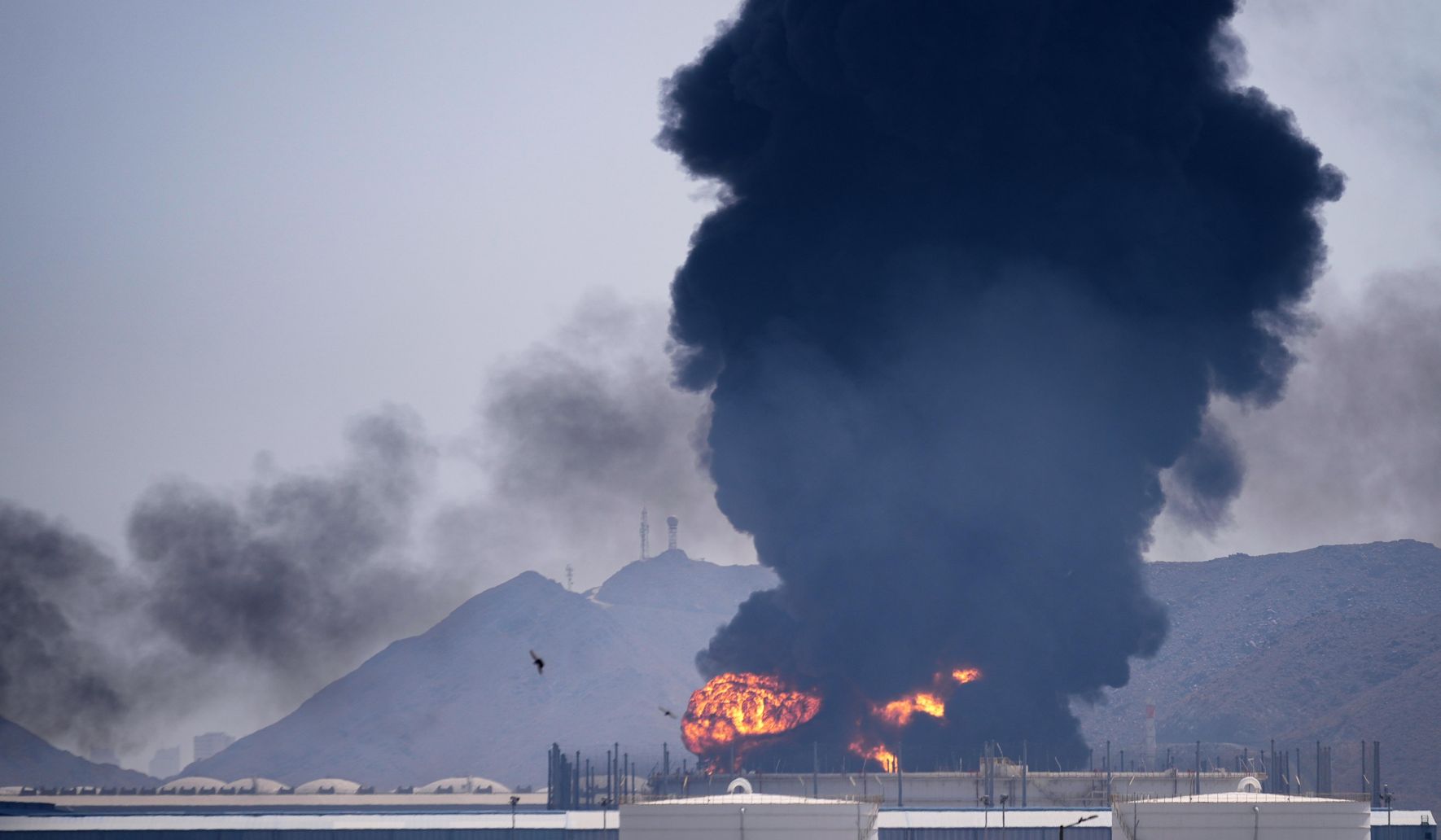
A missile strike hit a helipad inside the U.S. Embassy compound in Baghdad and debris from an intercepted Iranian drone struck an oil facility in the United Arab Emirates, deepening a dangerous cycle of attacks and counterattacks across the region. The incidents underline how Iran’s proxy networks and drone capabilities are exporting instability, complicating U.S. efforts to protect personnel and partners. The response now needs muscle and clarity to stop escalation and deter future strikes.
The immediate picture is stark: American personnel and regional partners face escalating threats from Iranian-backed forces and Tehran’s own drone and missile arsenal. Local commanders scrambled to account for people and assets after the helipad hit, and regional facilities saw damage from falling debris. The raw fact is simple and worrying: the campaign against U.S. and allied interests is growing more brazen.
A missile struck a helipad inside the U.S. Embassy compound in Baghdad and debris from an intercepted Iranian drone hit an oil facility in the United Arab Emirates as the U.S.-Israel war with Iran ent
This pattern is not an accident but part of a broader Tehran strategy that blends proxies, missiles, and drones to raise costs for the United States and its partners. The UAE incident shows how Iranian strikes — even when intercepted — spill over into neighboring countries and civilian infrastructure. That creates wider risks for commercial shipping, energy markets, and allied security in the Gulf.
Washington has to protect diplomats and servicemembers first, and that means improved defenses, quicker intelligence sharing, and clearer rules of engagement. Diplomatic cover and evacuations are last-resort measures; prevention is better and cheaper. The goal must be to stop attacks before they start, not to write apologies after the damage is done.
From a policy angle, deterrence requires predictable and credible consequences when Tehran crosses the line. That mix should include targeted kinetic responses against the capabilities and networks that enable attacks, alongside stepped-up sanctions on military suppliers and key regime finances. America must use all instruments of power to ensure Iran faces tangible costs, not empty statements.
Cooperation with Israel and Gulf partners matters more than ever, but it’s not just about rhetoric. Shared air defense, intelligence fusion, and joint contingency plans can blunt the operational advantage Iran seeks to exploit. Strengthening regional defenses also reassures partners who are increasingly vulnerable to cross-border fallout from this conflict.
Equally important is a clear messaging strategy at home and abroad. Americans need to know the risks and the principles guiding any response, while Tehran should not mistake restraint for weakness. Communicating resolve reduces the chances of miscalculation that could spiral into a larger conflagration.
Congressional oversight and funding must keep pace with the threat, equipping forward-deployed forces with better interception systems and strike options that leave minimal civilian exposure. That requires bipartisan support for robust deterrence, surveillance, and logistics so commanders have the tools they need. Weakness or dithering only encourages more aggression.
At the same time, we should not lose sight of the diplomatic front: isolating Iran economically and politically while creating a path for meaningful behavior change is smart statecraft. Sanctions, export controls, and targeted diplomacy can squeeze Tehran’s ability to finance proxies and procure advanced weaponry. But any diplomatic opening has to be built on verified changes in behavior, not appeasement.
The incidents in Baghdad and the UAE are a wake-up call that the status quo is untenable and dangerous. The United States must respond in ways that protect citizens, support allies, and restore deterrence without needlessly widening the conflict. A firm, clear, and capable strategy is the best way to stop attacks before they reach our people or choke off regional stability.

