

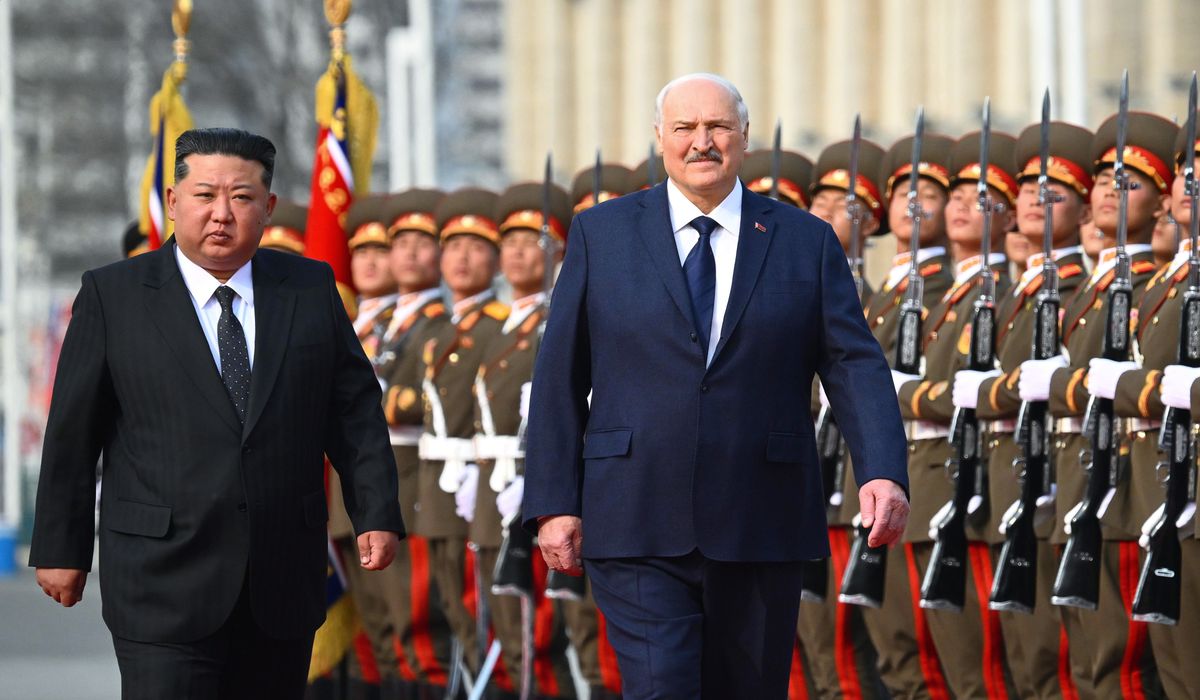
Belarusian President Alexander Lukashenko has arrived in Pyongyang for an official visit to meet North Korean leader Kim Jong Un, a meeting that raises strategic questions about arms technology, sanctions evasion and the shifting alliances among authoritarian regimes. The visit is significant because Belarus and North Korea both face international isolation, and any cooperation between them could complicate U.S. and allied security concerns. Observers will watch whether this is a symbolic show of support or the start of deeper military and economic ties.
On the surface, the trip looks like leadership theatre: two isolated rulers, each defending their grip on power. From a Republican perspective, that theater hides hard risks for American security and global stability. Both regimes have motives to trade technology, know-how and practical workarounds to sanctions, and that prospect can’t be ignored.
Lukashenko’s Belarus has been squeezed by Western sanctions since he cracked down on dissent and tightened ties with Moscow. North Korea, meanwhile, has leaned on illicit networks for revenue and technology in the face of its own penalties. When countries in that position meet, the safest assumption is they will explore ways to blunt international pressure and strengthen mutually useful capabilities.
One immediate concern is the potential transfer of dual-use technology that could accelerate Pyongyang’s missile or nuclear programs. Even if discussions stay polite and guarded, the history of proliferation shows how quickly cooperation can move from theory to practical steps. The U.S. and partners need to keep focused on interdiction and intelligence to prevent any unexpected breakthroughs.
Belarus could also seek North Korean labor, specialized manufacturing support or clandestine logistics that help skirt sanctions. North Korea has long used labor exports, trade fronts and covert procurement networks to raise hard currency and obtain restricted items. A partnership with Belarus could expand those channels and complicate enforcement for Western governments.
For Lukashenko, the visit is a calculated gamble: signaling independence from the West and finding new patrons to offset European pressure. From a Republican viewpoint, that kind of posture is both predictable and dangerous because it can tie hostile regimes together into a more resilient axis. That resilience makes it harder to enforce norms and harder to keep advanced capabilities out of the wrong hands.
Kim Jong Un also benefits by showing that Pyongyang still has partners willing to meet face to face at a high level. It sends a message at home and abroad that North Korea is not entirely isolated and can build practical relationships despite sanctions. For Washington, these optics matter because they can shift regional calculations and encourage further boldness on the Korean Peninsula.
This meeting may also touch on energy and economic cooperation, even if official statements stay vague. Belarus faces economic strain and needs supplies and workarounds, while North Korea seeks revenue and materials. Any transactional deals, even low-tech, would be a warning sign that sanctions are being evaded in ways that reward bad behavior.
Another layer is the Russia factor. Belarus remains tightly linked to Moscow, and any Belarus-North Korea cooperation could have ripple effects for Russia’s goals in the region. Republican strategists will note the possibility of a broader informal network of authoritarian states sharing tools and tactics, and the need for robust deterrence to counterbalance that trend.
Diplomacy and deterrence both matter here. Republicans tend to favor a clear-eyed mix of sanctions enforcement, military readiness and coalition-building to counter any dangerous transfers. At the same time, keeping lanes open for intelligence and diplomatic signals is crucial to prevent surprises and to find leverage when it’s available.
Domestic political optics matter too. Lukashenko is trying to project power and relevance after years of isolation, and Kim wants to display influence beyond regional neighbors. Those domestic calculations will shape the tone and content of the talks and may produce short-term headlines that obscure longer-term threats.
Watching the outcome, policy makers should track concrete indicators: any agreements on labor or trade, education and technical exchanges, and unusual shipments or financial flows. Those are the real markers of a deeper convergence, and they are the things that could require a measured yet firm policy response from the United States and allies.

