

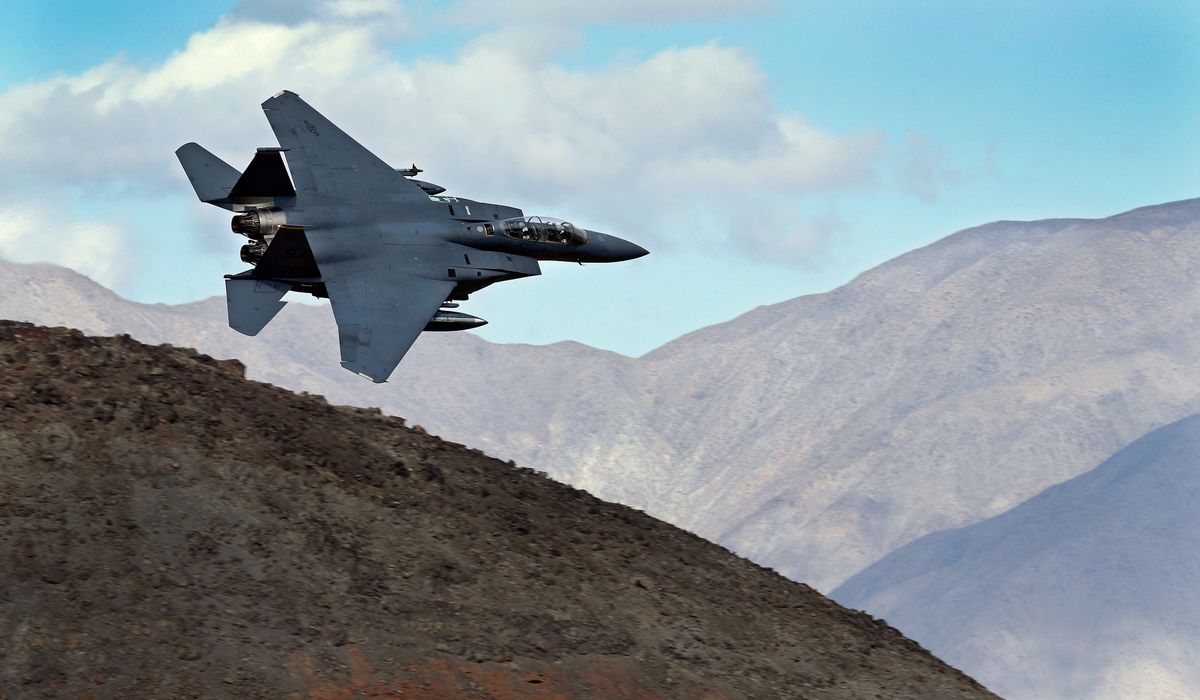
President Trump announced a bold American operation that retrieved an American pilot from behind enemy lines in Iran, framing it as a decisive and precise military success that reflects strong leadership and capable armed forces.
The claim landed early Sunday when President Trump said, “The U.S. mounted a daring rescue mission and retrieved an American pilot behind enemy lines in Iran, President Trump said early Sunday.” That single line set the tone for a narrative of competency and urgency pushed by the administration. Supporters are treating the operation as proof that decisive action can bring service members home quickly and securely.
This was more than a small tactical move; it read as a display of intelligence coordination, air and ground capability, and rapid decision-making. From a Republican perspective, the mission underscored the value of strong leadership that trusts the military to execute complex operations. It also served as a corrective to any claims that the United States would hesitate when Americans needed rescue.
Operational details remain deliberately sparse in public briefings, and that is by design for ongoing security reasons. The administration can justify withholding specifics so tactics and sources are not compromised for future missions. Politically, the decision to emphasize success while limiting detail fits a pattern of prioritizing mission integrity over endless public dissection.
On the international stage, the rescue alters immediate calculations. For adversaries and allies alike, the message is clear: the United States will act to protect its people, and it has the capability to find and bring them home even in hostile territory. That deterrent effect matters in tight spots where miscalculation could otherwise escalate into broader conflict.
Domestic reactions split predictably along partisan lines, but the core reaction among many conservatives was relief and a sense of vindication. Voters who prioritize national security see this as the kind of outcome expected when authority is centralized and decisions are made with clarity. Critics will press for verification, and that scrutiny will play out in media and on Capitol Hill, but for now the administration owns the narrative.
There are legitimate questions about risk, oversight, and the cost of such operations, and those questions deserve answers from the administration in due time. Still, the choice to act rather than wait can mean the difference between life and death, and for families of service members, that willingness to move fast is everything. Republicans will point to this rescue as a model for protecting Americans without prolonged debate or weakness.
Strategically, the rescue will factor into future diplomacy with Iran and regional planning with partners in the Middle East. It reinforces the need for robust intelligence sharing and fast, flexible military options. For now, the focus remains on honoring the service of the rescued pilot and on ensuring protocols are in place to prevent similar incidents.
Trust in American military competence and leadership is central to the conservative reading of the event, and the administration’s framing leans into that trust. The practical takeaway is simple: when the United States says it will bring citizens home, it follows through with force and precision. That certainty is the political and moral capital the administration is banking on as this story continues to unfold.

