

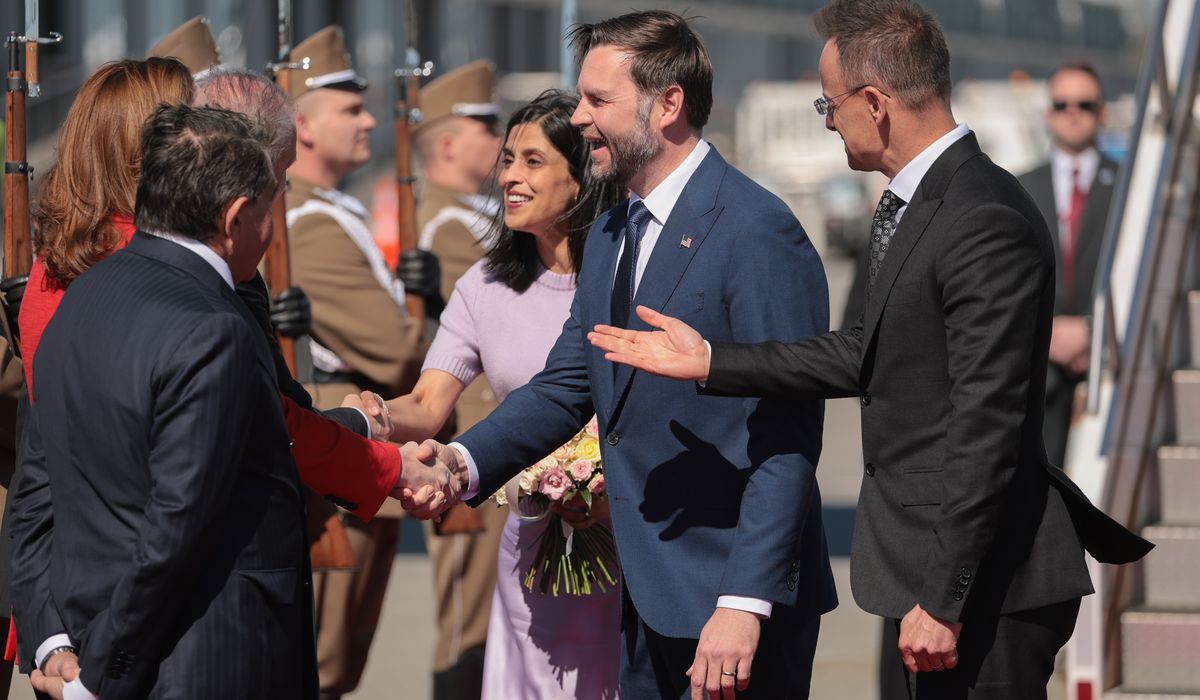
Vice President J.D. Vance traveled to Budapest this week to publicly support Prime Minister Viktor Orban as Hungary heads into a high-stakes national vote.
Vice President J.D. Vance arrived in Budapest Tuesday to boost Hungarian Prime Minister Viktor Orban ahead of a tough election on Sunday. His visit puts an American conservative voice directly into a European campaign at a moment when the stakes feel national rather than purely local. The optics are clear: conservatives in the United States and Europe see common ground on sovereignty, borders, and cultural identity. That coalition is trying to counter a momentum they believe the political left carries across institutions and media.
The timing matters. With ballots due on Sunday, every rally, speech, and handshake can sway undecided voters. Vance’s presence signals that the outcome will be watched closely by allies and adversaries beyond Hungary’s borders. It also telegraphs that Republican leaders are ready to stand with partners who resist globalist policy prescriptions and Brussels-centered authority. For many voters, an outside endorsement like this is reassurance that their voice matters on a broader stage.
Orban’s campaign has leaned hard on national control and economic independence, themes familiar to conservatives in the U.S. Those messages resonate in a country that has guarded its culture and made sovereignty a political touchstone for years. Vance’s visit reinforces that shared agenda, stressing that conservative governments should defend borders, prioritize families, and protect national industries from outside interference. That alignment matters not just in rhetoric but in trade and defense cooperation.
The left’s response was predictable: charges of foreign interference and alarmist warnings about democratic norms. Republicans counter that engagement between like-minded leaders is normal and necessary in a world where enemies coordinate across borders. The debate on interference often obscures the real question: whether citizens should accept policies imposed from distant bureaucracies. Vance’s message reframed the issue as one of choice, telling voters they get to decide what kind of future Hungary will build.
Energy and security policy have become real campaign issues, and Orban has emphasized pragmatic deals to keep Hungary’s lights on and its economy stable. That pragmatic streak appeals to voters tired of idealistic plans that leave families worse off. Republicans see practical governance as a virtue—leaders who take action to preserve prosperity and independence. Vance highlighted those points while making it clear that policy wins at home are linked to strong partners abroad.
Immigration remains central to the conversation, and Orban’s consistent stance has been to control entry and prioritize national cohesion. That position dovetails with current Republican priorities and helps explain why American conservatives have taken an interest. For many voters, cultural continuity and public safety are inseparable, and these concerns drive turnout more reliably than abstract debates. Vance’s appearance underscored that message and aimed to reinforce local resolve ahead of the vote.
Campaigning at this level also sends a signal back to domestic audiences in the United States: Republican leaders will not shy away from global contests that affect American interests. Supporting allies who resist centralized power and preserve national decision-making aligns with a foreign policy focused on sovereignty. It’s a posture that appeals to voters wanting clear principles rather than international ambiguity. That stance will likely shape future transatlantic cooperation if like-minded governments succeed.
The next few days will test whether outside endorsements translate into votes. Organizers on both sides will watch turnout and the mood at polling places on Sunday. For those who support a conservative, sovereign-first agenda, Vance’s trip is a reminder that politics now moves across borders and that strategic alliances matter. Whatever the result, this visit makes clear that political contests in Europe and America are increasingly interconnected in philosophy and practice.

