

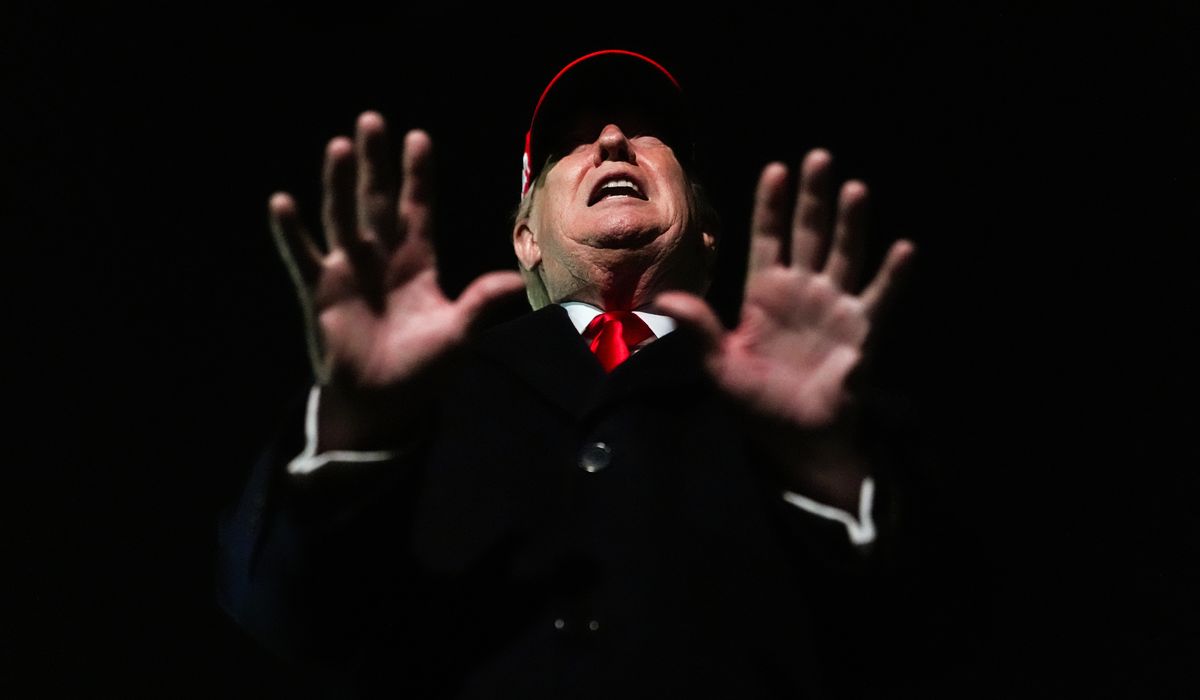
President Trump and Pope Leo XIV collided publicly over the war in Iran, sparking a sharp exchange that has rattled allies, energized critics, and raised questions about how religious authority and political leadership intersect in times of conflict.
The public spat began with a blunt statement from the White House defending a forceful approach to Iran and a swift rebuke from Pope Leo XIV, who called for restraint and a return to diplomacy. The tone of both messages was personal and pointed, turning a foreign policy disagreement into a culture clash between two of the world’s most influential voices. That shift has pulled domestic politics and international strategy into the same headline, forcing voters to weigh moral authority against hard-nosed security arguments.
Mr. Trump framed the disagreement as a test of leadership, insisting that protecting American lives and deterring Tehran’s aggression requires decisive action. From a Republican standpoint, showing strength prevents escalation by convincing adversaries that the costs of aggression are real. Supporters argue that moral appeals from outside the political chain of command cannot substitute for credible deterrence or military readiness when a hostile state threatens regional stability.
Pope Leo XIV’s intervention tapped a different set of priorities, emphasizing humanitarian concerns and urging a return to negotiation and oversight. That message resonates with voters who fear the human cost of armed conflict and want global institutions to moderate power politics. Yet critics on the right see the pope’s plea as stepping beyond pastoral care into political direction, arguing that elected leaders must make security decisions based on hard intelligence rather than moral lecturing.
Conservative Catholics and religious voters now face a palpable choice: align with a pope’s call for peace or back a commander-in-chief who promises to defend national interests. For many in the Republican coalition, the calculus comes down to trust in political leadership and the practicalities of deterrence. They worry that an emphasis on unilateral moral persuasion without demonstrated capability can embolden bad actors who calculate that international restraint equals weakness.
The exchange also exposed deeper tensions about sovereignty and the proper role of religious authority in international affairs. Republicans generally argue that faith leaders should influence hearts and conscience, not dictate operational policy to democratically chosen officials. That perspective holds that when religious figures weigh in, they should do so in ways that respect the boundary between spiritual counsel and strategic decision-making.
Strategically, the dispute has implications for how allies view U.S. resolve. A president who is publicly challenged by a global religious leader risks creating the impression of division at home and abroad. From a conservative view, unity behind firm policies is a deterrent; public fracturing can be exploited by adversaries who look for cracks in resolve. Republicans contend that projecting consistent strength is the single best tool to avoid protracted conflicts.
Politically, the debate landed at a sensitive moment for Mr. Trump’s base ahead of crucial elections, as some swing voters watch how leaders reconcile moral concerns with security imperatives. Republican strategists see an opportunity to recast the argument: support for a robust stance on Iran is framed not as belligerence but as a condition for lasting peace. That messaging aims to neutralize criticisms that toughness and prudence cannot coexist.
The incident will likely reverberate through campaign messaging and the broader conversation about America’s foreign policy identity. Republicans will press the case that strength, backed by clear goals and accountability, ultimately protects the vulnerable and deters escalation. At the same time, the GOP faces the task of showing that forceful posture can be combined with clear rules of engagement and measures to limit civilian harm, responding to the moral concerns raised by religious leaders.
Where this leaves the larger public is still in flux, but the immediate effect is unmistakable: the clash has turned a foreign policy debate into a debate about authority and values at home. Republicans expect the argument to sharpen around core principles—sovereignty, deterrence, and the primacy of elected leadership in decisions of war and peace. How voters reconcile those principles with calls for moral restraint will shape the political landscape in the months ahead.

