

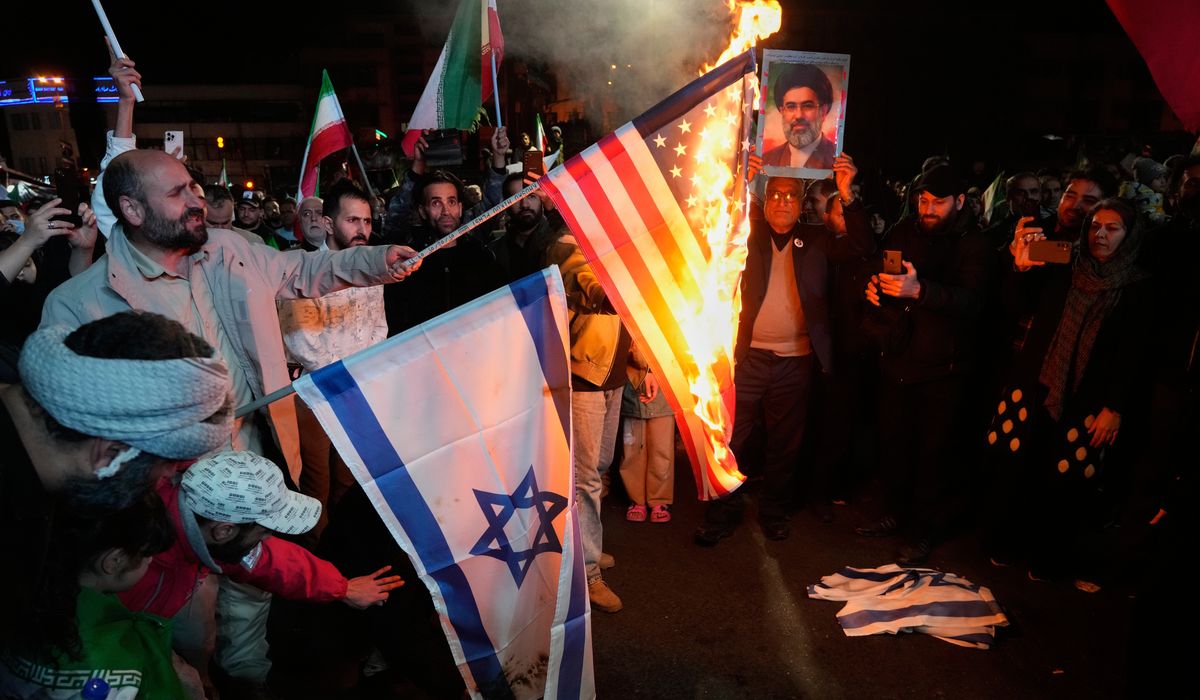
Iran is demanding compensation from five Arab countries that Tehran says are letting their territories be used by American forces in Operation Epic Fury, the joint U.S.-Israeli airstrike campaign.
Iran’s demand for compensation points to a rising diplomatic confrontation with several Arab governments over foreign military activity in their territories. Tehran frames the issue as a matter of sovereignty and reparations, insisting the presence of American forces operating under Operation Epic Fury violates its security and regional balance. This move signals Tehran’s intent to turn tactical disputes into political leverage.
The claim centers on five unnamed Arab countries that Iran accuses of allowing U.S. forces to operate on their soil in support of strikes tied to a U.S.-Israeli campaign. By insisting on compensation, Iran elevates what could be handled as a quiet diplomatic protest into a public, transactional demand. That shift increases pressure on those governments to choose between discreet cooperation with Washington and a more public posture to placate Tehran.
From a Republican viewpoint, this episode underscores predictable flaws in ambiguous U.S. policy: when American activity is tolerated but not transparently defended, allies become vulnerable to coercion. Tehran is exploiting ambiguity and signaling that it can extract political and material gains from gray-zone operations. Washington needs clearer messaging and firmer support for partners who host coalition activities.
Iran’s demand could have several immediate aims: to deter further operations, to secure a payout, or to rally domestic opinion by portraying the government as defending national honor. Each aim has different implications for how the five Arab states respond. Some will likely downplay the charge to avoid escalation, while others may quietly strengthen ties with the United States to preserve security cooperation.
Legal arguments over compensation are messy and rarely decisive in regional disputes, especially when military operations are justified by one side as counterterrorism or self-defense. Tehran will claim violation of its rights, but proving legal liability requires facts, jurisdiction, and international willingness to enforce a ruling. In short, legal avenues are unlikely to produce quick, practical outcomes.
Diplomatically, Iran’s move can be used to push Arab states into either public distancing from the U.S.-Israeli campaign or into closer, but quieter, cooperation with Washington to avoid paying any price. Either path forces those governments to balance security benefits against political fallout at home and in the region. The fracture could broaden if external actors treat the demand as a precedent to pursue similar claims.
For the five countries named by Tehran, the calculus will include security dependence on the United States, domestic political costs, and economic ties to Iran. Most Gulf states have learned to compartmentalize relations with Tehran while relying on American deterrence against major threats. That realpolitik suggests many will resist public concessions even if they quietly seek to reduce tensions.
Washington’s posture matters. If the United States publicly disavows operations or leaves partners exposed, it hands Tehran a diplomatic win and encourages future coercion. A stronger, clearer U.S. stance would reassure partners and reduce Tehran’s leverage, even if it does not eliminate the immediate dispute. Republicans would argue that deterrence and accountability are the right tools here, not appeasement.
Escalation risks are real but manageable if handled with firm diplomacy and transparent, credible deterrence. Military cooperation, intelligence sharing, and visible political backing for host countries discourage Tehran from pressing the demand into a broader crisis. Conversely, muddled responses invite continued pressure and create incentives for Iran to test others the same way.
Ultimately, the compensation demand is less about money than about influence and precedent. Tehran is testing the limits of regional tolerance for covert and overt operations linked to U.S. and Israeli security goals. How Washington and its regional partners respond will shape whether this becomes a one-off diplomatic fight or a new bargaining tool in Tehran’s foreign policy toolbox.

