

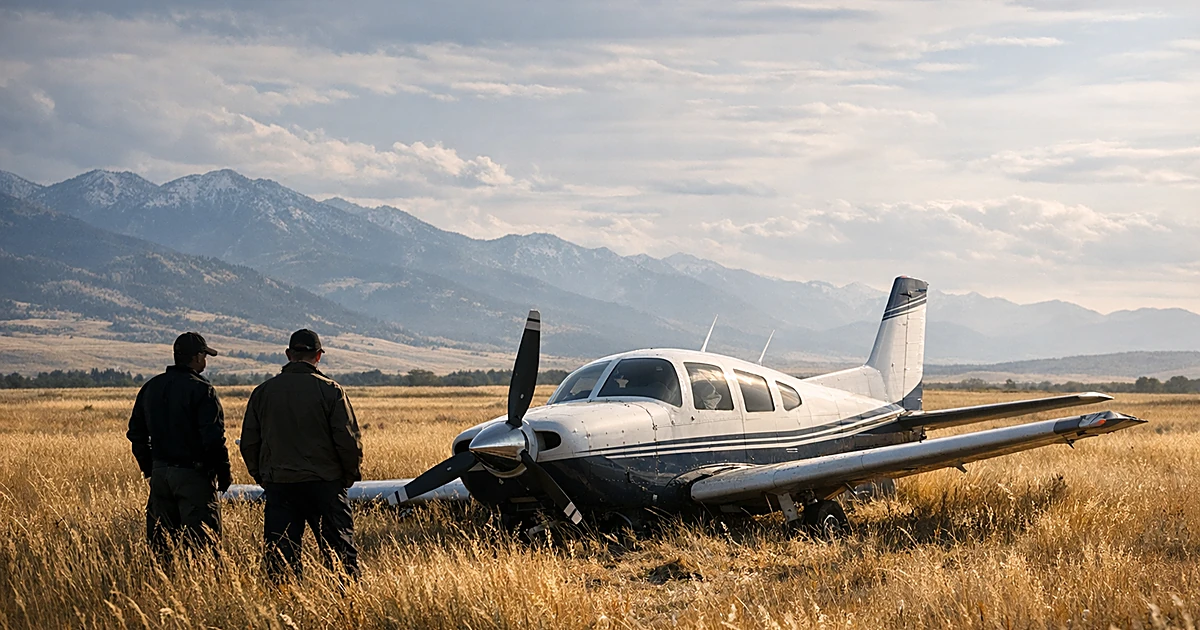
Sen. Tim Sheehy made an emergency field landing in southwest Montana after an in-flight engine failure, and both he and his co-pilot walked away unhurt.
Sen. Tim Sheehy, R-Mont., was piloting a plane during a routine training exercise when the engine failed and he set the aircraft down in a field near Ennis, Montana. Neither he nor his co-pilot suffered injuries, and there are no immediate reports of damage to property on the ground. The incident happened during a planned training flight, according to statements released by his office.
Sheehy is not your typical senator. Before politics he served as a Navy SEAL, went on to found an aerial firefighting company, and keeps FAA certifications as a commercial pilot and a certified flight instructor. Those credentials matter in a moment like this, when quick decisions and steady hands decide outcomes.
Engine failures in single-engine and light aircraft leave very little time for error, and they reward calm judgment. A pilot who trains for emergencies is more likely to identify landing options and manage the aircraft to a survivable outcome. That mix of training and real-world experience was on display Friday in Montana.
Mike Berg, Sheehy’s chief of staff, confirmed the basic facts and provided a statement to media outlets. The office described the flight as a routine training exercise that the senator completes twice a year. Berg said the aircraft experienced a mechanical engine failure and that both pilots landed safely.
“This afternoon, Sen. Sheehy was engaged in a routine flight training exercise which he completes twice a year. The aircraft experienced a mechanical engine failure.”
The office did not offer further comment beyond that statement, and public details remain limited at this stage. The twice-yearly training regimen the office described suggests Sheehy treats flying as a skill that requires regular practice, not a hobby he keeps at arm’s length. That discipline likely helped him respond calmly when the engine quit.
The aircraft came down near Ennis in Madison Valley, roughly 5,000 feet above sea level and surrounded by ranch land that can provide relatively flat terrain for an off-airport landing in fair weather. Those local conditions can matter a lot when a pilot must put a plane down without runway access. Montana’s open country can be unforgiving, but in this case it appears to have offered a usable spot.
Key technical details are not yet public. Officials have not identified the aircraft’s make and model, the flight’s origin or intended destination, or the specific mechanical cause of the failure. It is also unclear at this point whether the FAA or NTSB has opened a formal investigation, though that is common after emergency landings.
The name of the co-pilot has not been released, and no official statement has addressed potential property damage on the ground. Local reporting has not suggested any injuries to people on the ground, but investigators will need to confirm whether anything on the surface was affected. For now the immediate outcome is straightforward: both pilots were able to exit the aircraft safely.
Incidents involving public officials naturally draw attention, and that scrutiny is appropriate. The early facts here point to a controlled response by an experienced aviator who had practiced emergency procedures. When the margin between catastrophe and a clean outcome is small, the person in the left seat matters.
It is uncommon for sitting senators to maintain commercial pilot certificates and the currency to act as a flight instructor, especially while serving in Washington. Sheehy’s choice to keep flying and to schedule recurring training reflects a commitment to proficiency that not many in public life prioritize. That readiness is a practical trait voters in Montana recognized when they sent him to the Senate.
In-flight engine failures are rare but not unheard of in general aviation. There have been other high-profile cases where pilot skill shaped the outcome, including a Cessna pilot who ditched in the Hudson River after an engine failure and survived with a passenger. Those episodes underline that training and calm execution save lives.
Recent months have seen a variety of aviation incidents, from private jet trouble in adverse weather to military aircraft emergencies overseas. Across these events the consistent factor is how well the crew handled the problem under pressure. On Friday in Ennis, that margin favored survival rather than disaster.
Investigators will now work to determine the mechanical cause, whether the issue is tied to a specific aircraft type, and whether maintenance records were current. Those inquiries take time and will be necessary to prevent future failures. For the moment the verified facts remain limited to the engine failure, the emergency landing, and the lack of injuries.
Sheehy has not added a personal comment beyond his office’s release, which fits the restrained approach many veterans adopt after incidents. Military training emphasizes handling emergencies efficiently and without spectacle. That posture has been evident in the way his team has described the event.
Combat aviators and civilian pilots who fly under risk know that preparation is decisive when things go wrong. Sheehy’s twice-yearly voluntary training shows a personal investment in readiness that likely influenced Friday’s safe result. The pilots climbed out and walked away, and the focus will now shift to how and why the engine failed.

