

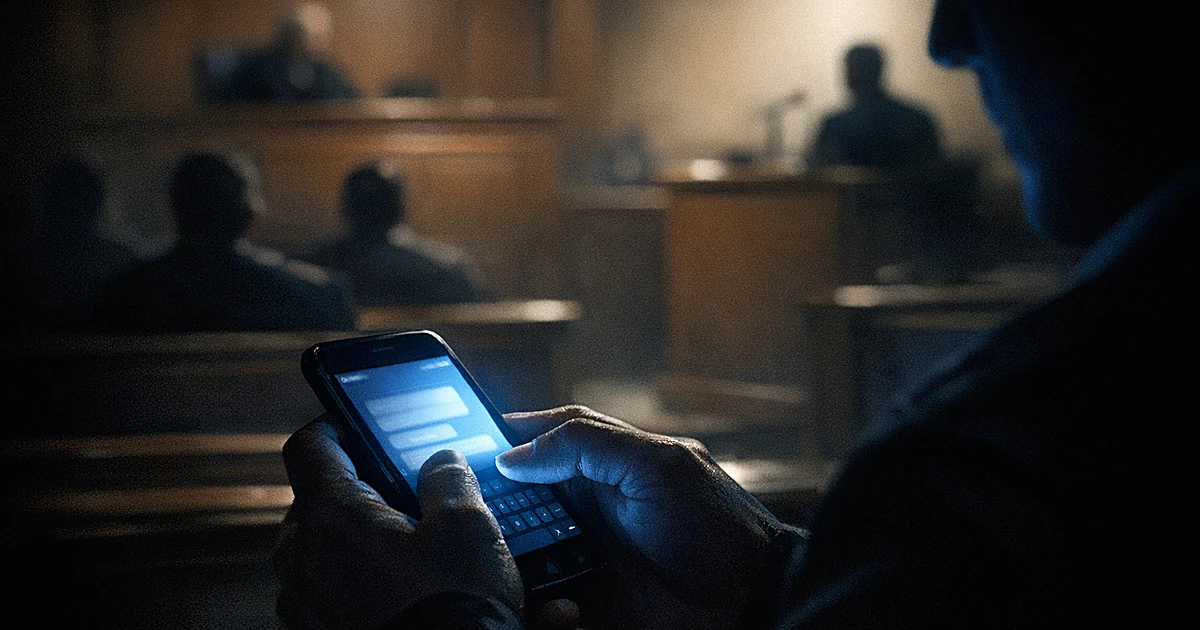
Courtroom testimony on day five of the preliminary hearing centered on text messages an investigator read aloud that allegedly show Tyler Robinson admitting to the shooting of Charlie Kirk, discussing a hidden rifle, and explaining a motive tied to Kirk’s “hatred.”
An investigator from the Utah State Bureau of Investigation took the witness stand and went through screenshots of a text exchange that prosecutors say is a direct confession. The messages were read into the record as part of a preliminary hearing where prosecutors have laid out a sequence of acts, plans, and aftermath that they say point to premeditation.
The hearing is now on its fifth day as the state pieces together what it calls a planned assassination outside a campus event in Orem, Utah, last September. If the judge finds probable cause to bind the case over for trial, prosecutors are seeking the death penalty.
Agent Brian Davis showed the court messages allegedly between Robinson and Lance Twiggs, Robinson’s former roommate and former lover, and those messages carry a striking mix of confession and calculation. The texts depict someone apologizing while also trying to manage physical evidence and possible detection at the scene.
The exchange began with Robinson telling Twiggs to stop what he was doing and look under a keyboard, then saying he was “stuck in Orem” and needed to retrieve a rifle he had left hidden nearby. The alleged messages lay out a plan to return to a drop point and a worry about law enforcement activity around the area where the weapon was stashed.
“I am. I’m sorry.”
Twiggs apparently pushed back, thinking police had already arrested someone else, and Robinson allegedly explained that officers had detained “some crazy old dude” and questioned another person in similar clothes, but that he was the shooter. He told Twiggs he had hoped to retrieve the rifle soon after the shooting, only to find the neighborhood largely locked down.
“I had enough of his hatred. Some hate can’t be negotiated out. If I’m able to grab my rifle unseen, I will have left no evidence. Going to attempt to retrieve it again. Hopefully they have moved on.”
That exchange, if accepted by the court as authentic, ties motive and method together in stark terms. Prosecutors say those words reflect what happened on September 10, 2025, when Charlie Kirk was shot while speaking at Utah Valley University during a “Prove Me Wrong” event.
Robinson allegedly admitted he had been planning the attack for “a bit over a week” and described changing clothes after stashing the rifle in a bush, saying he could not carry the weapon into the event. He told Twiggs he worried about fingerprints and monitored police presence near the drop point, looking for signs the gun had been found.
At times the texts read like a nervous field report: Robinson speculated a K-9 unit might have searched the area and described the gun as “old as s***” with modifications his “Gramps” made. He also referenced engraving bullets, a detail prosecutors highlighted as a deliberate, taunting element tied to the attack.
Investigators testified about engraved rounds recovered near the scene and about a spent fragment linked to the shooting. Those engravings reportedly included messages tied to niche internet culture and political taunts, details the prosecution says underline a personal and ideological dimension to the act.
Twiggs, who testified under limited immunity, confirmed receiving tearful, direct messages from Robinson and described their contents in court. That testimony, paired with the screenshots Agent Davis presented, forms a central thread of the prosecution’s narrative.
The texts show Robinson quickly shifting from confession to damage control, telling Twiggs to delete the exchange and weighing the rifle’s effectiveness. One message reads exactly, “Judging from today, I say Gramps’ gun does just fine,” a line prosecutors say signals both pride in planning and concern about evidence.
Robinson allegedly told Twiggs he planned to surrender, mentioned a neighbor who worked as a deputy, and advised Twiggs to ask for a lawyer and remain silent if questioned, specifically naming Doug Terry as the attorney he expected to use. He also posted “it was me at UVU yesterday” in a Discord chat about an hour before turning himself in, according to testimony presented at the hearing.
Defense lawyers have not denied the messages exist but have focused on contesting the physical evidence linking Robinson to the rifle and ammunition. Ballistics testing on a fragment from Kirk’s body produced results ATF examiner Samantha Karner described in court as “saying anything but inconclusive was inappropriate,” a point the defense highlighted heavily.
Deputy Utah County Attorney Chad Grunander told the judge plainly in court: “Your honor’s heard four days of testimony now. The evidence is overwhelming. It’s devastating.” The judge will hear oral arguments on September 1 before deciding whether to bind Robinson over for trial.
The courtroom has been open to public view after a prior decision to keep cameras in place, and the testimony so far has focused on the messages, the stashed rifle, and the steps Robinson allegedly took before and after the killing. Those details are now part of a record the court will evaluate as the case moves forward.
A defendant’s own alleged texts, read into evidence in open court, cut through a lot of clutter. Whether each piece of forensic proof holds up under defense scrutiny, those messages — with their blend of excuse, apology, and operational detail — are now central to what the state says it can prove.

