

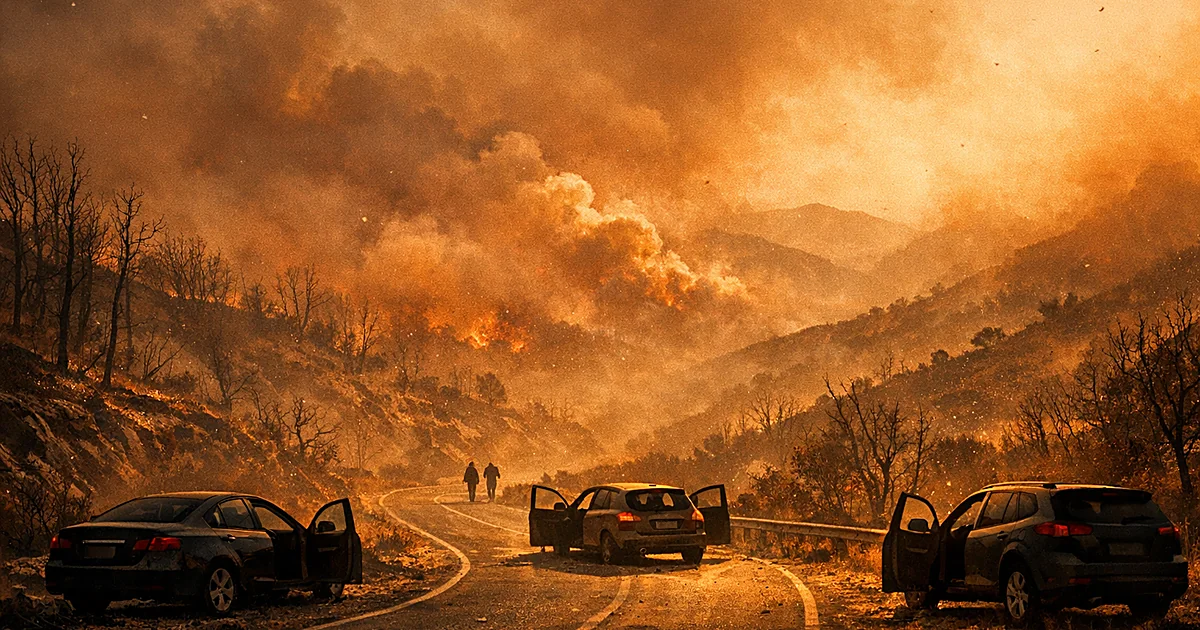
At least twelve people are dead and twenty-three are missing after a fast-moving wildfire tore through wooded slopes near Los Gallardos in Almeria, Spain, burning roughly 3,200 hectares and racing fifteen kilometres in about two hours as authorities and residents scrambled amid conflicting accounts of the ignition source and criticism of government preparedness.
The blaze raced through parched vegetation that had grown thick after heavy winter rains and then baked dry by early summer heat. Officials say the fire burned about 3,200 hectares, roughly 7,900 acres, and raced an extraordinary fifteen kilometres in two hours, overwhelming people who tried to flee. Most victims appear to be foreign nationals, and four burned-out vehicles suggested some victims were British because of their right-hand steering configuration.
Local authorities report the fire likely began when a broken power cable fell into a ditch next to a road, a version disputed by the utility Endesa, which insisted the cable carried no voltage. That contradiction remains unresolved and no arrests have been announced. Whether infrastructure failed or some other spark ignited the blaze, the conditions turning a small ignition into a runaway inferno were obvious to many.
Heat waves left brush and trees tinder-dry while a recent wet winter had produced heavy growth that later dried into fuel. Regional leader Juan Manuel Moreno called the event “one of the quickest and most complex we’ve seen.” He also warned plainly, “There’s still a long summer ahead.” Those are not words that comfort families searching for loved ones.
“Everything is extremely dry due to the heat waves, making it the perfect fuel; combined with the wind, it’s a ticking time bomb.”
Rescue teams found bodies abandoned along a route that was not part of the official evacuation plan, indicating many tried to outrun the flames rather than shelter-in-place as instructed. Eight people were discovered dead after leaving their cars to flee on foot, and others were found inside burned vehicles. Rescue crews reported walking sticks at the scene, suggesting hikers and older residents may be among the missing.
The human stories pouring in from social media and local forums painted a chaotic picture: relatives posting desperate pleas, reports of a red Ford Fiesta with a missing driver and dog, and messages from abroad about groups who tried to escape through a stream valley. Antonio Sanz, head of emergencies for Andalusia, confirmed at least one Spaniard among the dead and said many charred corpses still require DNA testing for identification.
“It was quite terrifying. It’s a very sad day, isn’t it? It’s devastating, really.”
Firefighters battled the flames as forecasts warned of stronger winds that could spread the blaze further. The fire season seems to be shifting earlier; veteran forest crews note they usually do not see fires of this scale until August. As one forest firefighter said, “We usually don’t see these fires until August. They’re starting earlier now because the vegetation dries out sooner.”
Spanish Prime Minister Pedro Sanchez offered official condolences and said he felt “enormous sadness and devastation.” Last year, after a record heatwave that charred 330,000 hectares, Sanchez admitted wildfire prevention had been “clearly insufficient” and pledged to do “whatever it takes” to avoid repeats. Those vows now ring hollow to families who lost loved ones while authorities faced questions about preparation and accountability.
The scale of Spain’s problem is large and accelerating. About 57,000 hectares have burned in Spain so far this year, roughly half the annual average for the past two decades, and that area accounts for roughly forty percent of all ground burned across the European Union. Comparisons to past disasters are stark: the Los Gallardos toll already exceeds the eleven firefighters killed in Guadalajara in 2005 and echoes the devastating June 2017 blaze in Portugal that killed more than sixty people.
When wildfires strike remote areas, response capacity can be stretched thin and delays become lethal. Recent incidents in remote areas of the American Southwest have shown similar vulnerabilities in emergency response and logistics. In Los Gallardos, the combination of slowing evacuation plans, speed of the fire, and conflicting accounts about the cause turned a dangerous situation into a deadly one.
The dispute over whether a downed power cable caused the blaze matters beyond technicality: if utility infrastructure ignited the fire, legal and political accountability must follow. If the cable was not the source, authorities must uncover what did start it and why preventative measures failed. Either way, officials knew vegetation was unusually dry and that the season was starting early, yet the measures promised after last year’s disaster did not prevent this outcome.
Families still wait for word, and twenty-three people remain missing as containment status fluctuates and windy forecasts threaten further spread. The tragedy exposes gaps in prevention, forestry management, and emergency planning, and it raises hard questions about whether political promises will be followed by tangible action before more lives are lost.

