

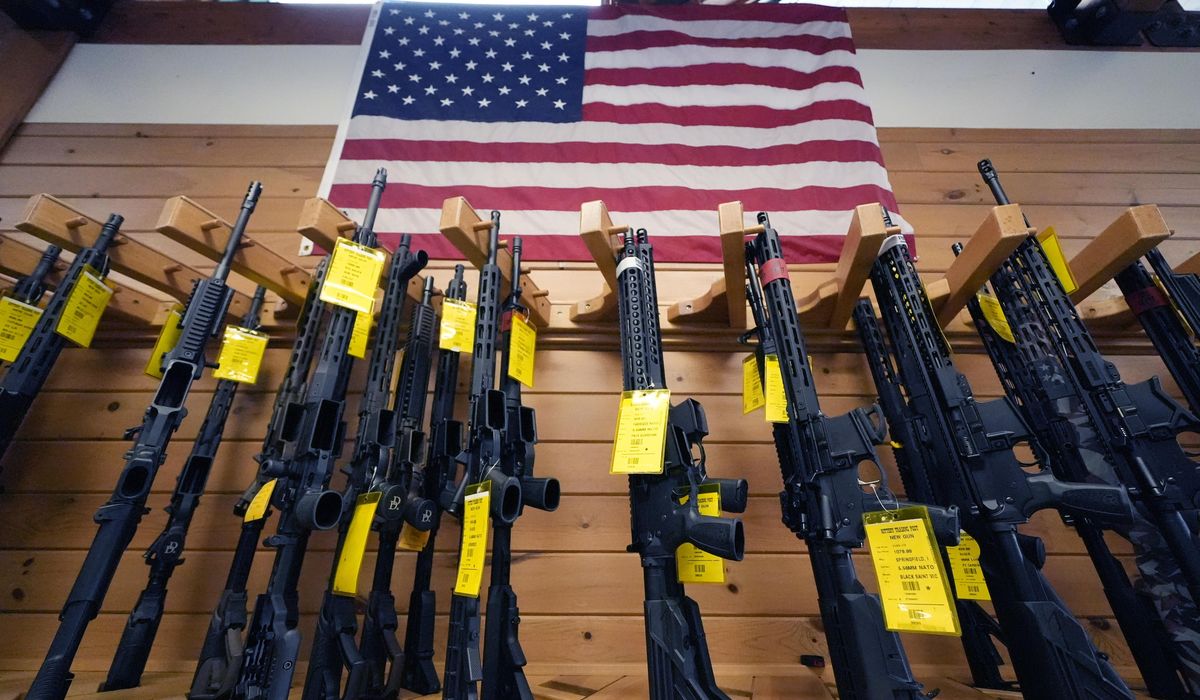
A federal appeals court Friday ruled New Jersey’s ban on AR-15 rifles and magazines holding more than 10 rounds of ammunition is unconstitutional. This decision revives a sharp constitutional fight over gun rights and state limits, and it sets the stage for further appeals and political debate. The ruling raises questions about public safety policy, judicial interpretation, and how states regulate firearms without crossing constitutional lines.
“A federal appeals court Friday ruled New Jersey’s ban on AR-15 rifles and magazines holding more than 10 rounds of ammunition is unconstitutional.” That sentence captures the legal outcome but not the broader argument behind it. The court’s decision rests on a view of the Second Amendment that many conservatives embrace: the right to keep and bear arms has meaningful protection that limits sweeping bans.
The ruling does not erase every regulation on firearms, but it draws a clear line against categorical prohibitions on a popular rifle model and common magazines. From a Republican perspective, this is a correction against laws that treat a tool as inherently illegal rather than focusing on criminal behavior. The opinion emphasizes constitutional limits on government power and the need for laws that target people who misuse guns, not the devices themselves.
Legal scholars and advocates on both sides will now consider strategy. Defenders of the ban will likely argue public safety justifies strict rules, while opponents point to constitutional text and history. The appeals court opinion signals skepticism of broad restrictions that sweep up law-abiding gun owners in the effort to curb violence.
Practical fallout will include litigation choices and possible changes in enforcement while appeals continue. State officials must decide whether to seek review from the Supreme Court, alter statutes to meet constitutional concerns, or pursue alternative regulations. Any of those paths will generate political fallout at the ballot box and in statehouses.
The decision also has ripple effects beyond New Jersey, because similar bans exist in multiple states and localities. Courts elsewhere could follow this reasoning, creating a patchwork of differing rules unless the high court provides clarity. Republican-leaning lawyers will stress the need for a consistent constitutional standard that protects individual rights across state lines.
Public safety arguments will remain central to the debate, and they deserve serious attention. Conservatives generally support measures that improve enforcement against violent criminals, strengthen background checks that are narrowly tailored, and fund mental health and community interventions. Those approaches aim to reduce violence without banning entire classes of firearms used by millions of law-abiding citizens.
The appeals court opinion will be parsed for its legal tests and historical analysis, and those details matter for future cases. If the reasoning rests on an originalist reading of the Second Amendment, it will appeal to conservatives who favor textual and historical methods. Opponents will press policy concerns and urge courts to allow more regulatory flexibility in the name of public safety.
For elected officials, the ruling is politically consequential. Republicans can frame it as a defense of constitutional rights and individual liberty, arguing that public safety is best served by targeting criminals rather than disarming law-abiding people. Democrats and others who favor stricter gun laws will portray the ruling as an obstacle to reducing mass shootings and gun violence.
This decision will likely prompt a national conversation about balancing rights and safety in a way that is practical and constitutional. Expect legislative proposals that try to thread the needle by restricting particular behaviors while avoiding blanket bans. The debate will remain heated, but the ruling puts constitutional limits at the center of how policymakers craft responses to gun violence.
As the legal process continues, courts, politicians, and citizens will weigh the tradeoffs between liberty and security. The appeals court’s ruling marks a significant moment in that contest, pushing the issue back into the national spotlight and ensuring it will be fought over in courtrooms and legislatures for months to come.

