

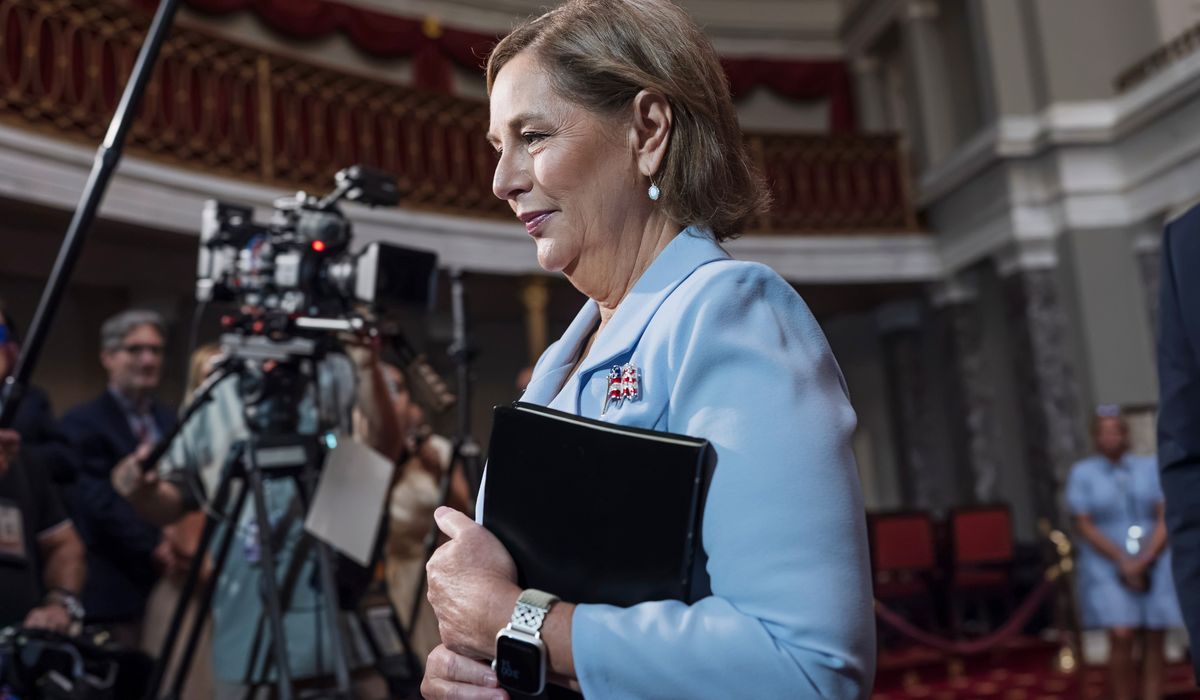
President Trump has asked new South Carolina Sen. Darline Graham, who was appointed to temporarily fill her late brother’s seat, to run for a full term and offered his endorsement.
The appointment of Darline Graham to the South Carolina Senate seat was swift and intended to keep conservative representation steady after a sudden vacancy. Her selection brings immediate attention to a contest that now has a major national player weighing in. President Trump’s public ask and endorsement changes the tone from a quiet transition to a high-stakes GOP decision.
Trump’s backing means more than a headline; it signals to donors, party operatives, and primary voters where the national Republican apparatus may focus support. An endorsement from a former president still carries weight in many GOP primaries, especially in a state that values strong conservative credentials. For a temporary appointee like Graham, that kind of backing can speed up fundraising and boost name recognition across county lines.
Graham’s role as an appointed senator puts her in the unusual position of defending a seat she didn’t originally win, while also having the advantages of incumbency. She steps into a voting role, committee work, and constituent service with a short runway before electoral tests. That makes the endorsement a practical tool: it helps her build the campaign infrastructure needed to convert an appointment into an elected mandate.
Republican voters will now weigh continuity versus fresh competition, and Trump’s voice will be a major factor in that calculation. Some conservative activists prize loyalty to traditional conservative principles, while others want a bold new conservative who can break with the status quo. The endorsement nudges those undecided toward seeing Graham as the continuity choice aligned with Trump-era priorities.
On the ground, the endorsement is likely to reshape early fundraising and endorsements from other GOP leaders. Local committees and prominent donors often follow signals from the national party, and an early consolidation can blunt fractious primaries. That helps the Republican Party present a unified front heading into a general election where every Senate seat has national implications.
There are practical policy angles to consider too. A reliably conservative vote in the upper chamber affects judicial confirmations, budget fights, and key regulatory rollbacks that matter to South Carolina businesses and voters. Republicans looking to secure and expand those policy wins will see value in quickly converting an appointment into an elected seat that can be counted on for the next term.
Candidates who were considering bids will now have to reassess the math: mounting a campaign against a Trump-endorsed incumbent is a different proposition than competing in an open or lightly contested primary. That can shrink the field and reorder campaign calendars, as potential challengers either move on or recalibrate strategy to appeal to the same voters who respond to Trump’s endorsement.
The timeline for formally entering a full-term race will determine how this episode unfolds. Filing deadlines, primary schedules, and local party rules will shape the immediate battleground. For now, the endorsement places Darline Graham at the center of a conversation about leadership, continuity, and conservative priorities in South Carolina, and it makes the coming months a test of whether an appointed senator can turn rapid support into lasting political strength.

