

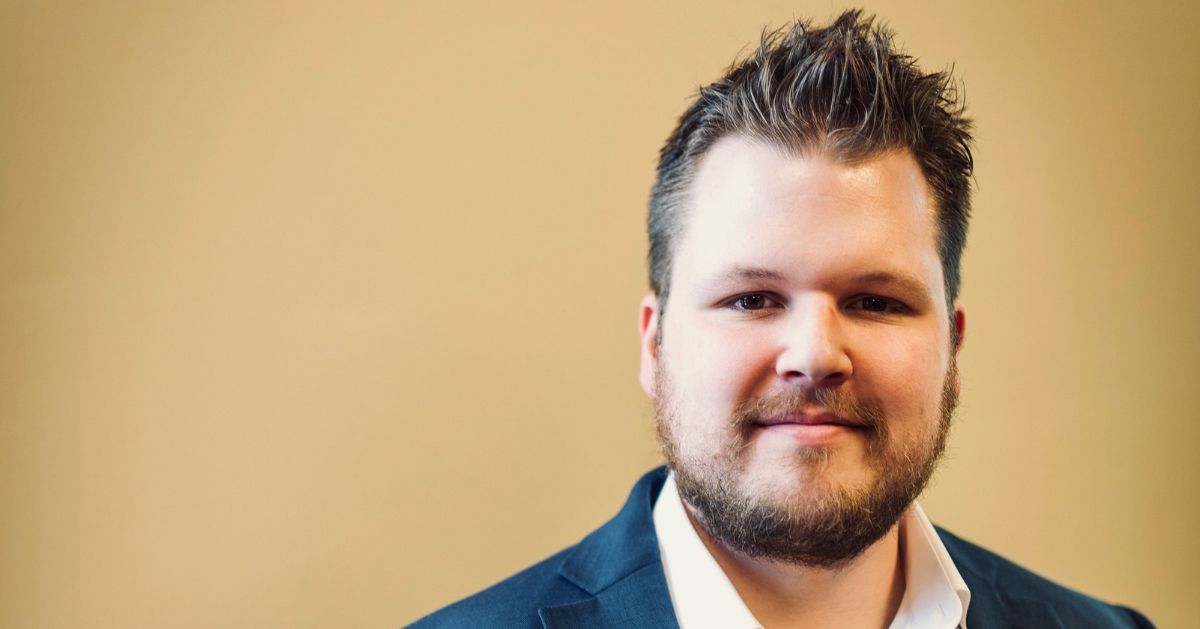
New York’s mayor threatened to detain Israel’s prime minister, stirred a firestorm over the International Criminal Court, and drew sharp criticism for mixing grandstanding with contested legal claims and troubling personal associations.
On Saturday the mayor of New York said the prime minister of the Jewish state belongs in a jail cell. Zohran Mamdani told the New York Times that Benjamin Netanyahu “belongs in the Hague,” called him “a war criminal who has been charged by the International Criminal Court,” and confirmed that his administration is working out whether it can arrest the Israeli leader when he comes to New York for the United Nations in September. Netanyahu’s office answered on Sunday that the ICC is “a kangaroo court that has no jurisdiction over Americans or Israelis,” and the warrant is “bogus.”
The legal reality is simple: a mayor cannot arrest a foreign head of government, and Mamdani knows it. The United States is not a member of the ICC, heads of state visiting the United Nations enjoy immunity under the 1947 treaty, and cities lack the power to override federal authority on foreign affairs. Those checks make any municipal arrest plan legally nonstarter.
Mamdani even acknowledged limits in his own remarks, promising he “won’t be writing our own laws.” Still, the public posture was theatrical, and it drew not just pundit heat but pushback from his political peers. Fetterman called the threat a stunt: “He’s just a clown to even say that. So he won’t try that. Just sit down.” The American ambassador to the United Nations, Mike Waltz, labeled the whole episode “pure political theater.”
The practical upshot is predictable: Netanyahu will fly into New York for the United Nations and fly out untouched. The announcement was targeted at an audience rather than designed to change diplomatic reality. For voters watching, the messaging mattered more than any enforceable legal claim.
The court Mamdani embraced has long been criticized for selectivity and geopolitical constraints. Nine of its first ten investigations were in Africa, every person it has convicted has been African and drawn from just three countries, and it declined to open a case over the million Uyghurs held in Chinese camps. It also failed to pursue Bashar al-Assad after Russia and China blocked moves at the United Nations, and it has not issued warrants for Iran’s leaders.
This selective record echoes other flawed international bodies that tolerate bad actors among their members. The U.N. Human Rights Council, for example, has included China and Cuba as members, which undercuts moral authority when the planet’s worst abusers take seats in judgment. A body that lets its worst offenders sit in judgment loses credibility.
American policy has treated the ICC warily across administrations. Bill Clinton signed the treaty and then refused to send it to the Senate, George W. Bush withdrew the signature, Barack Obama kept distance, and Donald Trump sanctioned the court twice. Washington has used its own levers, like sanctions, when it deemed appropriate rather than bowing to what it sees as an inconsistent international tribunal.
Senior Democrats were quick to distance themselves from the ICC move aimed at Israeli officials. Joe Biden called it “outrageous,” and said flatly that “there is no equivalence, none, between Israel and Hamas.” Chuck Schumer said he “condemned and rejected” it, and Congressman Jared Moskowitz called the court’s move an “antisemitic double standard.” Only a few lawmakers cheered the warrant, and Mamdani aligned himself with that smaller faction.
The warrant itself carries controversy around its author. Karim Khan, the prosecutor who pushed the case, moved to charge Netanyahu on May 20, 2024 about two and a half weeks after he learned he was under investigation for sexual assault, according to reporting in The Wall Street Journal. The United Nations opened an investigation, the court suspended Khan in June, and member states were scheduled to vote this week on whether to remove him from office. The court’s own appeals judges found the chamber that issued the warrant “erred in law.”
Mamdani insists he opposes antisemitism and has said hatred of Jews is “something that we have to tackle.” Words matter, but words alone do not erase patterns of statements and associations that many find worrying; historical examples show self-description can mask deeper problems. The contrast between rhetoric and record has prompted sustained scrutiny.
He has also avoided firm answers on incendiary phrases and movements. Mamdani would not condemn “globalize the intifada,” saying a mayor should not “police language” before retreating to the claim that he merely “discourages” it. He described support for the movement to boycott Israel as “consistent with the core of my politics,” and when asked if Israel has a right to exist as a Jewish state he said it may exist “with equal rights for all” and refused to endorse a state with “a hierarchy of citizenship.”
Mamdani praised Siraj Wahhaj as “one of the nation’s foremost Muslim leaders,” a figure federal prosecutors named an unindicted co-conspirator in the 1993 World Trade Center bombing, although he was never charged. In June Mamdani described the pro-Israel lobby AIPAC as part of a world of “monsters.” More than 700 rabbis, the Anti-Defamation League, and local Democratic officials criticized those comments and flagged broader concerns about antisemitic tropes and rhetoric.
His wife, Rama Duwaji, has her own record that amplified the controversy. She illustrated work for a writer who called the October 7 massacre “a spectacular moment,” and social media posts once honored Leila Khaled and Shadia Abu Ghazaleh. One post read, “F*** Tel Aviv. Shouldn’t exist in the first place.” She later apologized for racial slurs in old posts but did not retract praise for terrorists, and Israel moved to bar her while its minister for combating antisemitism called her record “an unprecedented moral low.”
Mamdani cannot make an arrest when a sovereign head of government enjoys immunity, and he understands the limits. The political theater of handcuffs was always the point: a signal sent to the city’s Jewish families that their mayor’s first instinct, when the leader of the Jewish state arrives, is a pair of cuffs. That message landed exactly where it was meant to land, regardless of legal reality.

