

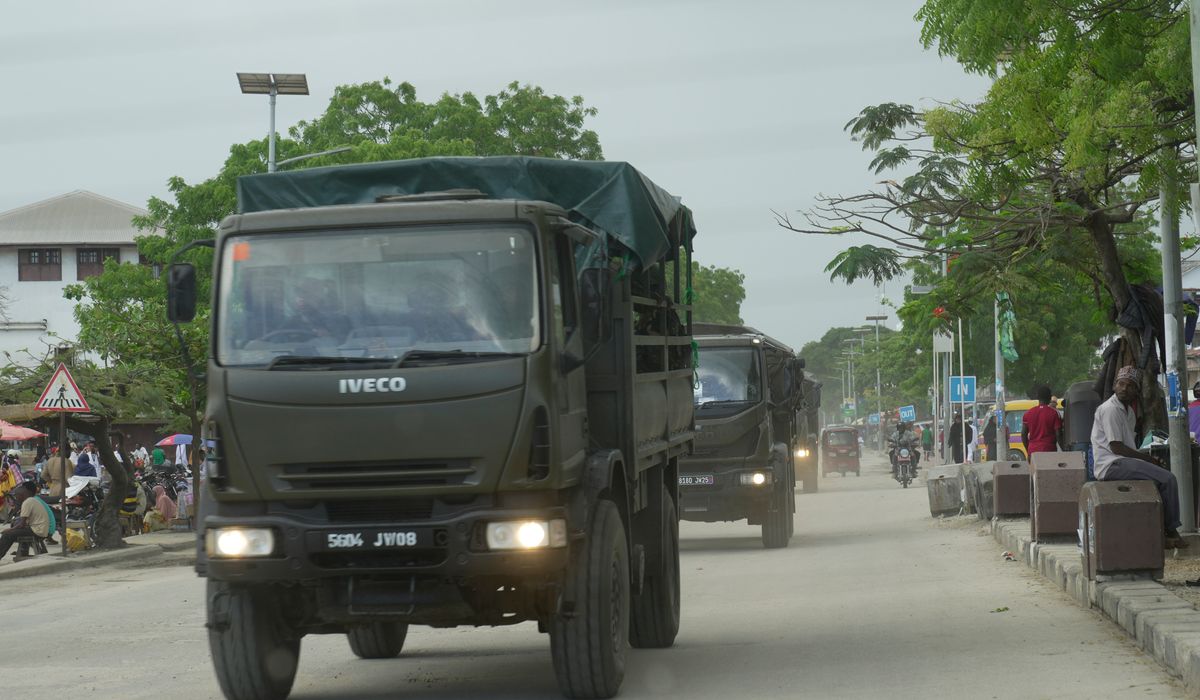
Tanzania’s opposition says dozens of its officials were arrested and charged with terrorism, raising fresh concerns about the use of security laws to silence critics and the erosion of democratic norms.
Tanzania’s main opposition party on Saturday said 51 of its officials were arrested and charged with terrorism, accusing the government of using law enforcement to intimidate critics. That claim landed like a thrown gauntlet, forcing both domestic audiences and international observers to weigh whether this is law enforcement acting on legitimate threats or a political hand using heavy tools against rivals. Either way, the optics are damaging: the mix of terrorism labels and mass arrests suggests a new tolerance for sweeping state power over political life.
From a Republican viewpoint, the first instinct is to defend the principles of free speech, competitive politics, and due process, and to push back on any sign that security statutes are being weaponized. When governments conflate opposition activity with terrorism, they create a blunt instrument that chills debate and discourages civic engagement. The danger isn’t only to the politicians rounded up; it’s to voters, journalists, and anyone who might speak up, because fear becomes the cheap substitute for persuasion in public life.
Using terrorism charges against political figures raises immediate legal questions that deserve plain answers: what evidence supports the charges, who conducted the investigations, and how transparent will the prosecutions be? Serious crimes require serious evidence and proper procedure, not broad, public displays that look like intimidation. Without open courts and independent oversight, suspicion grows that the system is being used to settle political scores rather than to deliver impartial justice.
The practical consequences go beyond courtroom drama. When state power reaches into opposition ranks with tools meant for national security, businesses and investors take note, and ordinary citizens recalibrate how they engage with institutions. Political instability or the perception of creeping authoritarianism can cool investment and complicate diplomatic relationships, making governance more expensive for everyone. A country that muddles its legal standards to score short-term political points risks long-term economic and social costs.
There’s also a human cost that’s easy to miss in headlines: people’s lives are interrupted, reputations are bruised, and families bear the fallout when leaders and officials are arrested under serious charges. Republicans who care about individual liberty see this not as partisan theater but as a test of whether legal systems protect citizens from overreach. The appeal of strong government is hollow if it can be turned into a tool to silence opponents rather than a mechanism to protect rights and promote prosperity.
Regionally, the move feeds a worrying pattern where anti-terror frameworks, intended for genuine threats, become catchalls for political dissent in several places. The rule of law depends on clear lines between legitimate security measures and political competition, and blurring those lines invites abuse. When leaders rely on policing and prosecutions to maintain power, they undermine the institutions that keep elections meaningful and peaceful transfers of authority possible.
Watchful observers inside and outside Tanzania will be parsing the legal filings, the conduct of police, and the behavior of courts to decide whether these arrests mark a drift toward authoritarianism or a lawful response to real threats. For conservatives who prize order, the answer matters because order without liberty is simply control. The path forward in such a case is messy and contested, and the stakes include not just who governs but how power itself is constrained.

