

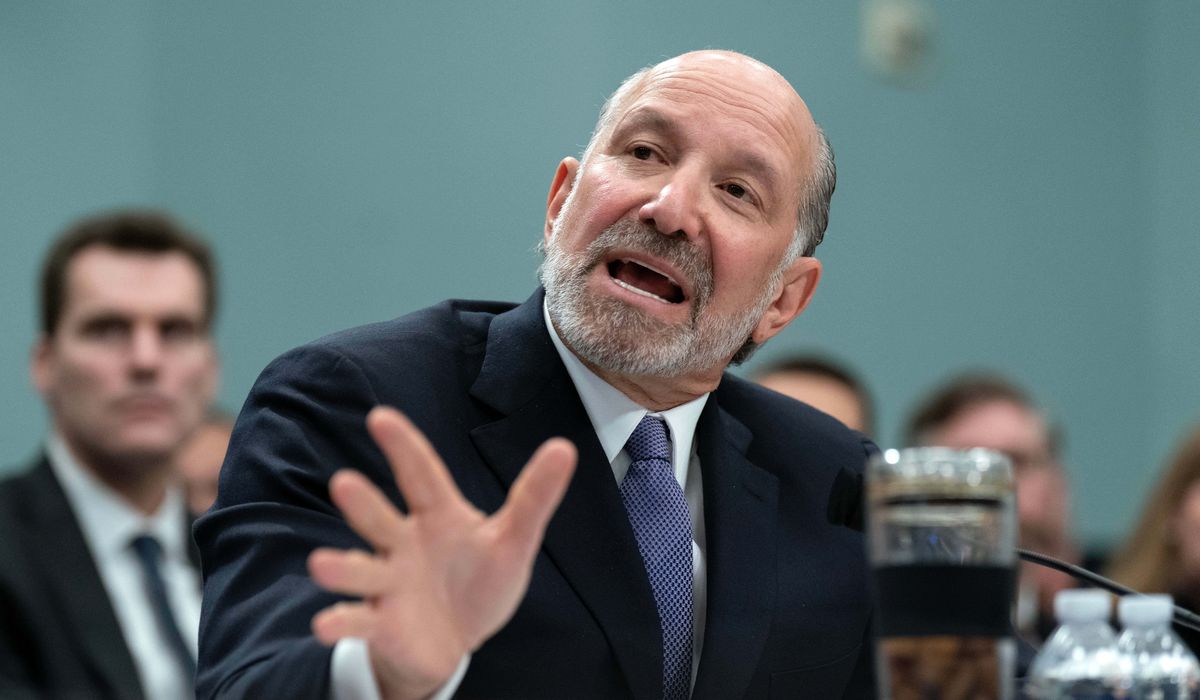
Commerce Secretary Howard Lutnick acknowledged he misspoke after describing the Iran conflict as an “economic chokeout” and saying no U.S. service members had died, prompting questions about his choice of words and the message that sends about the human cost of conflict.
Commerce Secretary Howard Lutnick said Thursday he misspoke a day earlier when he described the Iran war as an “economic chokeout” in which no U.S. service members had died. The correction came quickly, but the original phrasing already landed awkwardly for many observers. Those two lines—one phrase and one claim—are what drove the story.
The language matters because it frames a complex, dangerous situation in blunt economic terms. Calling a conflict an “economic chokeout” reduces military and human consequences to a policy tactic. From a Republican viewpoint, officials must choose words that respect service members and reflect strategic seriousness.
Mistakes happen, and officials correct them, yet some errors create real political vulnerability. Opponents will seize any phrase that sounds dismissive of casualties or that seems to downplay American sacrifice. That makes careful, precise language a political as well as a moral requirement.
Within party lines, the reaction is straightforward: hold leaders accountable while supporting policies that protect American interests. Republicans typically push for clarity on the objectives, costs, and protections for troops. When a senior official misspeaks, it gives critics a chance to question competence and messaging strategy.
Beyond partisan reaction, there’s an operational concern: sloppy rhetoric can confuse allies and adversaries. Allies expect clear, steady language that matches policy, and rivals look for signs of inconsistency or low resolve. A commerce official speaking about a war in economic terms blurs roles and can complicate interagency communication.
There’s also a domestic political angle that matters to voters. Families of service members want honest acknowledgment of risks and losses. If a leader’s offhand remark suggests otherwise, it can generate anger and distrust among communities that pay the heaviest price for war.
Rhetoric aside, the underlying issue is policy coherence. Economic tools can be powerful, but they rarely replace the hard choices that come with security operations. The public deserves straightforward explanations of what economic pressure can and cannot do, and who bears the cost when pressure escalates to violence.
Republican messaging emphasizes both strength and accountability, which means pushing back on careless language while supporting robust action when required. Officials must be ready to explain how sanctions, trade measures, and diplomatic pressure fit into a broader strategy. That explanation should avoid minimizing the role of the armed forces or the human costs involved.
Transparency helps restore trust after a gaffe, but it must be paired with substantive clarity. A prompt correction from Lutnick was the right first step, yet it needs to be accompanied by clear articulation of policy goals and limits. Voters and lawmakers alike expect that kind of follow-up.
The incident also offers a reminder about vetting and preparation for public remarks. When someone in a high-profile role addresses topics outside their typical portfolio, briefings should be thorough and editors must catch risky phrasing. Good communication is part of competent governance and matters for both national security and domestic politics.
In short, a misspoken line can become a larger story about judgment and messaging. Correcting the record matters, but so does learning from the slip to improve how officials describe national strategy and how they honor the sacrifices of service members. The debate over language here will keep shaping how the public evaluates leadership on foreign policy and national security.

