

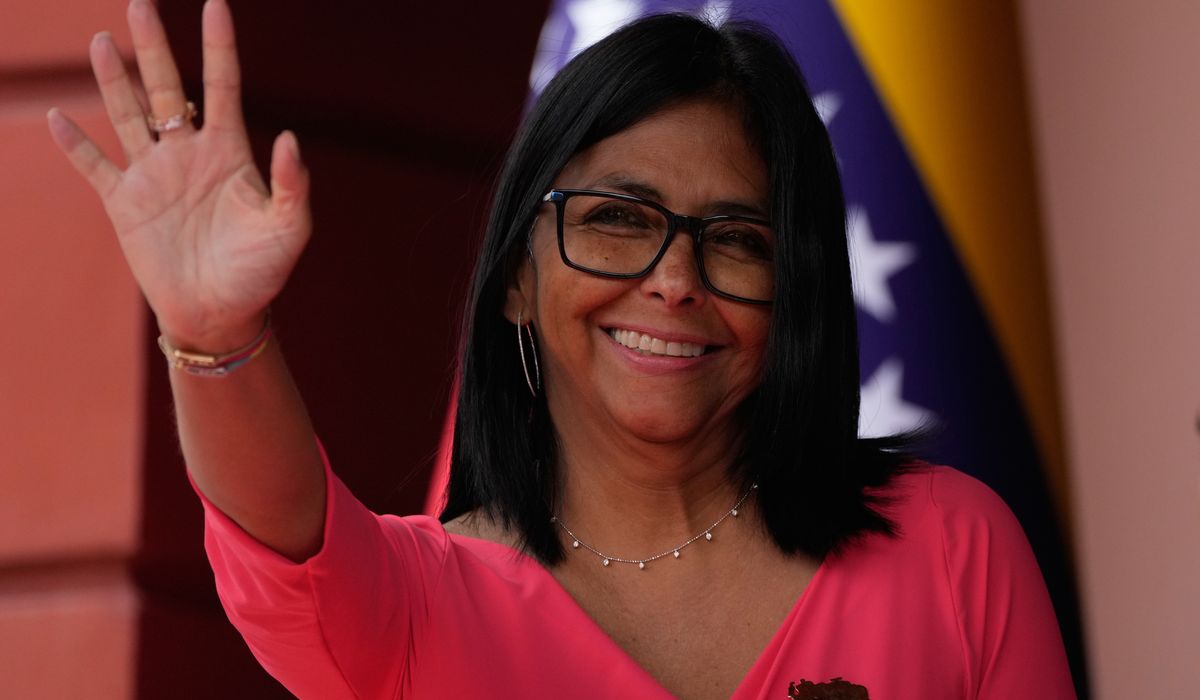
Venezuela’s acting president Delcy Rodriguez met Monday with Barbados’ Prime Minister Mia Mottley and invited her administration to invest in energy production in the South American country.
Delcy Rodriguez’s meeting with Mia Mottley on Monday put energy cooperation back on the table between Caracas and a key Caribbean neighbor. The invitation was simple and direct: Caracas wants partners to help revive and expand energy production. For Barbados, the pitch is about securing fuel and possibly bringing jobs and capacity to the region.
Venezuela still sits on vast energy resources and the infrastructure to produce them, even if years of mismanagement and sanctions have left much of that potential idle. From a Republican viewpoint this kind of outreach raises immediate questions about reliability and the rule of law. Investing in places where property rights are weak and contracts can be upended should make any investor pause and demand ironclad safeguards.
Barbados faces practical choices. As a small island nation it needs stable, affordable energy and resilience against supply shocks. Engaging with Venezuela might look attractive on paper because of proximity and potential cost advantages. But the transactional reality is complicated by political risk and the international legal environment around Venezuelan assets.
Republicans tend to frame this kind of diplomacy as a test of whether democracy-friendly partners can insist on transparent deals and safeguards. Energy investments should come with clear commitments to oversight, environmental standards, and independent arbitration in case disputes arise. Without those protections, a deal becomes leverage for the Venezuelan government rather than a mutual win.
On the diplomatic front, this meeting signals Caracas is trying to rebuild regional ties and open practical channels despite its strained relations with many Western capitals. Barbados has to balance its own foreign policy priorities with regional solidarity and the realities of trade. Prime Minister Mottley is known for blunt talk on international issues, so her approach will be watched closely by both neighbors and longer term allies.
There are real economic incentives on both sides if the risks are managed: local jobs, restored refining capacity, and the possibility of creating a supply corridor for Caribbean markets. The technical work needed to rehabilitate fields and refineries will be significant and costly, and it will require transparent contracting and reliable long-term governance. That is where any investor has to demand proof, not promises.
Any deal will likely attract scrutiny from Washington and other capitals that worry about legitimizing an administration with a troubled record. Republicans will point to the need for conditional engagement tied to verifiable improvements in governance and respect for international norms. The practical politics means Barbados will weigh immediate energy needs against long-term strategic alignments.
The conversation opened by that Monday meeting is now moving into the nuts and bolts phase, where feasibility and legal teams will assess what can be done without exposing Barbados or private investors to unacceptable risk. Private sector players will be cautious and will insist on clear dispute mechanisms and protections that reflect the on-the-ground realities. How those safeguards are structured will determine whether this invitation becomes a working partnership or another headline that fades quickly.

