

State fairs grew from simple agricultural gatherings into sprawling celebrations of invention, competition, and community, tracing a path from early 19th-century rural life to the modern mix of machinery, midways, and hometown pride.
State fairs are part marketplace, part classroom, and part big-tent entertainment. They began as places where farmers could compare notes, show livestock, and learn new methods in an era when most Americans lived far from cities and information moved slowly.
In 1800 the United States had about 5.3 million people, and by 1820 only roughly 7% lived in urban areas. Travel was slow and often difficult; roads were poor and rivers and canals mattered for moving goods and people. The Erie Canal, opened in 1825, was a turning point for connecting inland farms to broader markets.
The country had 16 states in 1800 and about 26 by 1841, yet farmers had little chance to see innovations from other regions. Early agricultural shows filled that gap, with pioneers like Elkanah Watson organizing cattle displays and breeding experiments near Pittsfield, Massachusetts. Watson formed the Berkshire Agricultural Society in 1811, a direct ancestor of the state fair idea.
By the 1830s states began organizing agricultural societies to promote improvement. New York created its State Agricultural Society in 1832 and set aside funds—$8,000 at the time—to encourage agriculture and household manufacturing. Those efforts culminated in the first New York State Fair in Syracuse on September 29 and 30, 1841, which drew an estimated 10,000 to 15,000 people for animal exhibitions, plowing contests, and displays of goods.
That first fair moved around over the next decades, showing in cities like Buffalo, Rochester, New York City, Saratoga Springs, and Utica before finding a permanent home in 1889 when a 100-acre site near Syracuse was donated. Other states took notice; Minnesota held a territorial fair in Minneapolis in 1855, three years before statehood, and similar events spread across the growing nation.
Competition was central from the start. Early contests rewarded superior livestock and skillful plowing, and categories expanded over time to include everything from quilts to photography to baking. Those blue ribbons created a culture where ordinary people could be recognized for craftsmanship and effort.
Fairs also tracked American technology. Machinery Hill at Minnesota’s fair showcased agricultural equipment, auto races appeared by 1907, and in 1910 the first airplane flight in that state took place at the fairgrounds. Mechanical innovation became a pillar of the fair experience as the country industrialized.
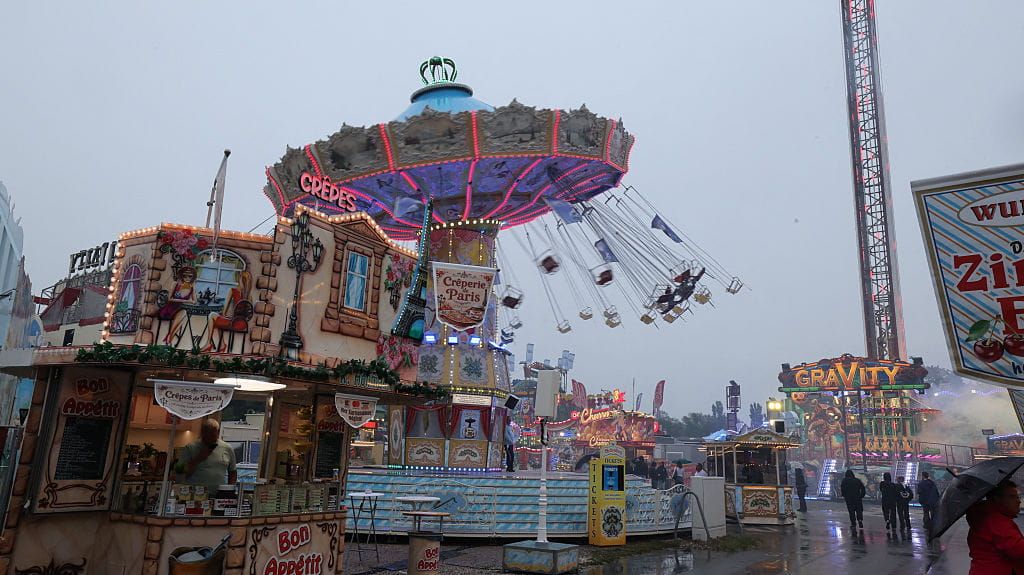
Entertainment grew alongside agriculture. Electricity arriving at fairs allowed evening Grandstand shows beginning around 1899, and carnival midways showed up in 1904. Attractions multiplied into the rides, concerts, and sideshows that are familiar today, pushing fairs beyond purely educational events into mass spectacles.
Political and cultural moments also happened on fairgrounds. On September 2, 1901, then-Vice President Theodore Roosevelt addressed the Minnesota State Fair and declared “Speak softly and carry a big stick,” a phrase that stuck with his public image. Fairs provided a stage for leaders, inventors, and performers to reach large, local audiences.
Food and novelty items often trace their roots to fairs. Wisconsin’s cream puff began in 1924 and endures a century later, while the Fletcher brothers introduced Corny Dogs to Texas fairgoers in 1942 by handing out samples. The Tilt-A-Whirl debuted in Minnesota in 1926 after Herbert Sellner built the ride, and sports stars like Dan Patch became national celebrities after record-setting performances at fairs in the early 1900s.
Fairs also foster talent development: the Bill Riley Talent Search began at the Iowa State Fair in 1959 and grew into a statewide pipeline for young performers. Those traditions connect generations, offering kids hands-on lessons in responsibility—raising animals, cultivating crops, or crafting projects that require months of work.
A child who spends a season raising an animal learns punctuality, care, and accountability because feeding time isn’t optional. Growing vegetables teaches patience, and sewing or woodworking rewards practice and persistence. When a young person points at a ribbon-winning animal or a handcrafted table and says, “I did that,” the fair has done its real work: it turns private effort into public accomplishment.

