

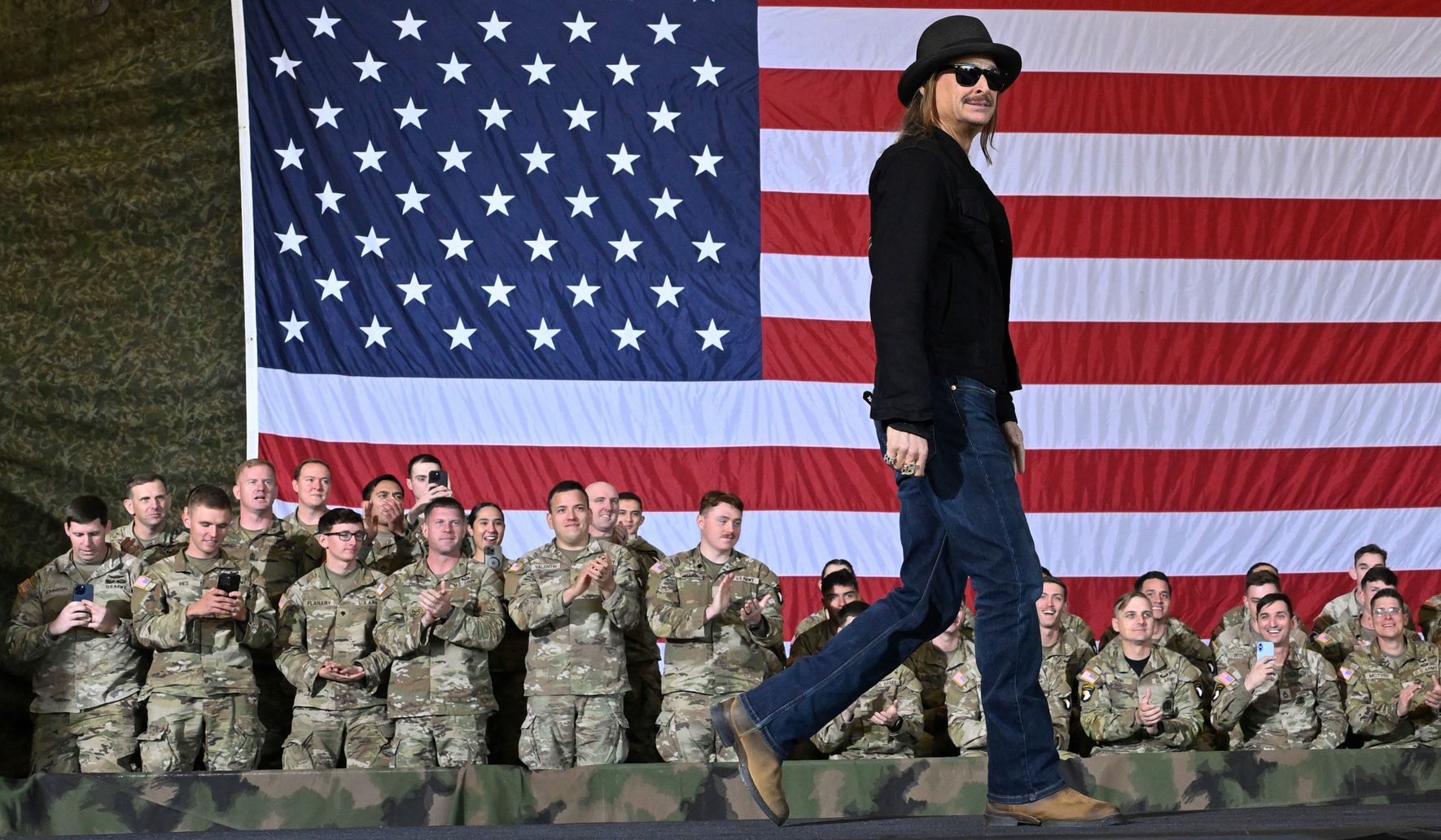
The Army has opened an administrative review after two AH-64 Apache helicopters on a training run hovered near the hillside home of Kid Rock, who is an outspoken supporter of President Donald Trump.
The incident involved two AH-64 Apache helicopters that reportedly hovered near the hillside home of Kid Rock during a training run, prompting the Army to launch an administrative review. Local residents noticed the low-altitude activity and raised concerns about safety and privacy. The military’s response is to examine the circumstances and determine whether procedures were followed.
People expect the armed forces to train effectively, but they also expect training to respect private property and community safety. When military aircraft fly close to residential areas questions about coordination with local authorities and airspace planning naturally follow. That tension between readiness and community impact is exactly why a review was put in place.
An administrative review will typically look at flight logs, pilot communications, and mission planning documents to establish what happened. The Army will interview crew members and check whether the flight path matched approved training corridors. This is standard procedure and not a criminal investigation unless evidence points to wrongdoing.
From a Republican perspective the answer should balance strong support for military readiness with clear accountability when something goes sideways. We want pilots to have the freedom to train under realistic conditions, but that freedom shouldn’t come at the expense of a citizen’s safety or peace of mind. Accountability protects both the public and the reputation of our armed forces.
There are a handful of practical causes that might explain the incident, from navigation adjustments to temporary changes in a training profile that were not properly deconflicted. Weather, mechanical issues, or an unexpected maneuver during a simulated scenario can push aircraft out of a planned lane. Whatever the cause, the review should identify whether checklist and coordination failures occurred.
The Army’s review will likely examine coordination between the unit conducting the training and any local air traffic or law enforcement agencies. It may also assess whether the pilots had current briefings on restricted or sensitive locations and whether standard mitigation measures were used. Transparency about the process, to the extent it does not compromise operational security, helps rebuild trust with the community.
Kid Rock is a high-profile entertainer and an outspoken supporter of President Donald Trump, which naturally draws attention when something unusual happens near his property. That attention is part of the reason the Army moved quickly to review the event, since any perceived lapse near a public figure can generate headlines and political debate. The situation shows how incidents that might otherwise be routine can escalate when they intersect with public personalities.
This episode highlights the ongoing need for clear protocols governing training over or near inhabited areas, including tailored guidance for low-altitude helicopter operations. Consistent enforcement of those protocols reduces the likelihood of repeat incidents and protects both civilians and service members. It also reinforces the idea that support for the military and demands for accountability are not mutually exclusive.
Expect the administrative review to produce a factual report that outlines what went wrong and recommends fixes, whether that means retraining crews, adjusting routes, or improving coordination with local authorities. The process should move methodically so findings are based on evidence, not headlines. How the Army responds will matter for future training operations and for the relationship between the military and the communities it passes over.

