

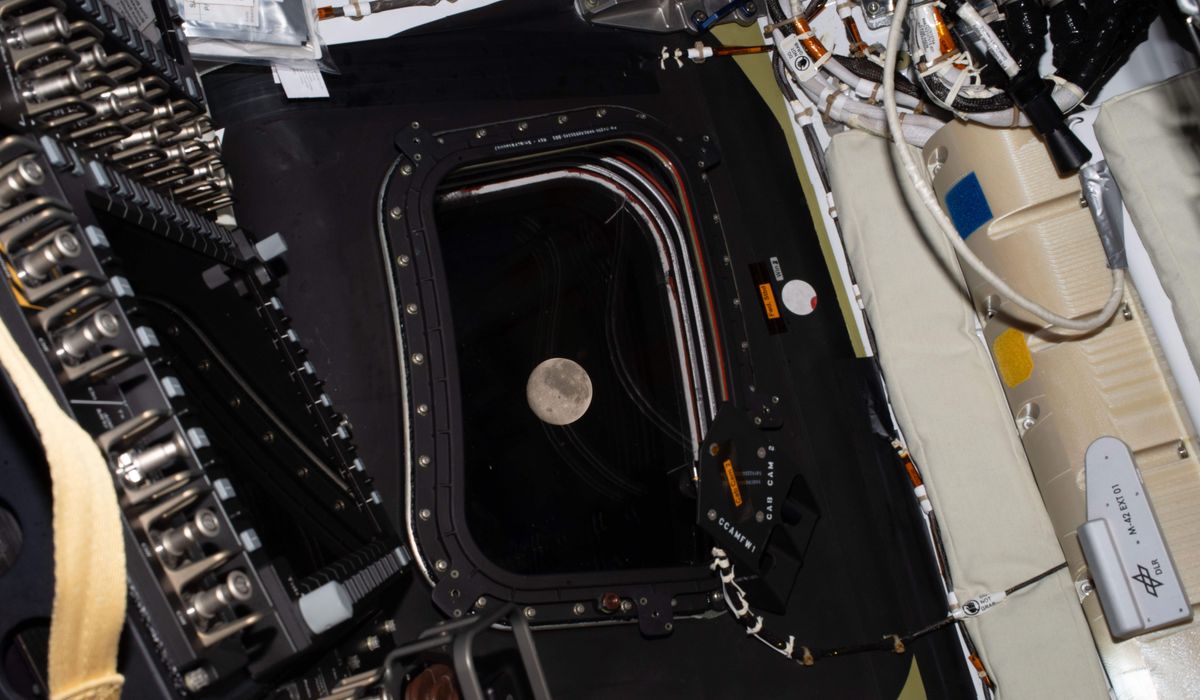
Artemis II astronauts pushed farther from Earth than ever during a Monday lunar fly-around, chasing a new distance record and opening up views of the moon’s far side that humanity has rarely seen.
The moon has been growing larger in the window for the Artemis II crew as they carried out a high-speed lunar fly-around that set a fresh distance milestone from Earth. The mission’s trajectory sent the crew well beyond usual low-Earth operations, giving them a rare vantage on the lunar far side. That perspective promises images and observations of terrain most humans have never directly witnessed.
The flight plan prioritized a close, fast pass that would swing the spacecraft out and around the moon, challenging both navigation teams and onboard systems. The crew worked with ground controllers to fine-tune burn sequences and attitude adjustments while maintaining the timeline. Those maneuvers were critical to achieving the higher-than-normal altitude that defines this record run.
Onboard cameras and sensors were tasked with recording the approach, the far side transit, and the return arc toward Earth. Engineers configured instruments to handle rapid lighting changes, shifting from bright sunlit plains to long, deep shadows on the far side. The resulting imagery aims to highlight surface features in new detail and help calibrate instruments for follow-on missions.
A human crew looking back at the moon from that distance offers a different kind of value than robotic probes alone can provide. Astronauts report how light, shadow, and scale change with perspective at extreme ranges, and that human feedback informs future mission planning. The psychological and observational input from those on board will shape how scientists and designers approach deep-space operations.
Communications and timing were tight during the fly-around, since line-of-sight with Earth shifts as the spacecraft moves behind the moon. Mission teams prepared handoffs between tracking stations and relay assets to keep telemetry flowing. Those handoffs ensure flight controllers have near-continuous situational awareness even when direct links are briefly limited.
Thermal control and power systems faced changing demands during the extended exposure to lunar conditions and deep-space sunlight. Systems engineers monitored battery and thermal performance closely, ready to adjust operations when heating or cooling trends diverged from predictions. Maintaining stable spacecraft conditions was essential to the crew’s comfort and to protecting onboard instruments.
The mission provided an opportunity to exercise navigation techniques that will be needed for future lunar surface missions and deeper space travel. Precise midcourse corrections and attitude control kept the spacecraft on its intended trajectory while minimizing fuel use. Demonstrating those skills on a crewed craft builds confidence for more ambitious objectives in the Artemis program.
Visuals from the far side carry both scientific and cultural weight, revealing regions of the moon that are seldom visible from Earth. Those images will feed analyses of geology, impact history, and regolith properties in areas that are less studied. The new perspectives can refine landing site selection and surface operation plans for later missions.
A human fly-around also tests crew procedures for long-duration viewing and observation tasks, including how to manage time, focus, and data collection under tight schedules. Astronauts practiced protocols for rapid photography, instrument checks, and reporting observations back to mission control. Those rehearsed workflows aim to make future surface sorties and orbital operations more efficient.
Mission leadership emphasized that the record-setting distance was not an end in itself but a step toward demonstrating capabilities needed for sustained lunar exploration. The flight validated navigation, life support, and communications systems at ranges beyond low-Earth orbit. Those validations are practical building blocks for returning humans to the lunar surface and for longer missions to come.
Data downlinked after the fly-around will be combed by teams focusing on engineering performance and scientific value. Specialists will compare predicted and actual system behavior, from thermal margins to propulsion efficiency. That analysis feeds updates to software and procedures for the next missions in the program.
Crew commentary and raw imagery from the run are expected to be shared with scientific teams and mission planners for immediate review. Those first-hand reports complement instrument readings and help prioritize which datasets deserve deeper study. Having both human impressions and instrument data in hand shortens the feedback loop for practical improvements.
The mission’s visual record from the far side may also help shape public engagement and educational outreach, offering images and experiences that few have seen. Clear, high-resolution views of unfamiliar lunar terrain can spark curiosity and inform classroom lessons about planetary science. Those outreach benefits are a softer but valuable outcome of a technically focused mission.
While the flight pushed distance records, mission engineers and astronauts stayed focused on routine checks and conservative decision-making, keeping safety as the top priority. Every maneuver was vetted against contingencies to protect the crew and spacecraft. That disciplined approach allowed the team to balance ambition with prudence throughout the fly-around.
As the spacecraft headed back toward Earth, teams began preparing for reentry and recovery procedures that follow any deep-space crewed flight. Post-fly-around timelines include system inspections, data offloads, and crew debriefs that capture lessons learned while they are fresh. Those follow-up steps turn a remarkable fly-around into practical improvements for missions ahead.

