

This piece examines the tradeoff between public safety and personal privacy as automated license plate readers spread across the country, weighing how law enforcement benefits stack up against the risk of creating searchable records of ordinary Americans’ movements.
How much personal movement should people surrender to help police solve crimes? Automated license plate readers are a blunt, effective tool that can point officers to stolen cars, missing people, and wanted suspects. At the same time, they record millions of innocent trips, building a searchable trail that raises serious Fourth Amendment questions.
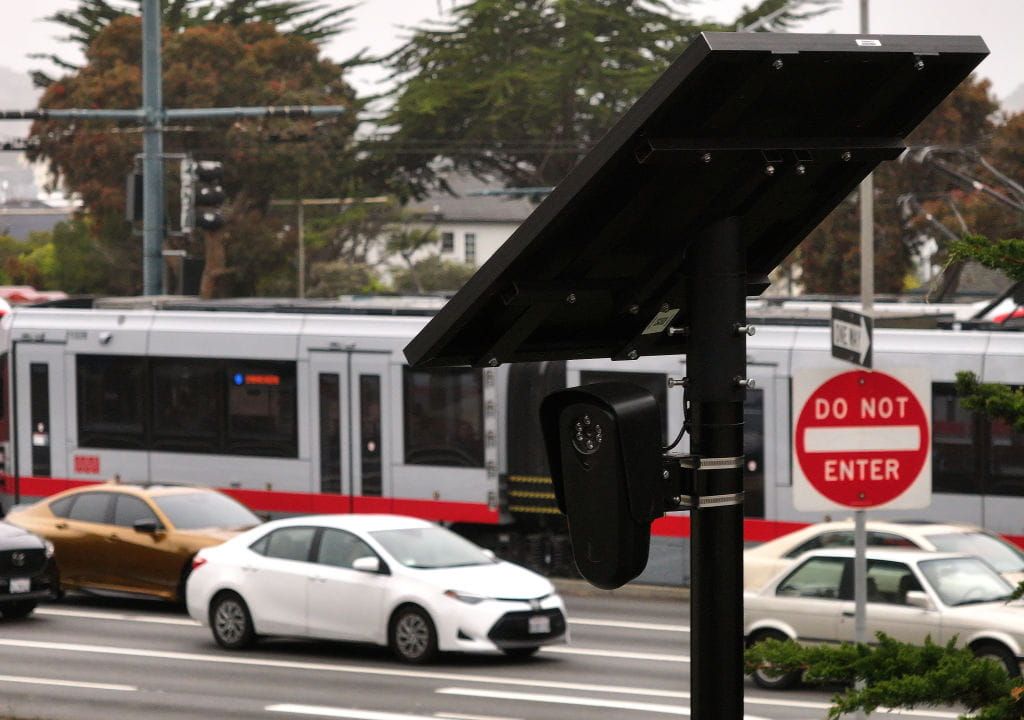
ALPR technology is straightforward: cameras photograph plates, create computer-readable records, log time and location, and compare numbers to law enforcement databases. The National Conference of State Legislatures explained they “capture computer-readable images that allow law enforcement to compare plate numbers against plates of stolen cars or cars driven by individuals wanted on criminal charges,” and noted devices are mounted on police cars, road signs, or traffic lights. That basic usefulness is exactly why departments keep installing them.
Supporters point to real-world results: San Diego’s 2025 report said the system assisted roughly 600 investigations, produced more than 400 arrests, recovered over 440 stolen vehicles, and helped locate $6 million in stolen property. Washington State reported dozens of recoveries, arrests, and missing people found. A 2025 peer-reviewed study from Taylor & Francis found patrol officers using ALPRs were two to three times more likely to make arrests and recover stolen cars than officers without the tech.
Those numbers make a straightforward case for conservative priorities: law and order, and giving police the tools they need to keep communities safe. When a child is missing or a violent offender is on the run, a fast, automated alert can matter. The cameras do what any officer could do in public view, but they do it faster and at scale.
But the civil liberties concerns are also real and deserve a clear answer. Every day cameras capture plates of drivers who have done nothing wrong, and those scans can accumulate into something much more intrusive than a single snapshot. A 2016–2017 review found law enforcement scanned 2.5 billion plates, “99.5% of which belonged to vehicles unassociated with criminal activity,” underscoring how much data is collected on ordinary lives.
“The data collected can enhance law enforcement’s ability to investigate and enforce the law, but also raise concerns that the information collected may be inaccurate, placed into databases and shared without restrictions on use, retained longer than necessary, and used or abused in ways that could infringe on individuals’ privacy.”
That passage captures the split: the tool is useful and dangerous at the same time. Privacy advocates rightly worry about data sharing across agencies, indefinite retention, errors in the database, and unauthorized access by employees. The practical risk is not paranoia; it is that aggregated records of where people go can reveal religious practices, medical visits, political activity, and relationships.
Legal debate has sharpened around what courts call the mosaic theory of the Fourth Amendment. The Michigan Law Review summarized the shift this way: “Before Jones, Fourth Amendment decisions had always evaluated each step of an investigation individually. Jones introduced what we might call a ‘mosaic theory’ of the Fourth Amendment, by which courts evaluate a collective sequence of government activity as an aggregated whole to consider whether the sequence amounts to a search.” Courts now weigh whether countless, routine scans become a constitutionally significant intrusion.
Anyone who cares about the Constitution and public safety has to face a tradeoff without easy answers. Conservatives can and should defend both effective policing and individual liberty. That means insisting on clear rules: who can access ALPR data, how long it is retained, whether cross-agency databases are permitted, and what oversight exists to prevent abuse.
Policy choices matter. Reasonable retention limits, audit trails for queries, and criminal-justice-only access rules can preserve ALPR benefits while reducing the risk of turning innocent people into a searchable map. Without guardrails, the technology’s convenience becomes a surveillance architecture the Founders never imagined.
The stakes are practical and legal. Americans want safe streets and secure neighborhoods, but they also expect the Constitution to prevent general government searches of everyday life. The debate over license plate readers is not just about cameras on poles; it is about how we balance safety, accountability, and liberty in a high-tech age.


1 Comment
The problem is they retain records and build a database. I’ve also read some of the cameras are able to take pictures of occupants of the vehicles. Then the snoops put this into the data base. 1984 is here, everybody, and big brother is now actually watching YOU. But you have nothing to hide, you say. Lavrentiy Beria, who was the chief of the Soviet secret police under Josef Stalin once said, “Show me the man and I’ll show you the crime.” Then there was the caw of the lady who was arrested because one of these cameras put her where she wasn’t. She was able to prove the camera was wrong but that was only after she was arrested.