

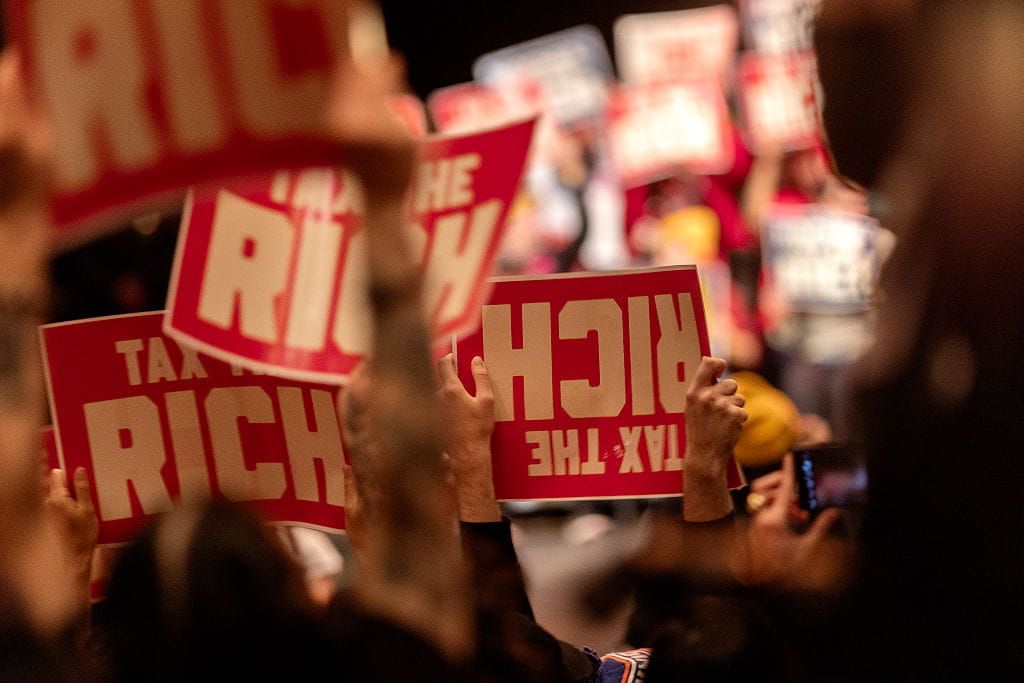
The fight over a proposed California wealth tax has drawn a high-stakes counterattack, with top earners pooling tens of millions to block measures they say would punish success and wreck the state’s economy.
Golden State billionaires gave $40 million to fight a proposed wealth tax, pouring money into a campaign that mixes advertising, legal strategy, and public messaging. The effort puts private capital against public policy and turns the debate over taxation into a headline battle. Voters and lawmakers are watching as money and messaging collide in a pivotal state contest.
The headline fact is simple: wealthy Californians put $40 million behind efforts to stop a new wealth tax from taking root. That cash is aimed at ballot messaging and judicial defenses, and it signals how much is at stake for individuals and the broader business climate. For Republicans and many independent voters, the sum underscores a larger point about protecting property and investment from aggressive new levies.
“The wealthiest Californians are hoping to protect their billions with millions.” That line captures the optics, but it also highlights a core philosophical divide: should accumulation be targeted by broad, recurring levies, or should the state encourage growth and opportunity? Opponents of the tax argue it amounts to double taxation and will accelerate the exodus of entrepreneurs and capital from California. Supporters counter that progressive levies are needed to fund services and reduce inequality, which fuels a heated political back-and-forth.
From a Republican viewpoint, the $40 million counterpunch is less about defending elites and more about defending the economic foundations that create jobs and innovation. The case presented by the funders stresses that when laws threaten long-term investment, everyone loses—workers, small suppliers, and neighborhoods that rely on corporate and philanthropic support. That line of argument aims to recast the debate from wealth redistribution to preserving incentives that produce prosperity.
Critics of the wealth tax warn of predictable outcomes: legal challenges, increased tax planning, and migration of capital and talent to friendlier states. Policymakers pushing the levy risk encouraging corporations and high-income households to relocate, shrinking the tax base governments depend on. The $40 million in opposition resources is therefore framed not simply as a defensive ad buy, but as an investment in keeping the state competitive.
On the political side, money translates into visibility: television spots, digital ads, and grassroots outreach that shape how the question is framed for voters. That strategy aims to turn complex economic arguments into simple, memorable points—taxes on assets feel abstract unless tied directly to job losses or shrinking services. The backers of the campaign are betting that a focused media push can win the narrative and, ultimately, the vote or a favorable ruling in court.
Legal arguments are likely to be part of the playbook as well. Opponents have signaled constitutional concerns and procedural objections that could wind up in the courts. In that environment, funding a multipronged campaign makes sense: public persuasion and courtroom strategy often go hand in hand. The $40 million cover both the short-term push to influence public opinion and the longer arc of litigation if necessary.
The wider lesson for California is blunt: tax policy shapes behavior, and when lawmakers aim high with new levies, the pushback can be equally substantial. The debate over the wealth tax has become a test case for whether the state chooses a path of higher redistribution or one that prioritizes stability for investors and entrepreneurs. Either way, the $40 million investment by wealthy opponents will be a major factor in how this fight unfolds.

