

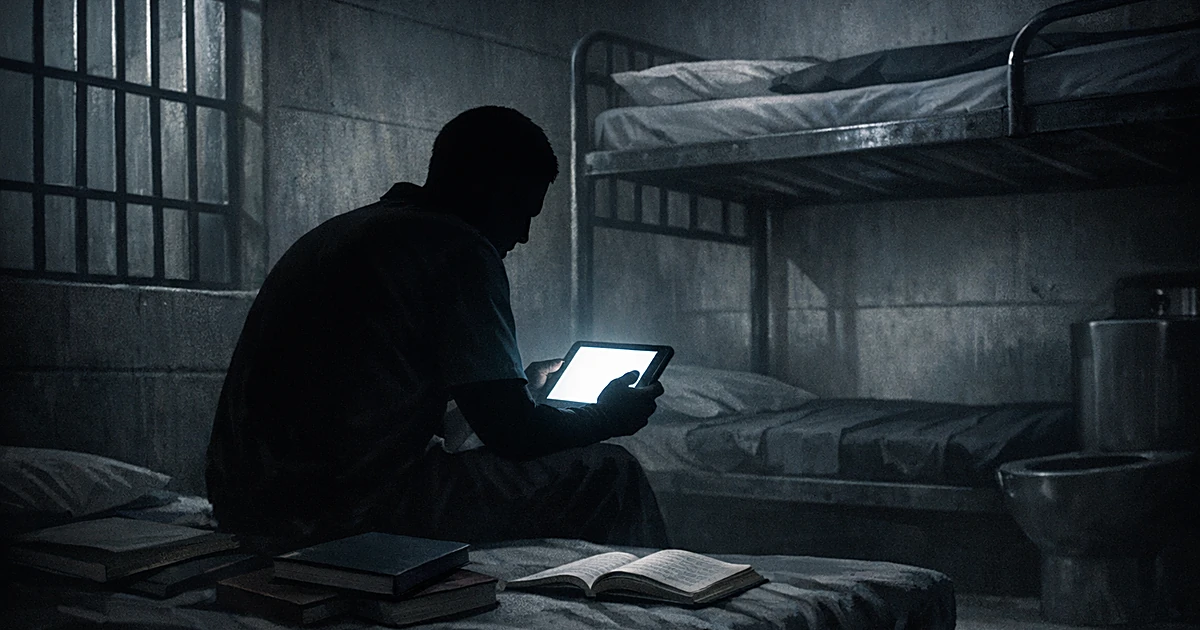
California’s taxpayer-funded tablet program meant for education and family contact is instead allowing convicted killers and sex offenders to receive explicit images, watch pornography, and carry out alleged child exploitation from inside prison cells.
State-issued tablets were marketed as tools for “digital equity” and reentry, but inmates report a very different reality. The devices, distributed statewide by 2023, sit at the center of a widening accountability problem that taxpayers are funding. The contract behind the rollout was initially $189 million and could reach $315 million with extensions.
Prisoners described routine access to explicit content and sexually explicit conversations that officials said the devices prevented. Robert Maury, a rapist and serial murderer in Stockton, told reporters inmates can receive “nude pictures” and watch pornography through the tablets. He described getting a topless photo from a 22-year-old German psychology student who had been “hoping that I would share my story with her for her class project,” and said he “flirted” with her “for a while.”
Maury also explained how inmates view porn during video chats, with someone outside “put[ting] porn on their TV” and prisoners watching along. When explicit images arrive, he said he “just say[s] cool and thank you.” Those short, candid admissions undercut the administration’s claims that the tools are tightly controlled and focused on rehabilitation.
Samuel Amador, another condemned inmate, offered similar accounts of how the devices are used. He said prisoners receive pornographic videos in “30 second clips” and trade sexually explicit messages through the system, while also viewing family moments. He told reporters: “I watch porn an[d] short clips of my family at the Beach,” and added that inmates can get around the restrictions: “[W]e get around their bulls***.”
Jamar Tucker, housed at High Desert State Prison, noted the official rules technically bar nude photos, but said he has received videos of women “dancing… in a thong” and uses racy photos for sexual arousal. Those firsthand reports make it hard to accept that the devices are limited to Bible study and reentry classes. They raise urgent questions about how effectively the system blocks prohibited content.
The consequences reach beyond adult pornography. The case of Nathaniel Ray Diaz shows how dangerous the access can be. Diaz, a convicted sex offender already imprisoned for crimes against a 12-year-old girl, allegedly used a state-issued tablet from Avenal State Prison to contact and exploit the same child again.
Prosecutors say he made “thousands of calls” to the girl, violated a no-contact order, and allegedly directed her to send sexually explicit images that he received through a co-conspirator. Diaz is now in custody awaiting trial, but the allegations expose how a device meant for connection can be weaponized to re-victimize someone. This is not a hypothetical risk; it is an alleged crime carried out on taxpayer hardware.
Douglas Eckenrod, the former deputy director of adult parole operations in California, issued a blunt warning about scale and monitoring. He said the case is “only the tip of the iceberg” and emphasized that the system cannot realistically monitor nearly 90,000 inmates with taxpayer-funded devices. His concern is a math problem: devices in every cell, limited staff, and practical gaps in oversight.
“We created a pathway for them to reach out and groom folks. There are going to be victims that didn’t need to have been victims because of these decisions.”
The state piloted the tablet program in 2018 and rolled it out to almost all inmates by 2023, allowing text messages at five cents apiece and video at sixteen cents per minute. Those user fees, along with the contract, are borne by California taxpayers, yet the protections appear insufficient. Officials recently announced tightened restrictions, but details remain murky and the structural monitoring gap persists.
The Newsom administration framed the rollout as advancing “digital equity” for justice-impacted people and furnishing access to “the Bible, education, and reentry resources that actually reduce crime.” Those phrases clash with accounts of violent offenders receiving explicit material and, in at least one alleged case, using a tablet to exploit a child. The mismatch between marketing and reality is stark.
Beyond the tablet program, the administration has reshaped capital punishment policy by placing a moratorium on executions, moving condemned inmates across facilities, and dismantling San Quentin’s death row. Meanwhile, the contract permits four one-year extensions, potentially driving the total to $315 million and locking in a program that critics say lacks basic safeguards.
Taxpayers are footing the bill while victims and families face the consequences of policy choices. Officials insist the system is controlled, inmates say otherwise, and a former senior corrections official warns monitoring 90,000 devices is impossible. When a state-funded device allegedly lets a predator reach a 12-year-old again, the failure is systemic, not accidental.


1 Comment
Absolutely ridiculous! Criminals deserve NOTHING! Pampering criminals is the reason our judicial and prison system is worthless. Newsome needs to have all of his assets confiscated and throw his worthless @ss on the street. These politicians are bigger criminals than the ones in prison.