

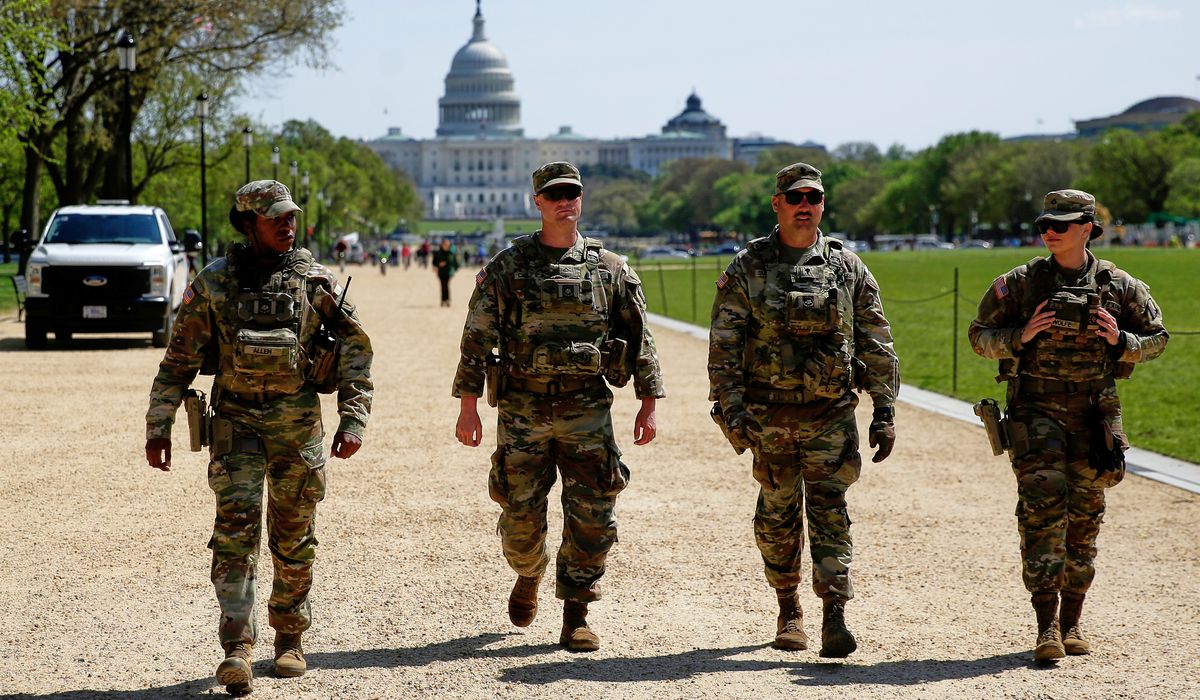
Pentagon officials confirmed that National Guard troops sent to the capital to help stop crime will stay in place through the 2029 inauguration, and the move has sparked a focused debate about security, local authority, and the proper role of federal forces in policing major events.
National Guard personnel deployed in the nation’s capital to stop crime will remain through the 2029 inauguration, Pentagon officials said. That announcement ends guesswork about the timeline and makes clear the federal government expects an extended presence well past the usual parade of ceremonial turnovers. Republicans are framing the plan as practical, not political, saying public safety deserves steady planning and predictable security arrangements.
Supporters argue the Guard provides a visible, organized deterrent against violence and sabotage, especially around high-profile events and critical infrastructure. The presence of trained units reduces the chance of chaotic responses and protects both officials and ordinary citizens who will attend or work near downtown areas. From a Republican perspective, preparedness beats improvisation every time, and putting capable hands on the rope line is common sense.
Critics raise valid questions about civil liberties and the line between protecting citizens and militarizing daily life, and those questions deserve concrete answers before any long-term posture becomes routine. Still, the Pentagon has emphasized coordination with local law enforcement, and officials say the Guard’s role will be supportive rather than taking over municipal policing functions. That distinction matters, and Republicans pressing for firm rules want clear written limits, timelines, and oversight to avoid mission creep.
Logistics matter too: sustaining forces in a city for years requires housing, supply chains, and careful command arrangements so soldiers are not overused or placed in ambiguous legal situations. The Department of Defense has statutory duties and constraints, but it also has resources and engineering capacity that city agencies often lack. A methodical, contract-based approach to billeting and support keeps costs predictable and avoids the wasteful last-minute scrambling that happens when planners treat major security needs as emergencies.
There is also a political side that cannot be ignored. For many Republicans, ensuring the capital is secure for inaugurations and other national ceremonies is about protecting the continuity of constitutional processes, not about favoring any candidate. That view frames this deployment as a neutral, necessary step to guarantee events proceed without disruption, whether the target is a mass protest, an organized extremist action, or simply a violent opportunist exploiting crowd conditions.
Transparency and oversight should come with any extended deployment so taxpayers know what they are paying for and so civil rights remain protected, and Republicans pushing those measures emphasize accountability through Congress and municipal review boards. Clear reporting on daily operations, incident logs, and use-of-force reviews will reduce public anxiety and make the Guard’s work less mysterious. Those same records shield individual service members and commanders from unfair blame when operations follow rules and law.
Ultimately, the national conversation should focus on what keeps people safe while respecting local authority and constitutional norms, and that balance is what many Republicans are calling for right now. Operational clarity, hard timelines, strong local partnerships, and independent oversight can make an extended Guard presence a stabilizing force rather than a source of friction. The Pentagon’s timeline through the 2029 inauguration gives planners a window to get those systems right and prove that responsible security can be both effective and restrained.

