

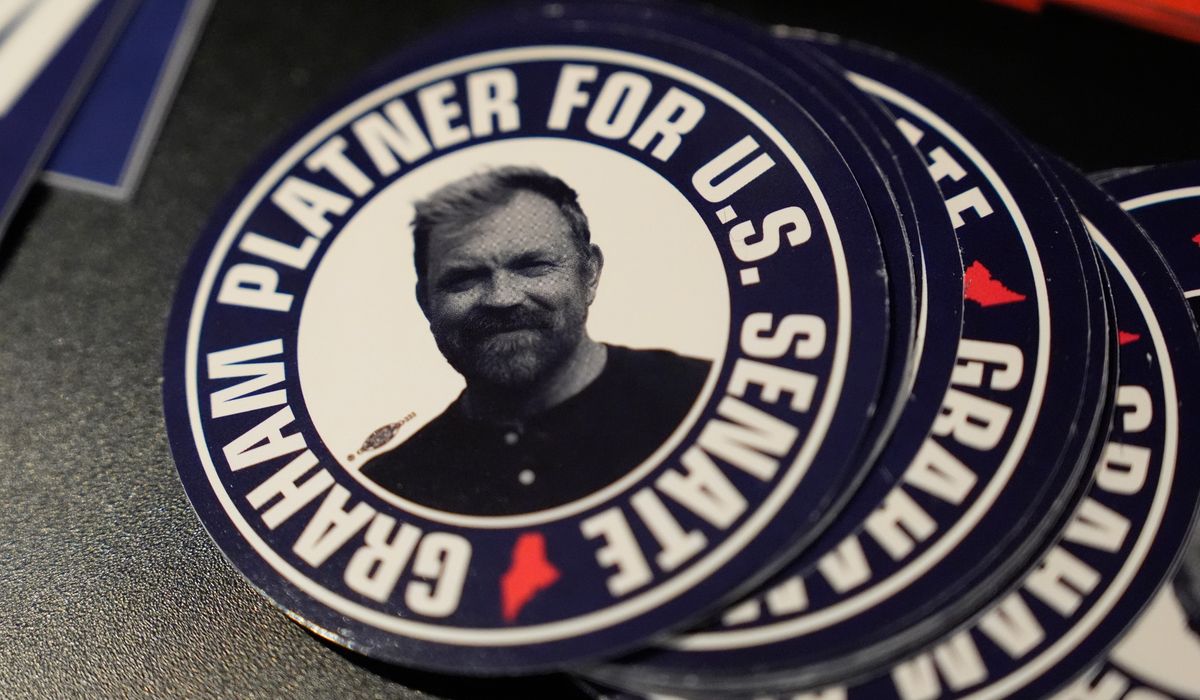
Republican critics say Democratic lawmakers ducked questions and protected one of their own after misconduct allegations surfaced against Senate candidate Graham Platner.
Republican leaders and activists are calling out the response from Democratic officials after allegations involving Graham Platner became public. Lawmakers from the other side repeatedly sidestepped direct answers during interviews and town halls, leaving voters without clear accountability. That pattern has energized conservatives who see a double standard in how allegations are handled depending on party loyalty.
The candidate at the center of the controversy is Graham Platner, a Senate hopeful who now faces misconduct accusations that a range of voters find troubling. Instead of condemning the behavior or demanding a full inquiry, Democratic lawmakers deflected Sunday when asked about misconduct allegations against Graham Platner, refusing to condemn the Senate candidate despite previously championing the Democrats’ “”. This inconsistency has been seized on by Republican commentators as proof that political expediency trumps principle.
From a Republican perspective, the situation is simple: standards should not bend when a party has something to lose. When Democrats once loudly promoted ethics and accountability, conservatives expected those standards to be applied evenly. The reluctance to call out alleged wrongdoing now looks like partisan protection, and that damages public trust across the board.
Voters deserve clarity, not spin. Republicans argue that a thorough, transparent investigation would serve everyone, including Platner if he is innocent. The refusal to demand answers sends a signal that some politicians prioritize electoral math over consistent ethical rules.
Campaigns are built on image and trust, and allegations of misconduct can destroy both quickly. Republican strategists point out that when one party treats accusations as disposable depending on convenience, the political fallout becomes a test of credibility for the entire system. Conservative voters say they will remember who defended what and who stayed silent during this controversy.
Democratic silence also gives opponents an opening to shape the narrative without rebuttal. Conservatives are prepared to press hard on the issue in debates, ads, and voter outreach, framing the story as evidence of partisan hypocrisy. That strategy aims to force clear, on-the-record responses from the lawmakers who declined to take a stand.
Republicans emphasize that the presumption of innocence matters, but so does consistency in enforcing standards. If a candidate faces credible allegations, the party should either call for a full probe or explain why the issue is different this time. The current mixed messages coming from Democratic circles only deepen skepticism among independents and swing voters.
Local activists and national figures in the Republican coalition are now coordinating to keep attention on the matter, hoping to prevent it from fading into spin. They argue that transparency protects the democratic process and that voters deserve straightforward answers before casting ballots. The pressure campaign will likely continue through the primary season and into the general election if the allegations remain unresolved.
Meanwhile, conservative commentators are tracking each public appearance and statement for inconsistencies and evasions. The goal is not merely political gain but to force a standard that applies equally to every candidate, regardless of party. Republicans say that restoring accountability is essential if voters are to regain faith in political institutions.
What unfolds next will depend on whether Democrats insist on protecting Platner or call for a proper review when questions arise. For Republicans, the choice is a litmus test: either uphold the same ethical yardstick they once demanded or admit that party loyalty outweighs principle. That choice will be central to how voters judge all involved in the coming weeks.

