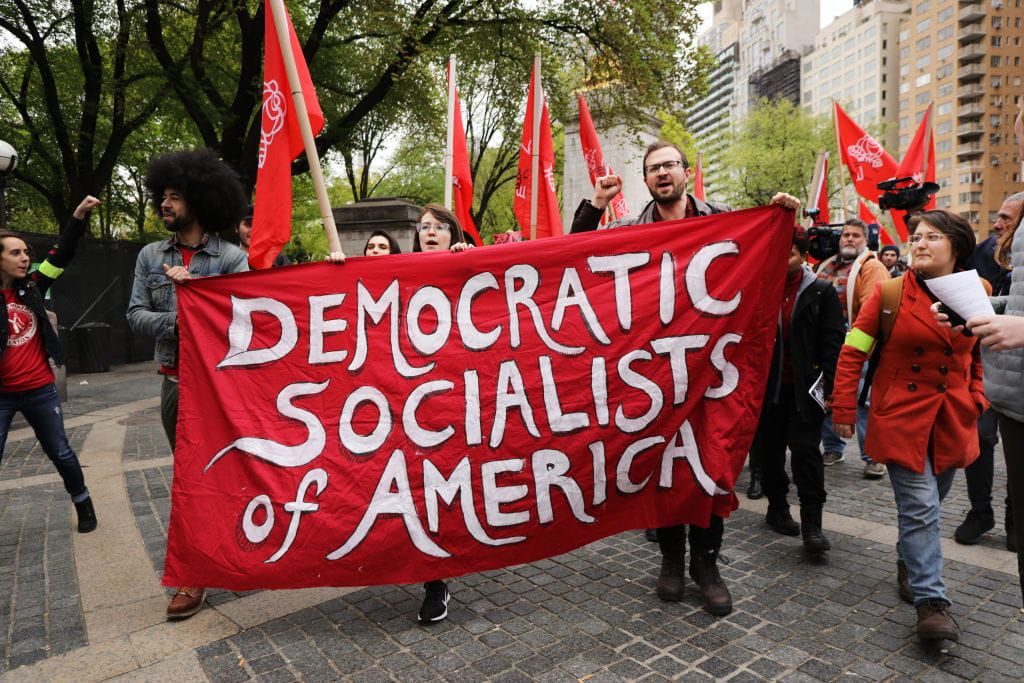
Establishment Democrats and self-styled democratic socialists are clashing in public and private, with heated confrontations over rhetoric, policy and electoral strategy sparking questions about the party’s coherence and what voters actually mean when they claim to support socialism.
The internal fights have played out from national figures to city mayors, and they show a party pulling in two directions at once. Longtime insiders have publicly challenged progressive rhetoric and policy plans, while a sizeable faction of Democratic voters embraces democratic socialism or tolerates its candidates. That split is reshaping debates over taxes, foreign policy messaging and who represents the party in key races.
Rahm Emanuel moved from criticizing Bernie Sanders to confronting New York City’s Zohran Mamdani, and his interventions underline how establishment figures view the socialist wing as a governance problem. Emanuel accused Sanders’ camp of prioritizing posture over practical economic measures and leveled a direct critique of the movement’s priorities. “If the Bernie bros were serious about growing jobs and wages, they would support candidates touting substantive ways to help families cover the mortgage or the rent, secure their retirement, and ensure no one is a single medical emergency away from bankruptcy,” Emanuel wrote.
Sanders fired back by labeling Emanuel an “establishment” Democrat supposedly “dependent on billionaire campaign contributions” to keep the current system intact, and the exchange shows the personal heat in the argument. Emanuel then said he spent about 90 minutes privately confronting Mamdani over his rhetoric on Israel, pushing back on language that many interpret as existentially hostile. Emanuel’s tally of meetings and his public airing of them underline how raw this intra-party dispute has become.
That rhetoric centers on charged slogans such as “From the river to the sea, Palestine will be free,” a line used by some protesters and activists. The phrase, laid out in full as “From the river to the sea, Palestine will be free,” covers territory between the Jordan River and the Mediterranean Sea and therefore prompts a sharp debate about whether it implies removing the state of Israel. Critics argue the slogan is widely understood as a call for eliminating Israel, which explains why establishment figures react so strongly.
Free with the Daily Briefing
85Essays
Unravel the Constitution
Hamilton, Madison & Jay’s complete case for America, free and searchable in the Publius Reader.
Free with the Daily Briefing. Unsubscribe anytime.
On the policy front, establishment strategists have unloaded on proposals they see as reckless. Mark Penn, a veteran Democratic strategist, tore into Mamdani’s property tax proposal and warned it would sweep up many more homeowners than supporters admit. “The $5 million figure was fake,” Penn wrote on X. “Now many will recall that persecutions frequently begin with a list – a list that can be used by the authorities and that is where Mamdani started – and he published it to boot. And smiled about it as though those high-value owners deserve what’s coming to them,” Penn continued. “But with a million people on his tax hit list, welcome to the lie of socialism – it starts with the idea that only ‘they’ are going to get it – a small group of 30,000 homeowners – and before you know it you are on the list.”
Those words capture a broader fear among party elders: that sweeping proposals and inflammatory language will alienate donors and crucial constituencies. Yet the grassroots evidence is mixed, because democratic-socialist endorsed candidates have seen wins and losses across local and primary contests this year. The Democratic Socialists of America-backed slate has produced 38 victories and 38 defeats so far, with many more races still undecided, showing real organizational momentum in pockets.
Polling complicates the narrative further by showing how many voters either claim the socialist label or are open to its candidates without necessarily grasping the ideology. A CNN and SSRS survey finds roughly a third of Democrats and Democratic-leaning adults self-identify as democratic socialists, and those respondents skew younger and less affluent. At the same time, among Democrats who do not identify as socialists, 64% say they would still be okay with a democratic socialist candidate while 36% would be upset or uneasy, which suggests tolerance for the label even where full support is lacking.
Understanding of democratic socialism remains shaky across the electorate. A Reuters and Ipsos poll reported that 49% of respondents said they understood democratic socialist policies, while 47% said they did not, leaving a large slice of voters who are uncertain. Asked whether democratic socialists have good ideas, respondents gave mixed answers: 27% said at least some, 51% said few if any, and 20% said they didn’t know. MAGA Republicans returned similar distributions on that question: 27%, 57%, and 13% respectively.
The clashes between progressives and establishment Democrats are therefore taking place against a backdrop of electoral experimentation and public confusion. That dynamic creates volatility — candidates and donors alike must weigh whether rhetoric and radical-sounding proposals help win primaries or cost general election credibility. The result is a party that appears decisive in factional fights but uncertain about coherent, broadly palatable messaging as the election cycle continues to unfold.