

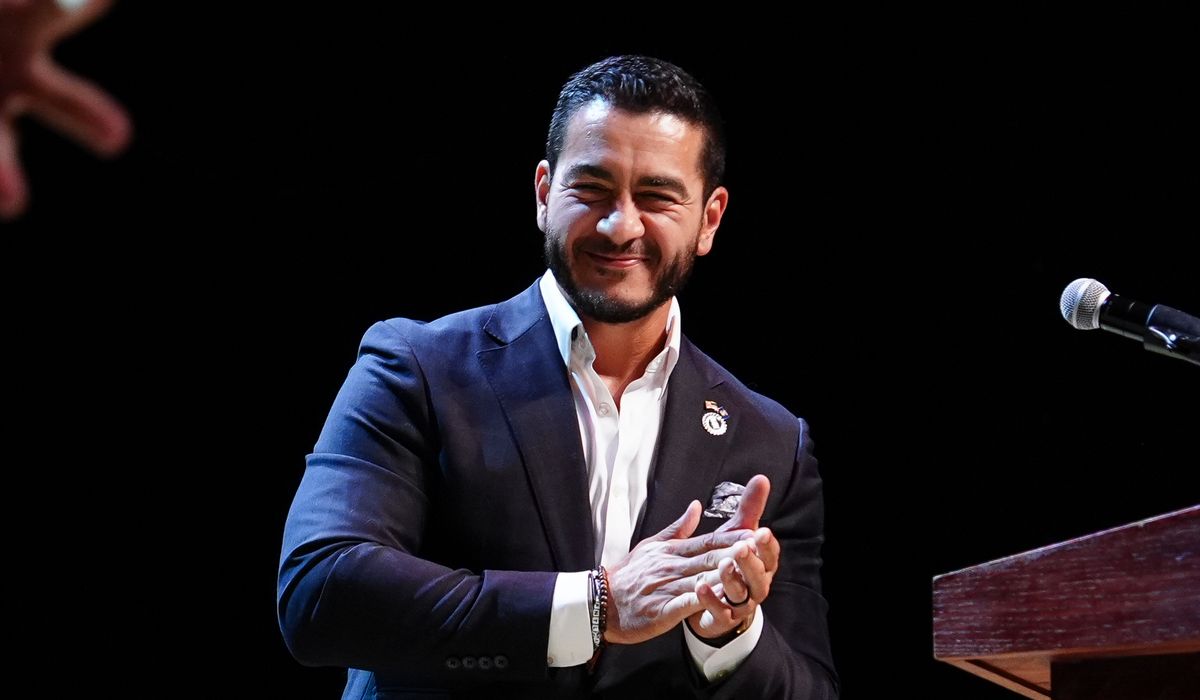
Abdul El-Sayed won Michigan’s Democratic primary for U.S. Senate, beating Rep. Haley Stevens in a fierce race that handed progressives a clear victory and immediately propelled the contest onto the national stage. The result reshapes the dynamics of Michigan politics and raises sharp questions about the party’s direction and electability heading into the general election.
The primary was competitive and closely watched, with both campaigns investing heavily and appealing to different Democratic constituencies. El-Sayed ran as a clear left-leaning alternative, while Stevens represented the more moderate, establishment wing of the party. Voters chose a progressive nominee in a moment that signals where a sizable portion of the Democratic base in Michigan stands.
For Republicans, the outcome looks like an opening. A candidate tied to the progressive agenda hands conservatives and moderates in swing areas a target they can define for the general election. That advantage matters in Michigan, a state that decides closely contested federal races and where persuadable voters have swung outcomes in recent cycles.
The left’s win will energize grassroots donors and outside groups aligned with progressive priorities, bringing fresh cash and attention to Michigan. Those resources can boost turnout and messaging in the short term, but they also sharpen the contrast Republicans will use on taxes, energy, and public safety. The campaign that follows is likely to be nationalized quickly, with both sides pouring in money and media.
Republican strategists will argue that El-Sayed’s policy positions are a liability in suburban and working-class districts. Those voters care most about pocketbook issues and community safety, and they may respond to direct, plainspoken arguments that emphasize economic stability over sweeping reforms. Expect GOP messaging to be focused and relentless on those themes.
Democratic operatives will counter that the nominee can expand the coalition by energizing young voters and new activists. That argument depends on translating enthusiasm into votes where it counts on election day, not just in primary turnout. The party’s internal debate about strategy and messaging is now front and center, with implications beyond this single race.
The Senate matchup will also influence how national groups allocate their efforts and funds in the fall. Both parties track vulnerability and opportunity closely, and a progressive nominee reshuffles those calculations. For Republicans, the math may look more favorable; for Democratic donors, it will be a decision about defending a seat that could be pivotal in determining control.
Campaign tone is likely to heat up fast, with attack ads and rapid-response teams framing the stakes in stark terms. The contrast will be portrayed as choices about priorities and governance, and voters will see competing narratives about who best understands Michigan’s challenges. Media coverage will follow suit, keeping the contest in the spotlight through sustained scrutiny.
Local officials and interest groups inside Michigan will have to pick sides or try to navigate between national pressure and constituent concerns. That balancing act matters because endorsements and local infrastructure can swing turnout in key counties. The state’s political map means that shifts in just a few communities could decide the outcome.
Ultimately, the primary result sets up a high-profile general election that Republicans see as winnable and Democrats view as crucial to defend. Expect a fast-moving, expensive fight where messaging, turnout, and candidate stamina are decisive. Whoever emerges on November’s ballot will carry not only their party’s hopes but also a test of political strategy in a pivotal Midwestern state.

