

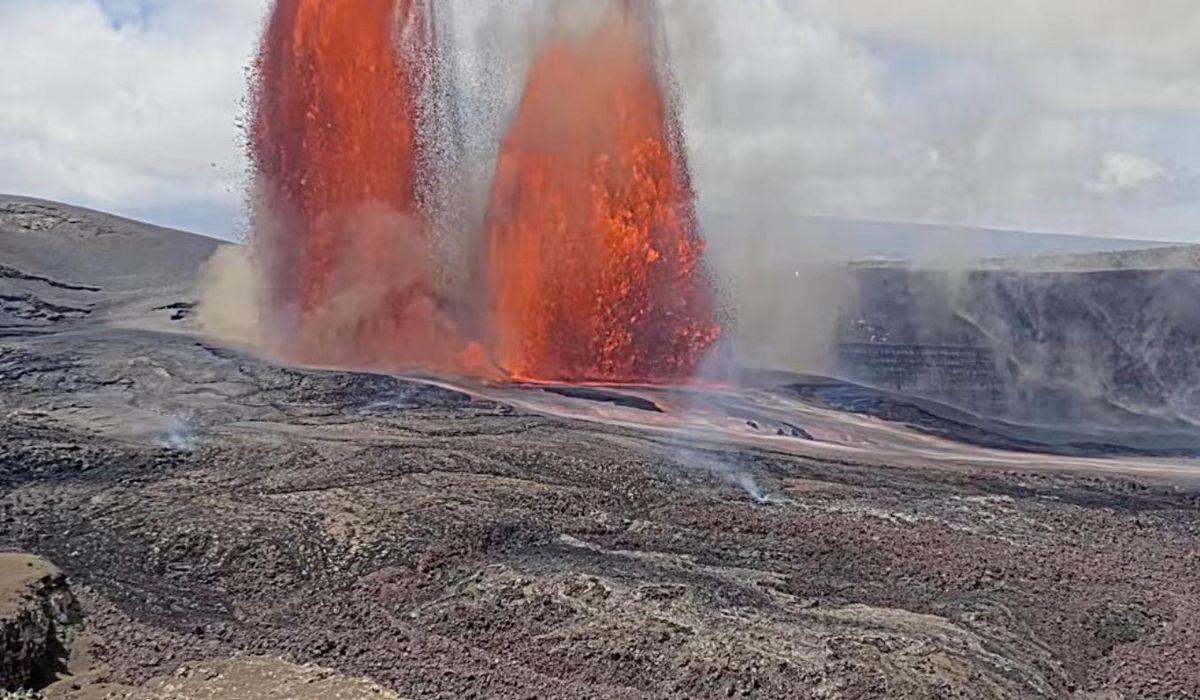
The latest lava fountaining episode of an erupting Hawaii volcano reached 1,000 feet (300 meters) high Tuesday, prompting temporary closures at a national park and part of an important highway.
The volcano produced a dramatic lava fountain that shot molten rock and incandescent material up to 1,000 feet (300 meters) into the air Tuesday. That display of eruptive energy led authorities to close sections of a national park and an adjacent stretch of highway as a precaution. Officials acted quickly to limit exposure to falling debris and airborne hazards.
Park rangers and transportation crews coordinated the temporary closures to keep visitors and motorists out of harm’s way. The affected highway is an important route for both residents and tourists, so the shutdown created immediate detours and delays. Emergency workers emphasized that closures were precautionary while conditions were assessed.
Volcanic fountains of this height can fling large blocks of cooling lava significant distances, creating rockfall risk along slopes below the fissure. Small particles and ash can also travel downwind and reduce air quality for nearby communities. Public safety planners focused on those direct and indirect hazards when ordering the closures.
Air quality concerns can be unpredictable after intense fountaining, with vog and fine ash posing respiratory risks for sensitive people. Local health officials advised those with breathing problems to stay indoors until air monitoring teams report safer readings. Community alerts and advisories were sent through local channels to keep residents informed.
Tour operators and visitors who had planned park visits faced cancellations and reroutes as access points were temporarily blocked. Hotels and businesses near the park adjusted check-in plans and offered guidance about safe viewing alternatives outside exclusion zones. Many operators urged patience and respect for safety boundaries while the eruption continued.
Geologists monitoring the eruption tracked both the fountain intensity and lava flow directions to anticipate further hazards. Instrumentation around the vent measured seismic activity and gas emissions to help forecast short-term behavior. Real-time monitoring allowed decision-makers to update closure maps as conditions evolved.
Road crews stationed at key intersections redirected traffic and placed signage to alert drivers to the temporary closures. Transport authorities urged commuters to give themselves extra time and follow posted detours for as long as the restrictions remain in effect. Emergency access routes were kept clear for first responders and maintenance crews.
Residents living downwind from the eruption were told to prepare for possible ashfall and to secure outdoor items that might be damaged by falling grit. Schools and vulnerable facilities reviewed their contingency plans to protect children and patients from airborne particles. Community centers opened as information hubs where officials could share air quality updates.
Photographers and sightseers were reminded that the spectacle of a 1,000-foot fountain carries real danger close up. Viewing from sanctioned observation areas and farther vantage points reduces the risk of injury from sudden rockfall or unstable ground. Park authorities emphasized that dramatic photos are not worth risking personal safety.
Scientists cautioned that while dramatic fountains can persist for hours or days, their intensity often waxes and wanes in short cycles. That variability makes planning for safe access challenging and requires continuous reassessment of exclusion zones. Experts said they would issue updates as new data came in and as the eruptive episode changed.
Local governments coordinated with federal agencies to ensure resources for response and recovery were available if conditions worsened. That coordination included potential road repairs, debris removal, and restoration of impacted facilities once it was safe. Preparations were designed to move quickly so closures could be lifted without compromising public safety.
Businesses that rely on through traffic along the closed highway began contingency planning to mitigate short-term revenue impacts. Some offered flexible cancellation policies and adjusted service hours to accommodate disrupted travel patterns. Community leaders explored ways to support small operators affected by the temporary shutdown.
Communication lines stayed active between monitoring teams, park staff, and transportation agencies so that reopening decisions would reflect the most current data. Those responsible for public safety stressed that reopening would only happen once hazards were judged manageable. Until then, barriers and signage would remain in place to protect people from unpredictable volcanic behavior.
Visitors planning future trips to the area were advised to check official park and transport alerts before traveling and to be ready for sudden schedule changes. The eruptive episode that sent lava 1,000 feet (300 meters) into the sky served as a reminder of the region’s active geology and the need for caution. Observers were encouraged to respect closures and watch for official updates as the situation develops.

