

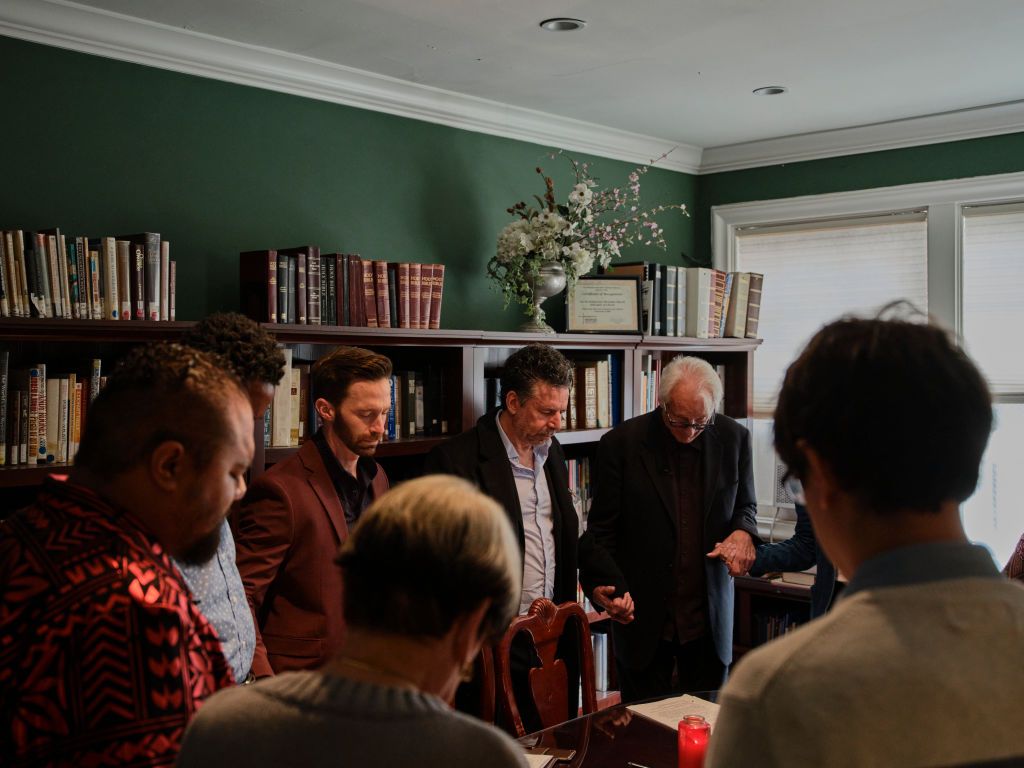
The Supreme Court has agreed to hear a dispute over whether local officials can indefinitely delay zoning decisions to block home prayer meetings, a fight that began when an Ohio homeowner faced a cease-and-desist for holding a Sabbath minyan in his living room.
What began as a neighbor complaint about a handful of men gathering quietly on the Sabbath turned into a legal battle that climbed all the way toward the highest court. The key question is not whether the prayers themselves are protected, but whether local authorities can use procedural delay to avoid judicial review. That procedural tactic can leave a homeowner with no real remedy even when constitutional rights are at stake.
The case, Grand v. City of University Heights, centers on Daniel Grand, an Orthodox Jewish homeowner who sought to host a minyan, a prayer quorum that requires ten men. Grand said he needed to hold the gatherings at his house because Orthodox practice discourages driving on the Sabbath, eliminating the option of meeting elsewhere. A neighbor alerted city officials, and the city responded with a cease-and-desist notice citing zoning rules because the house was not designated as a place of worship.
Officials suggested Grand was effectively operating a synagogue in a residential zone, and the dispute escalated from there. The zoning board took no timely decisive action, and Grand eventually withdrew his request to avoid drawn-out bureaucratic fights. After that, he says the city began punitive measures, including skipping trash pickup and keeping his activities under police surveillance, which he viewed as harassment intended to prevent further gatherings.
The procedural posture of the dispute is why courts initially declined relief. Both the district court and the Sixth Circuit dismissed Grand’s claims on the ground that the local zoning process had not run its course. As Michael A. Helfand wrote in The Washington Post:
“If a municipality can avoid judicial review by insisting that the zoning process continues, what prevents it from extending that process indefinitely? An inflexible rule requiring a final decision ultimately incentivizes bureaucratic gamesmanship. More hearings. More requests for information. More procedural hurdles. All the while, no federal court can address the merits of the case.”
The Supreme Court took the unusual step of agreeing to decide whether that kind of indefinite administrative delay should block federal courts from hearing constitutional claims. The justices are not being asked to rule directly on whether Grand may lawfully host a minyan, but they will consider whether local authorities can keep pushing the process forward until the right to judicial review evaporates. That is a narrow yet potentially transformative procedural question.
Money and access to legal help complicate matters even further. Many homeowners lack the resources to fight prolonged municipal proceedings, and fines or other penalties can make litigation impractical. The case raises a blunt question: how much money does one need to assert constitutional rights when a local government can weaponize permitting and zoning delays?
Supporters of religious freedom warned in legal filings that overly rigid finality rules will choke small, informal religious practice. As Jay Sekulow of the American Center for Law & Justice wrote in an amicus brief:
“In the Christian tradition, home-based fellowship, Bible study, and communal meals have been central to the faith since the earliest days of the Church …
“A finality rule that requires those Americans to complete an institutional-scale administrative process before seeking relief from that targeting penalizes the very qualities — smallness, informality, home-based intimacy — that make the religious practice most vulnerable to death by red tape.”
That argument applies beyond one faith tradition; the decision could affect Jewish minyanim, Christian Bible studies, and any other home-based worship or fellowship. The constitutional backdrop is plain: “Congress shall make no law respecting an establishment of religion, or prohibiting the free exercise thereof …” and the Court’s ruling will test whether procedural rules or religious liberty get the upper hand.
Whatever the outcome, the ruling promises to reshape how local governments handle zoning disputes that touch on constitutional rights. For homeowners who host small, informal religious gatherings, the stakes are real: a decision that bolsters access to federal review would protect intimate religious practices from being smothered by bureaucracy, while the opposite result could hand local officials a powerful tool to curb home-based worship without ever resolving the underlying claims.

