

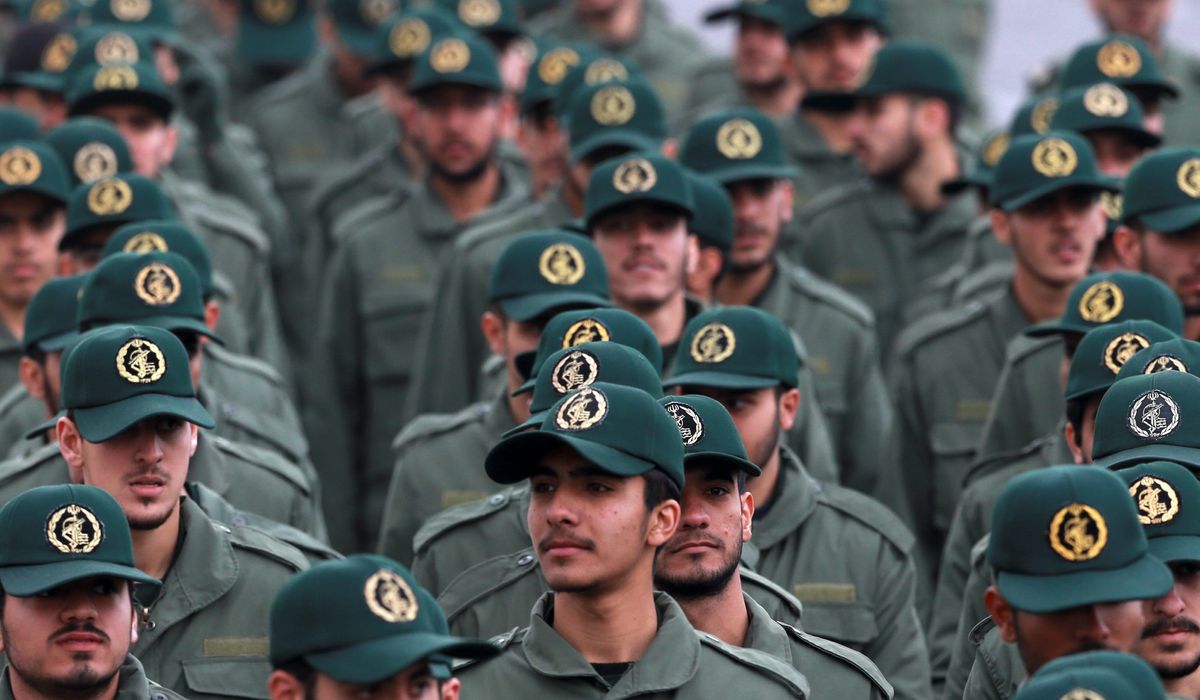
Senior commanders of Iran’s Islamic Revolutionary Guard Corps warned on Wednesday that renewed U.S. airstrikes would broaden the conflict, presenting a clear escalation risk and setting up a test of American resolve in the region.
The Islamic Revolutionary Guard Corps delivered a direct threat on Wednesday, saying that any return to airstrikes by Washington would trigger an expansion of hostilities. That kind of rhetoric fits a long pattern of Tehran using public warnings as part of its deterrence and influence strategy across the Middle East.
From a Republican viewpoint, these statements should not be treated as routine bluster. When an adversary explicitly links continued attacks to a larger response, the United States must weigh force protection, regional stability, and the credibility of deterrence in equal measure.
There are immediate tactical choices on the table for U.S. commanders and policymakers. They can keep a restrained posture to avoid rapid escalation, or they can demonstrate credible capability and will to impose costs, which Republicans argue is the better long-term deterrent. Each path carries political and military tradeoffs that will be debated in Washington.
Iran’s calculus rests on ambiguity and limited probing aggression, counting on hesitancy from U.S. leaders to react decisively. That ambiguity benefits Tehran, allowing it to support proxies, pressure allies, and extract concessions without crossing red lines that would trigger overwhelming retaliation.
Republican analysis tends to favor removing that ambiguity by signaling a clear threshold for unacceptable behavior, backed by visible military readiness. The idea is not to provoke but to prevent: a robust posture aims to stop small attacks from snowballing into larger confrontations that would damage U.S. interests and regional partners.
There is also a legal and diplomatic side to consider. Airstrikes carry risks for civilians and for coalition cohesion, and they must be justified under international law and U.S. statutes. Still, legal and moral constraints do not negate the need for a strategy that defends U.S. forces and deters hostile actors from crossing lines that threaten stability.
Allies in the region watch how the United States responds, and their calculations shift when they perceive American weakness or paralysis. A clear, measured response to provocations reassures partners like Israel and Gulf states, while prolonged uncertainty encourages local actors to hedge or seek leverage with Tehran.
That leads to a broader strategic point: escalation is not solely a military problem. It is political and informational. Tehran aims to exploit divisions in Washington and to shape international narratives that portray Iranian moves as defensive. Republicans argue the correct approach is to combine firm action with messaging that exposes Tehran’s aggressive posture.
Ultimately the situation on Wednesday underscores a simple truth of statecraft: deterrence depends on credibility. If threats by Iran are allowed to accumulate without consequence, the region becomes more dangerous and U.S. influence erodes. Conversely, a consistent policy that protects U.S. personnel and stands with allies can reduce the likelihood of a larger war by making aggression costly and unattractive to Iran and its proxies.

